Elkhatib Safwan K, Moshfegh Cassandra M, Watson Gabrielle F, Schwab Aaron D, Katsurada Kenichi, Patel Kaushik P, Case Adam J
Department of Cellular and Integrative Physiology, College of Medicine, University of Nebraska Medical Center, Omaha, Nebraska, United States.
School of Medicine, Jichi Medical University, Shimotsuke, Japan.
Biol Psychiatry Glob Open Sci. 2021 Sep;1(3):190-200. doi: 10.1016/j.bpsgos.2021.05.004. Epub 2021 May 25.
Post-traumatic stress disorder (PTSD) is a devastating psychological disorder. Patients with PTSD canonically demonstrate an increased risk for inflammatory diseases, as well as increased sympathetic tone and norepinephrine (NE) outflow. Yet, the exact etiology and causal nature of these physiologic changes remain unclear. Previously, we demonstrated that exogenous NE alters mitochondrial superoxide in T-lymphocytes to produce a pro-inflammatory T-helper 17 (T17) phenotype, and observed similar T17 polarization in a preclinical model of PTSD. Therefore, we hypothesized sympathetic-driven neuroimmune interactions could mediate psychological trauma-induced T-lymphocyte inflammation.
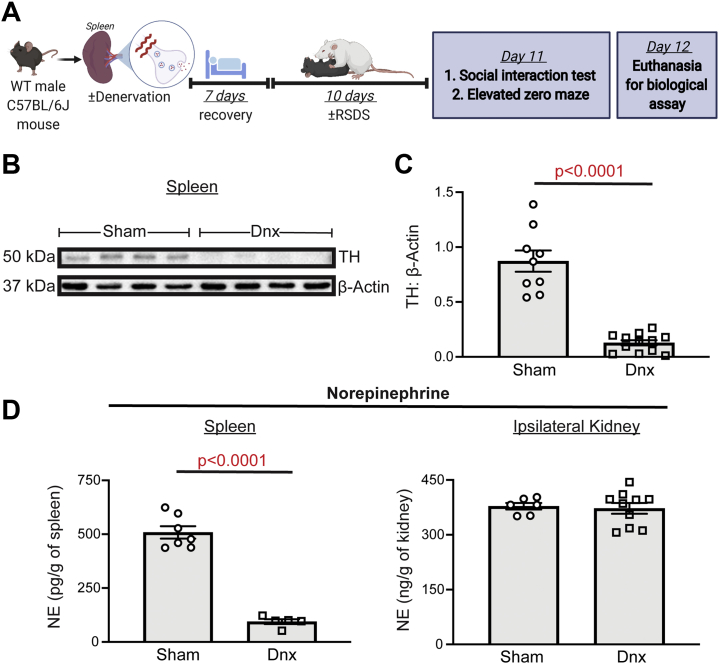
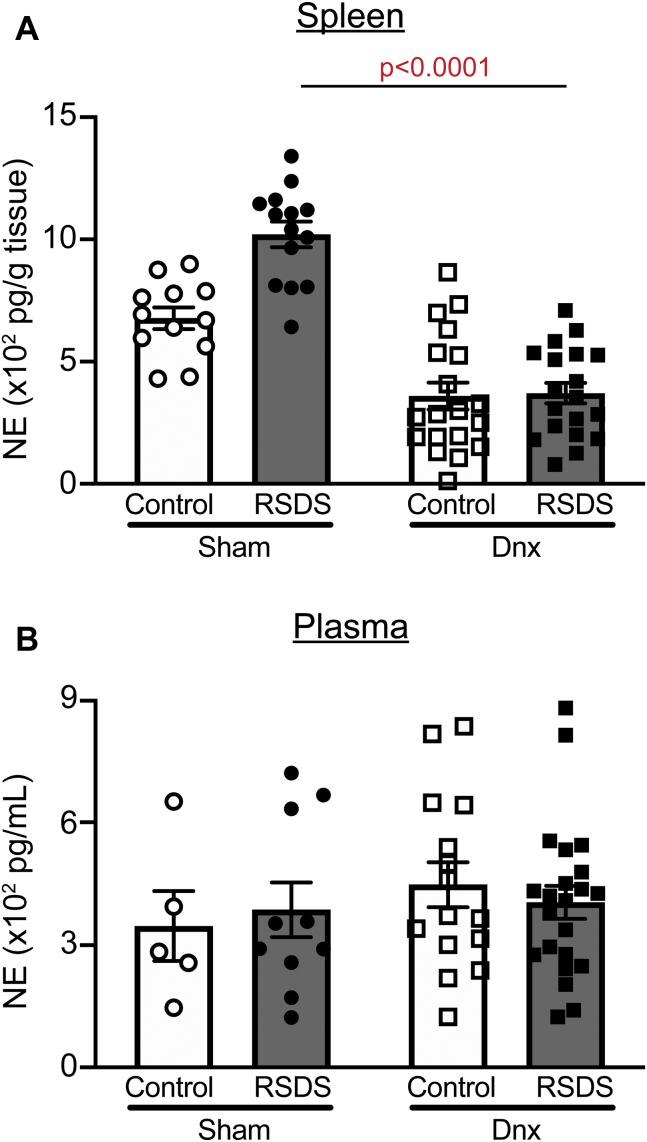
Repeated social defeat stress (RSDS) is a preclinical murine model that recapitulates the behavioral, autonomic, and inflammatory aspects of PTSD. Targeted splenic denervation (Dnx) was performed to deduce the contribution of splenic sympathetic nerves to RSDS-induced inflammation. Eighty-five C57BL/6J mice underwent Dnx or sham-operation, followed by RSDS or control paradigms. Animals were assessed for behavioral, autonomic, inflammatory, and redox profiles.
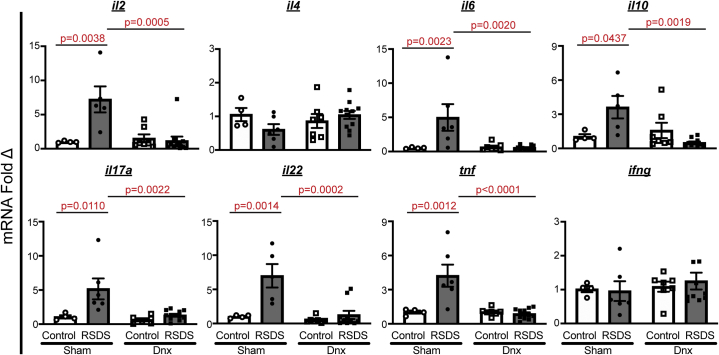
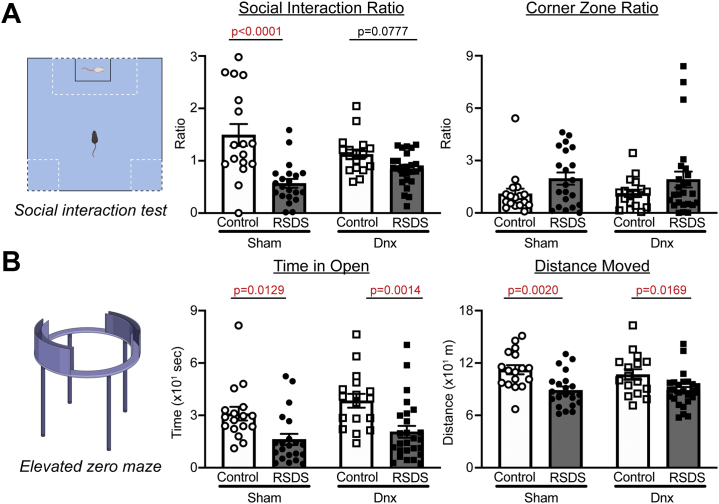
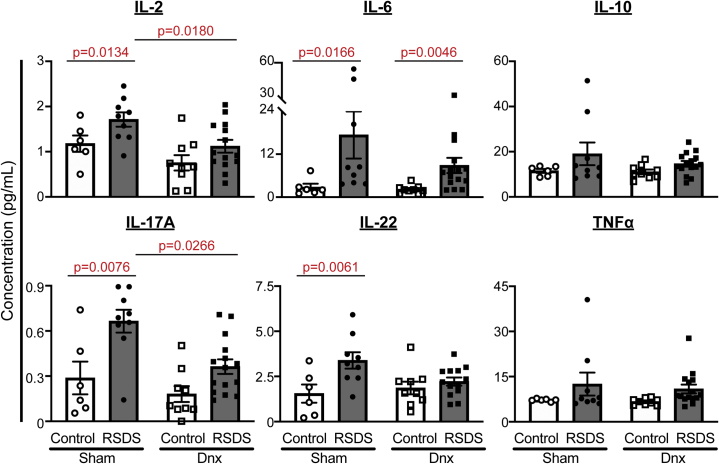
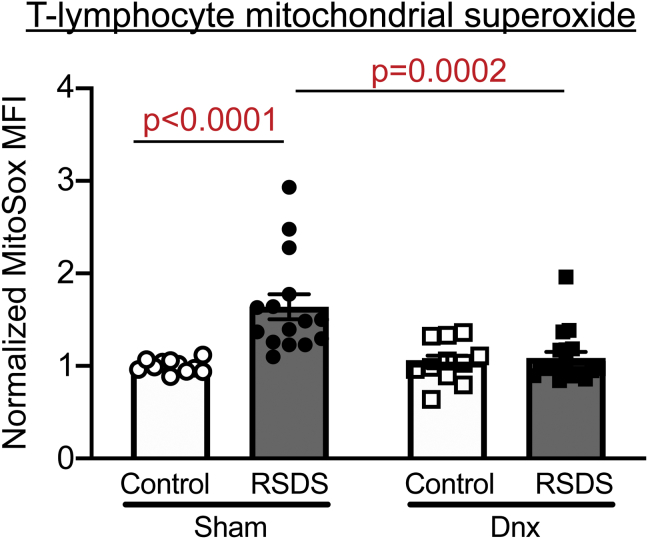
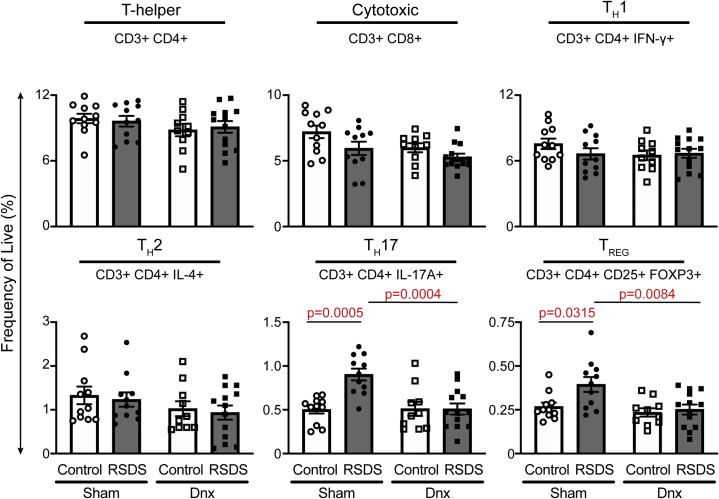
Dnx did not alter the antisocial or anxiety-like behavior induced by RSDS. In circulation, RSDS Dnx animals exhibited diminished levels of T-lymphocyte-specific cytokines (IL-2, IL-17A, and IL-22) compared to intact animals, whereas other non-specific inflammatory cytokines IL-6, TNF-α, and IL-10) were unaffected by Dnx. Importantly, Dnx specifically ameliorated the increases in RSDS-induced T-lymphocyte mitochondrial superoxide, T17 polarization, and pro-inflammatory gene expression with minimal impact to non-T-lymphocyte immune populations.
Overall, our data suggest that sympathetic nerves regulate RSDS-induced splenic T-lymphocyte inflammation, but play less of a role in the behavioral and non-T-lymphocyte inflammatory phenotypes induced by this psychological trauma paradigm.
创伤后应激障碍(PTSD)是一种极具破坏性的心理障碍。PTSD患者通常表现出患炎症性疾病的风险增加,以及交感神经张力和去甲肾上腺素(NE)外流增加。然而,这些生理变化的确切病因和因果性质仍不清楚。此前,我们证明外源性NE会改变T淋巴细胞中的线粒体超氧化物,以产生促炎性辅助性T细胞17(T17)表型,并在PTSD的临床前模型中观察到类似的T17极化。因此,我们推测交感神经驱动的神经免疫相互作用可能介导心理创伤诱导的T淋巴细胞炎症。
重复社会挫败应激(RSDS)是一种临床前小鼠模型,概括了PTSD的行为、自主神经和炎症方面。进行靶向性脾去神经支配(Dnx)以推断脾交感神经对RSDS诱导的炎症的作用。85只C57BL/6J小鼠接受Dnx或假手术,然后进行RSDS或对照实验。对动物的行为、自主神经、炎症和氧化还原特征进行评估。
Dnx并未改变RSDS诱导的反社会或焦虑样行为。在循环中,与完整动物相比,RSDS Dnx动物的T淋巴细胞特异性细胞因子(IL-2、IL-17A和IL-22)水平降低,而其他非特异性炎症细胞因子(IL-6、TNF-α和IL-10)不受Dnx影响。重要的是,Dnx特异性改善了RSDS诱导的T淋巴细胞线粒体超氧化物增加、T17极化和促炎基因表达,对非T淋巴细胞免疫群体的影响最小。
总体而言,我们的数据表明交感神经调节RSDS诱导的脾T淋巴细胞炎症,但在这种心理创伤范式诱导的行为和非T淋巴细胞炎症表型中作用较小。