Department of Surgical Sciences, Anesthesiology and Intensive Care, Uppsala University, Uppsala, Sweden.
Department of Physiology and Pharmacology, Karolinska Institute, Stockholm, Sweden.
Function (Oxf). 2021 Aug 20;2(6):zqab042. doi: 10.1093/function/zqab042. eCollection 2021.
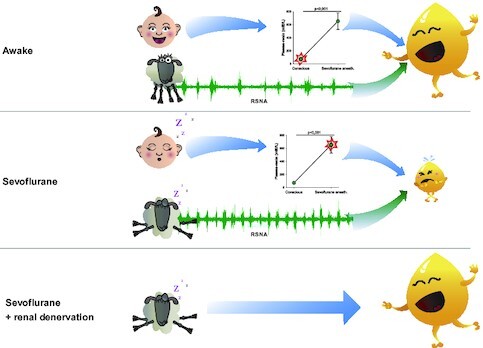
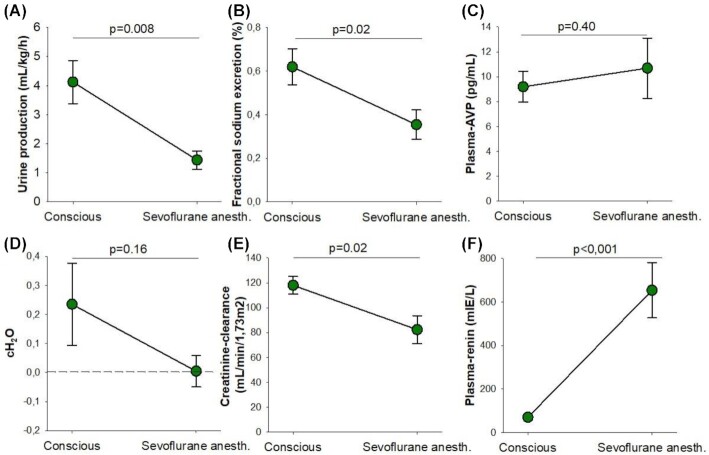
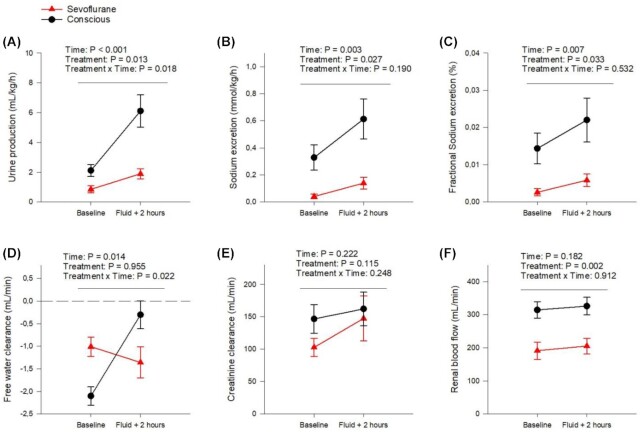
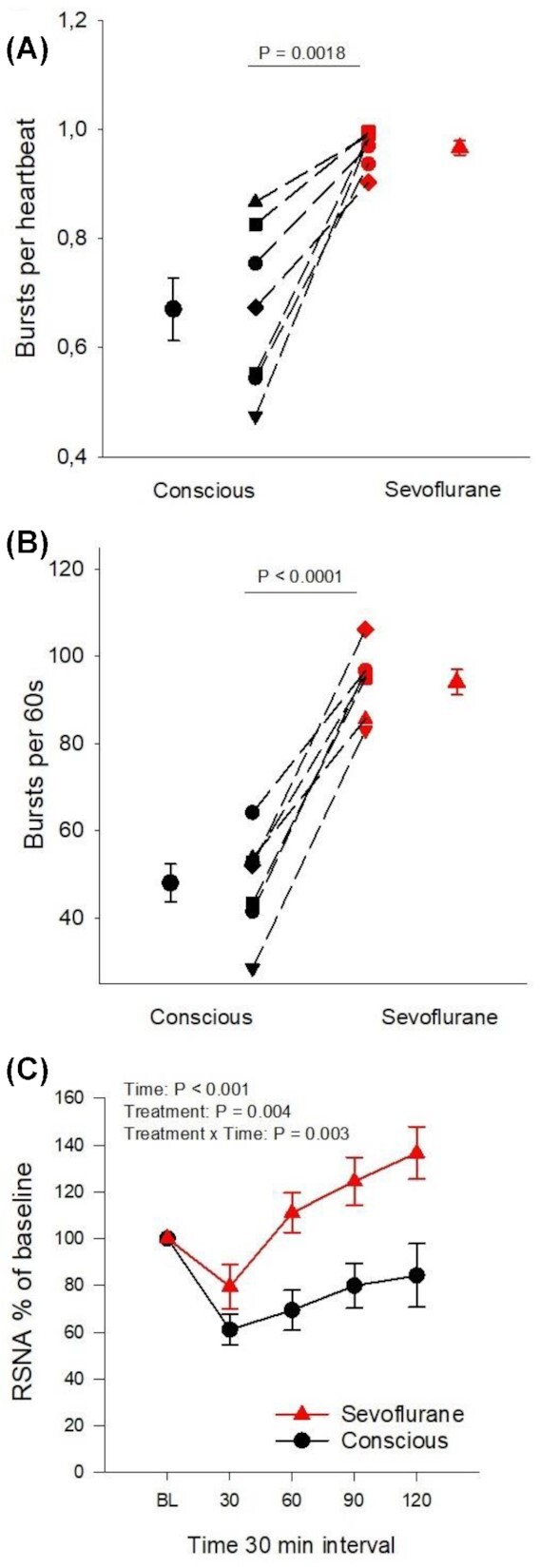
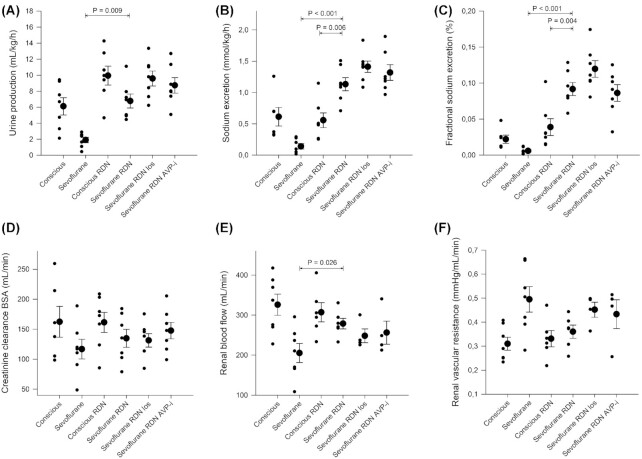
Regulation of fluid balance is pivotal during surgery and anesthesia and affects patient morbidity, mortality, and hospital length of stay. Retention of sodium and water is known to occur during surgery but the mechanisms are poorly defined. In this study, we explore how the volatile anesthetic sevoflurane influences renal function by affecting renal sympathetic nerve activity (RSNA). Our results demonstrate that sevoflurane induces renal sodium and water retention during pediatric anesthesia in association with elevated plasma concentration of renin but not arginine-vasopressin. The mechanisms are further explored in conscious and anesthetized ewes where we show that RSNA is increased by sevoflurane compared with when conscious. This is accompanied by renal sodium and water retention and decreased renal blood flow (RBF). Finally, we demonstrate that renal denervation normalizes renal excretory function and improves RBF during sevoflurane anesthesia in sheep. Taken together, this study describes a novel role of the renal sympathetic nerves in regulating renal function and blood flow during sevoflurane anesthesia.
在手术和麻醉期间,液体平衡的调节至关重要,它会影响患者的发病率、死亡率和住院时间。术中钠和水的潴留是已知的,但机制尚不清楚。在这项研究中,我们通过影响肾交感神经活性(RSNA)来探讨挥发性麻醉剂七氟醚如何影响肾功能。我们的结果表明,七氟醚在小儿麻醉期间诱导肾脏钠和水潴留,同时伴有肾素但不伴有精氨酸加压素的血浆浓度升高。在清醒和麻醉的绵羊中进一步探讨了这些机制,结果表明与清醒时相比,七氟醚可增加 RSNA。这伴随着肾钠和水潴留以及肾血流量(RBF)减少。最后,我们证明在绵羊的七氟醚麻醉期间,肾去神经支配可使肾脏排泄功能正常化并改善 RBF。总之,这项研究描述了肾交感神经在调节七氟醚麻醉期间肾功能和血流中的新作用。