Genome Damage and Stability Centre, School of Life Sciences, University of Sussex, Brighton, UK.
Laboratory of Genome Dynamics, Institute of Molecular Genetics of the Czech Academy of Sciences, Prague 4, Czech Republic.
Nat Struct Mol Biol. 2022 Apr;29(4):329-338. doi: 10.1038/s41594-022-00747-1. Epub 2022 Mar 24.
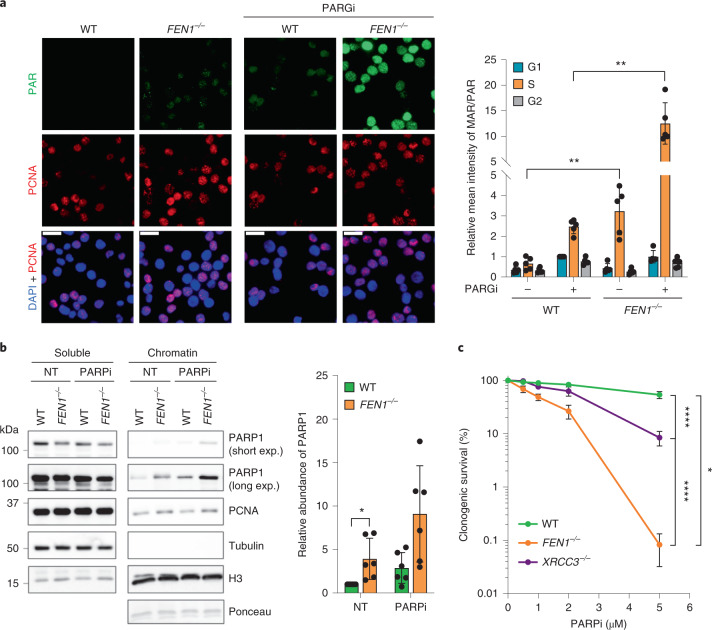
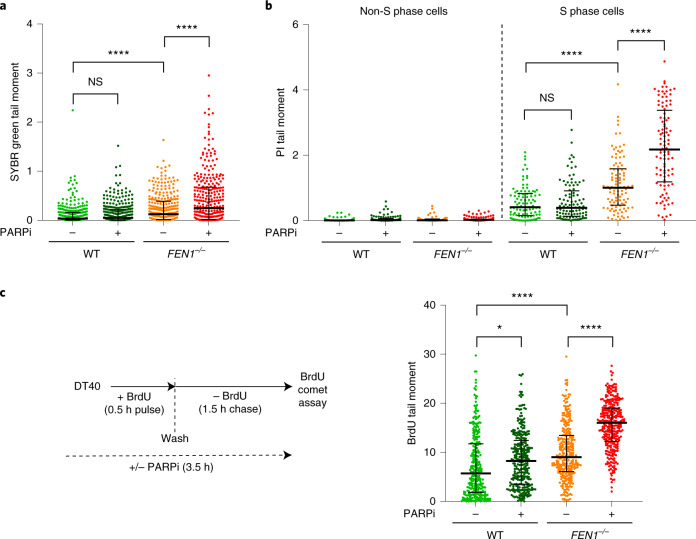
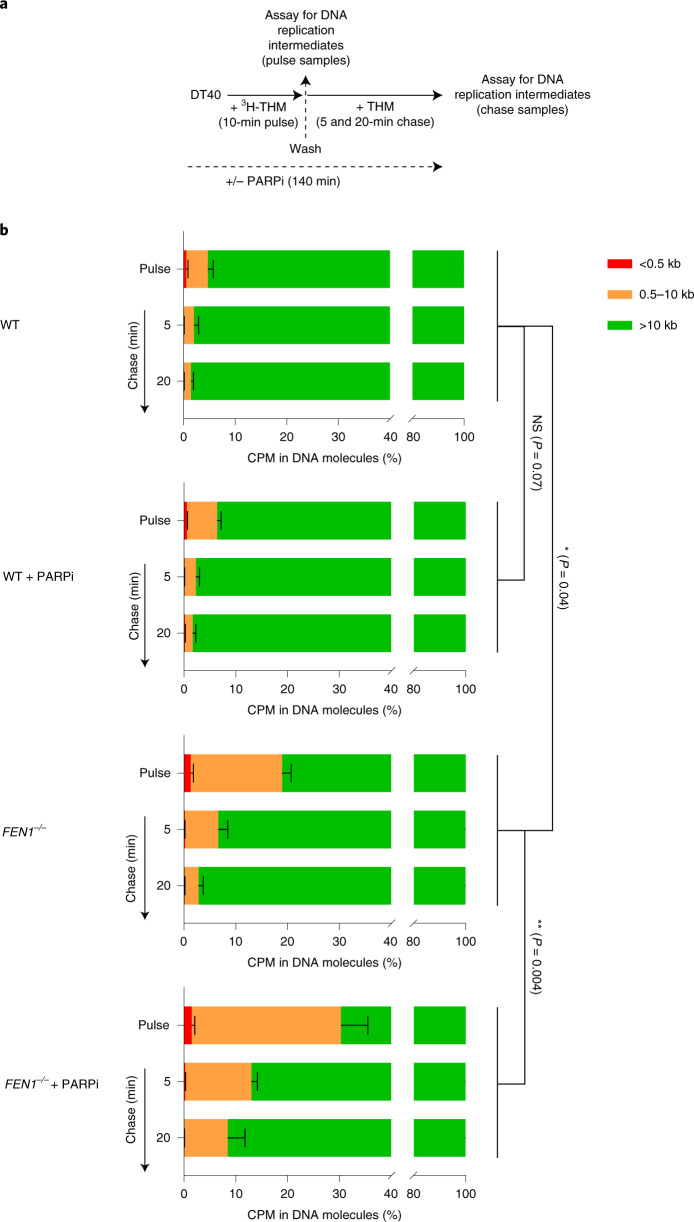
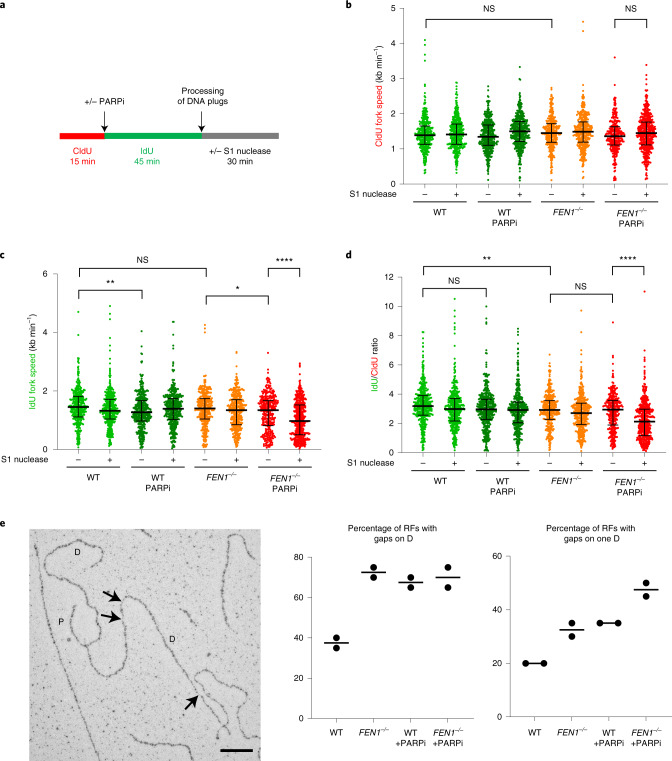
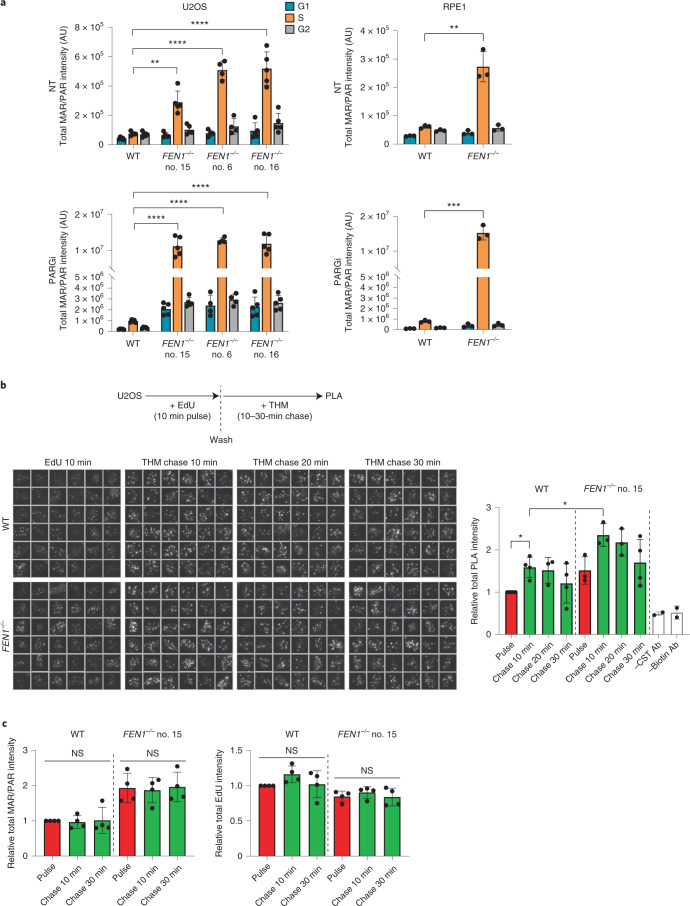
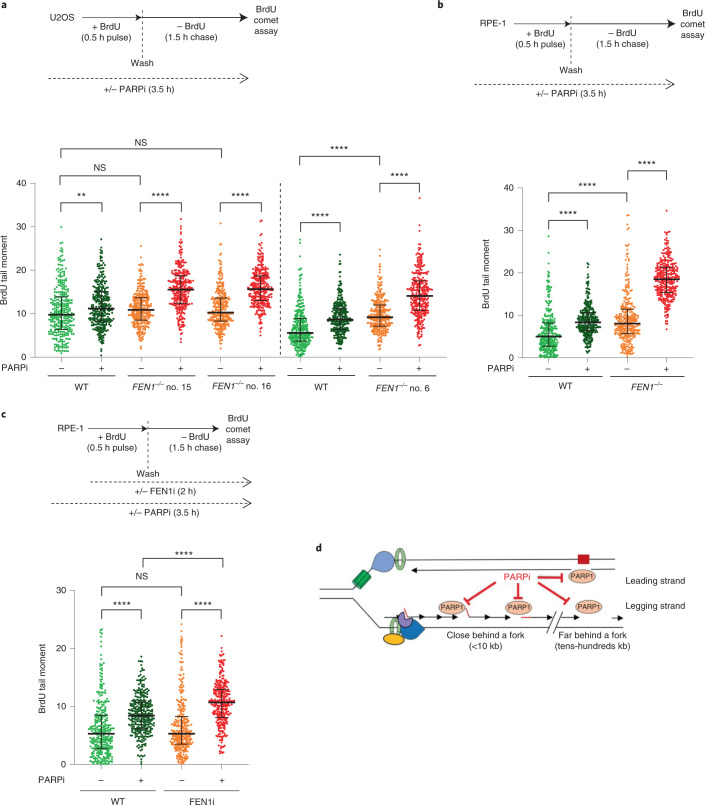
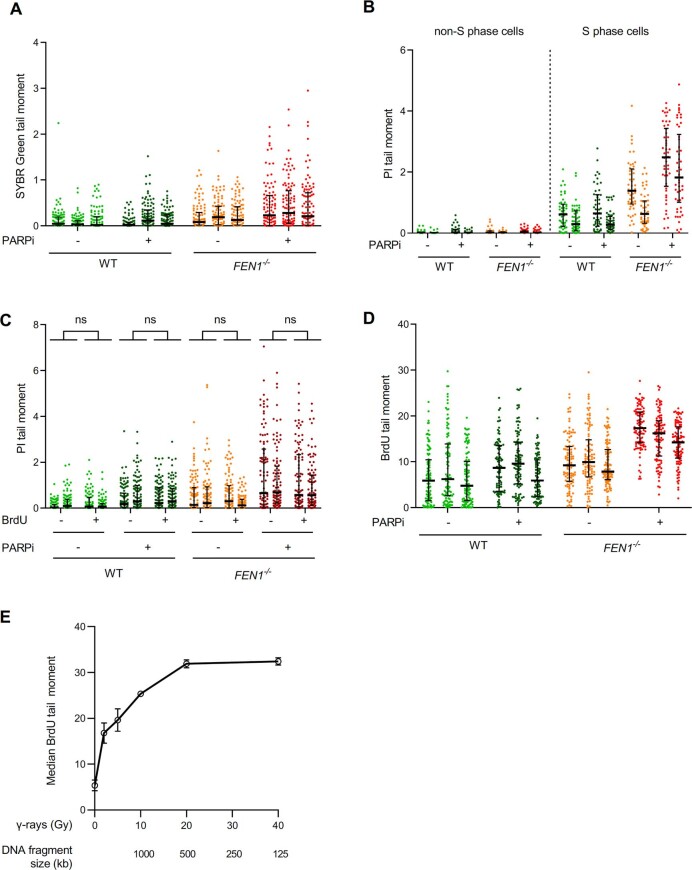
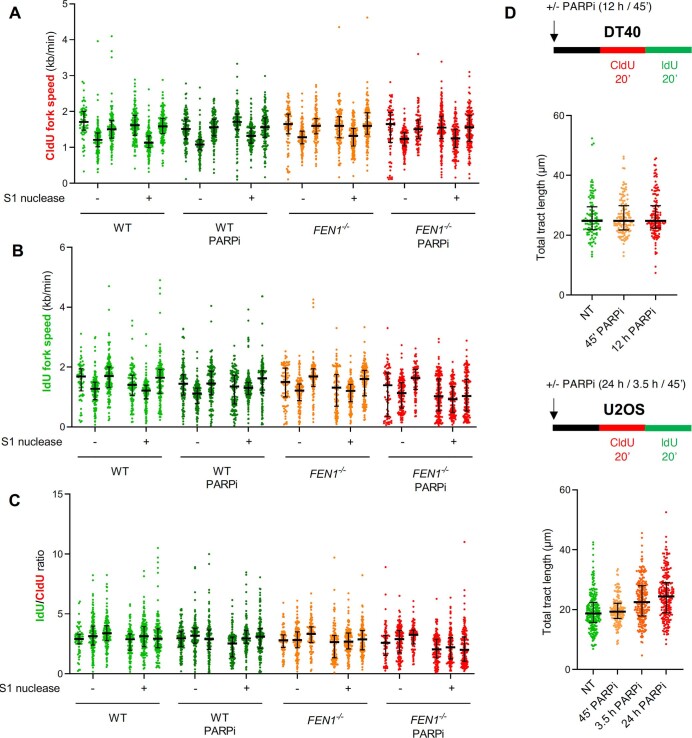
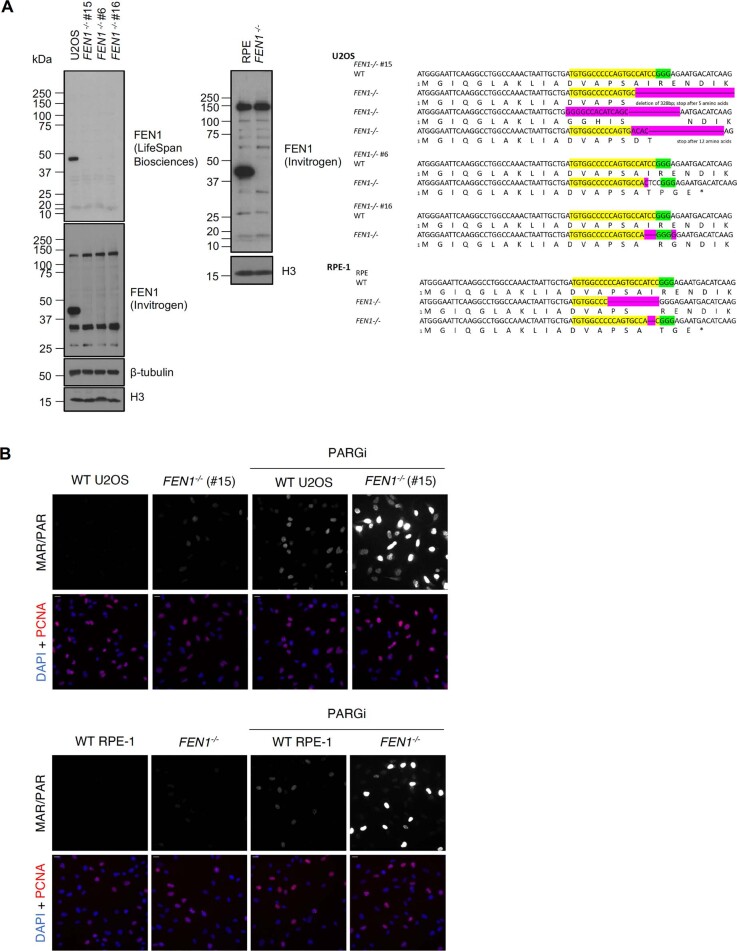
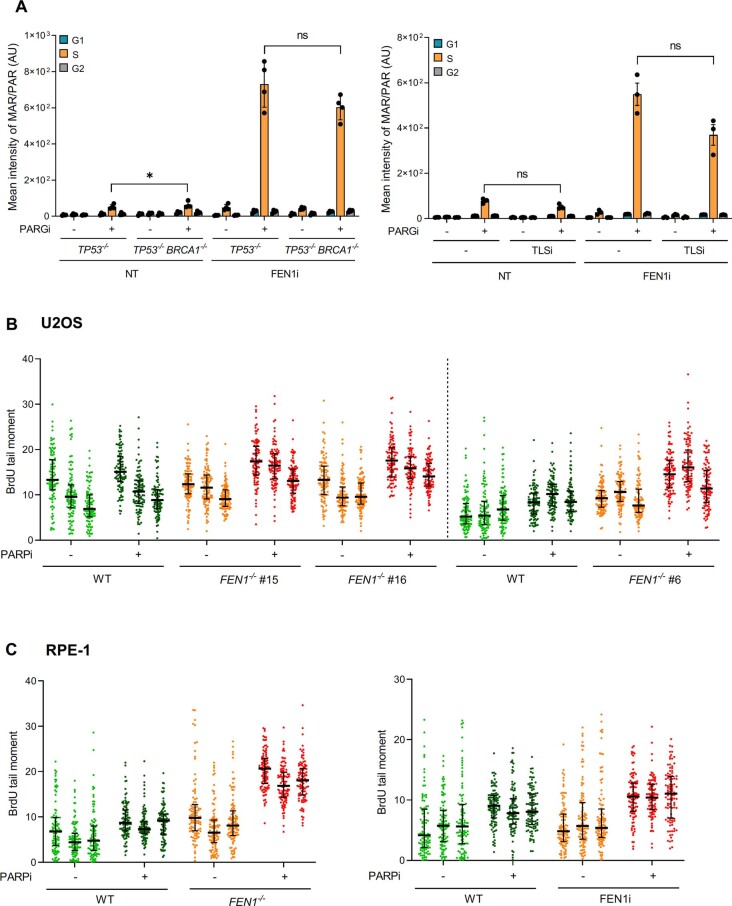
Poly(ADP-ribose) polymerase 1 (PARP1) is implicated in the detection and processing of unligated Okazaki fragments and other DNA replication intermediates, highlighting such structures as potential sources of genome breakage induced by PARP inhibition. Here, we show that PARP1 activity is greatly elevated in chicken and human S phase cells in which FEN1 nuclease is genetically deleted and is highest behind DNA replication forks. PARP inhibitor reduces the integrity of nascent DNA strands in both wild-type chicken and human cells during DNA replication, and does so in FEN1 cells to an even greater extent that can be detected as postreplicative single-strand nicks or gaps. Collectively, these data show that PARP inhibitors impede the maturation of nascent DNA strands during DNA replication, and implicate unligated Okazaki fragments and other nascent strand discontinuities in the cytotoxicity of these compounds.
聚(ADP-核糖)聚合酶 1(PARP1)参与未连接的 Okazaki 片段和其他 DNA 复制中间体的检测和处理,突出了这些结构作为 PARP 抑制诱导基因组断裂的潜在来源。在这里,我们表明,在 FEN1 核酸内切酶基因缺失的鸡和人 S 期细胞中,PARP1 活性大大升高,并且在 DNA 复制叉后面活性最高。PARP 抑制剂在 DNA 复制过程中降低了野生型鸡和人细胞中新生成的 DNA 链的完整性,并且在 FEN1 细胞中降低的程度更大,甚至可以检测到复制后单链的切口或间隙。总的来说,这些数据表明,PARP 抑制剂在 DNA 复制过程中阻碍了新生成的 DNA 链的成熟,并暗示未连接的 Okazaki 片段和其他新生成的链不连续性是这些化合物细胞毒性的原因。