Dipartimento di Scienze e Tecnologie, Università Degli Studi del Sannio, Via De Sanctis, 82100 Benevento, Italy.
Dipartimento di Scienze e Tecnologie Ambientali, Biologiche e Farmaceutiche, Università Degli Studi Della Campania "Luigi Vanvitelli", Via Vivaldi 43, 81130 Caserta, Italy.
Nutrients. 2022 Mar 10;14(6):1166. doi: 10.3390/nu14061166.
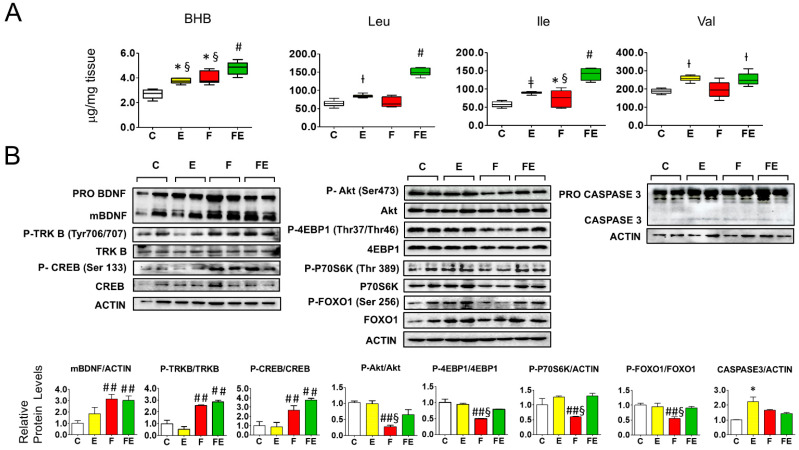
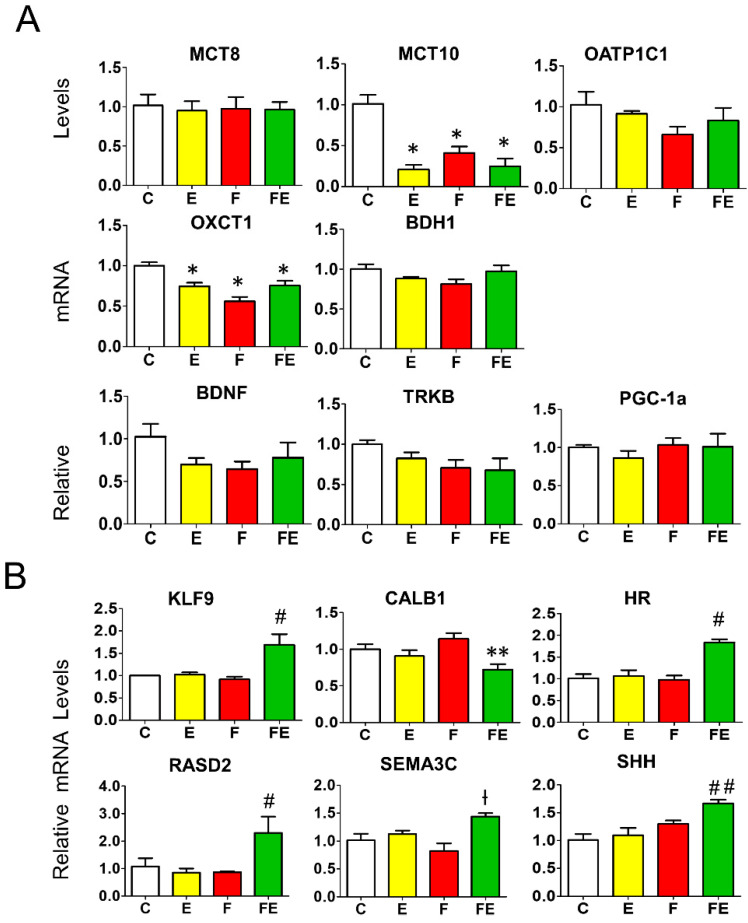
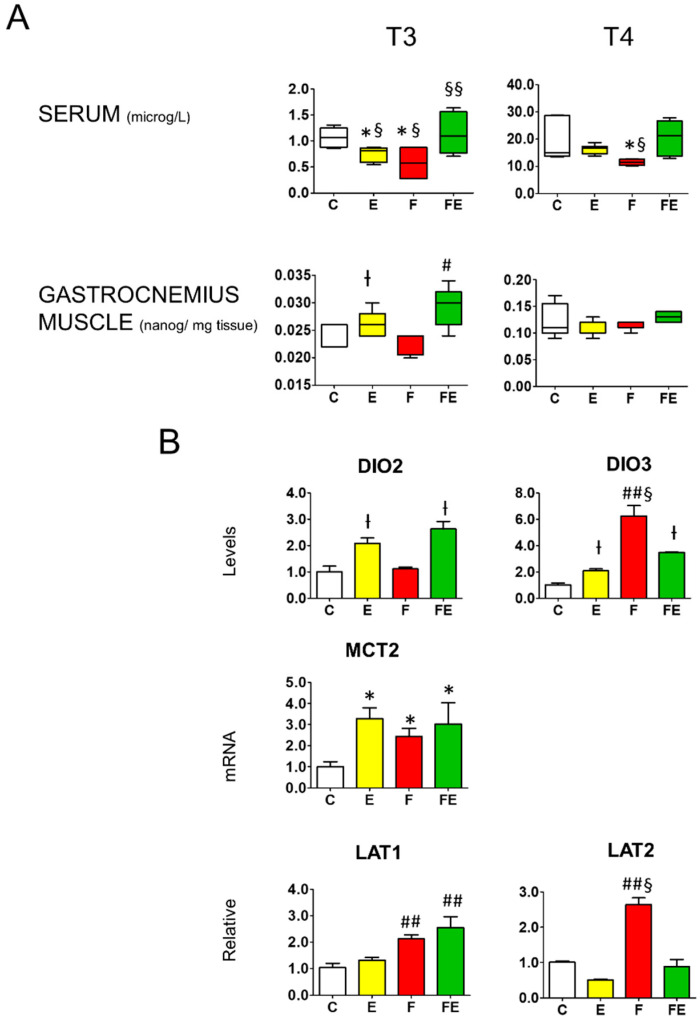
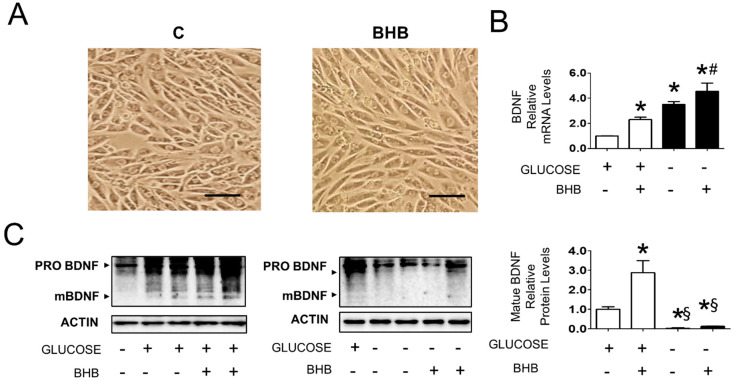
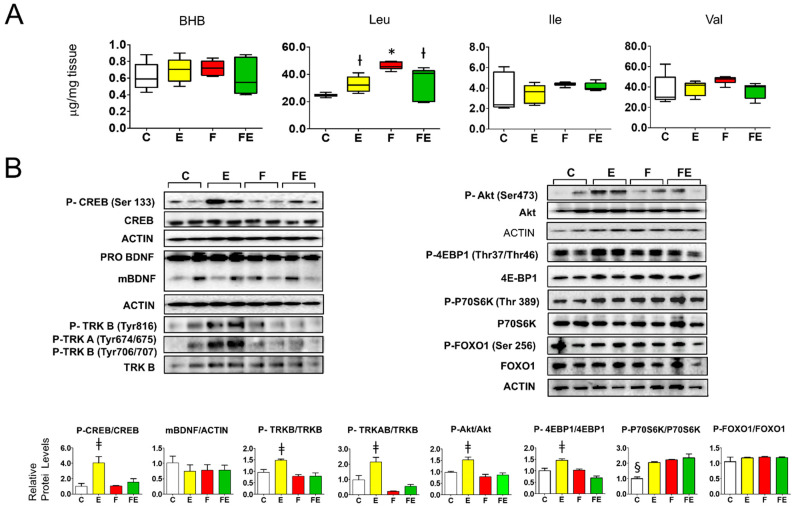
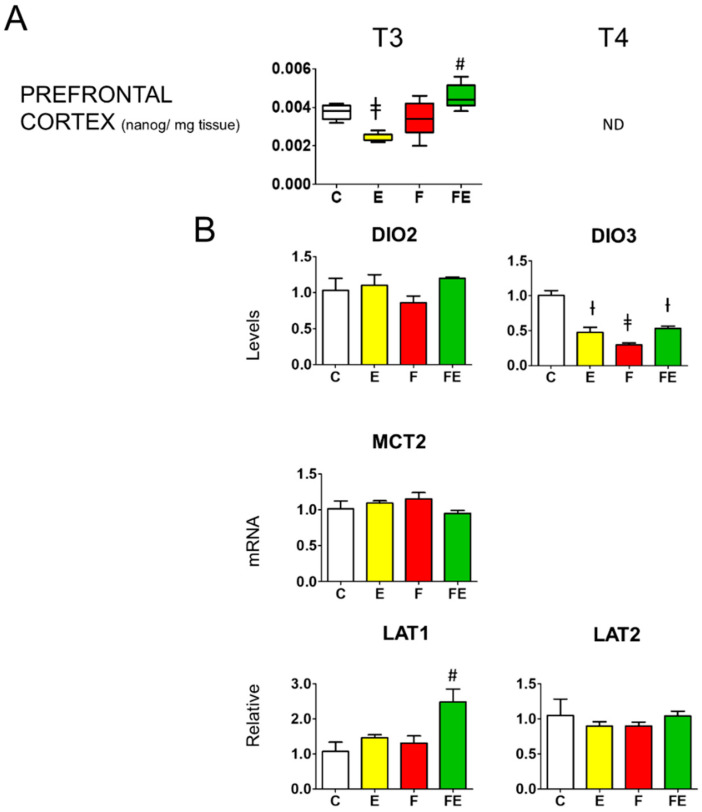
Mild endurance exercise has been shown to compensate for declined muscle quality and may positively affect the brain under conditions of energy restriction. Whether this involves brain-derived neurotrophic factor (BDNF) and mammalian target of rapamycin (mTOR) activation in relation to central and peripheral tissue levels of associated factors such as beta hydroxy butyrate (BHB), branched-chain amino acids (BCAA) and thyroid hormone (T3) has not been studied. Thus, a subset of male Wistar rats housed at thermoneutrality that were fed or fasted was submitted to 30-min-mild treadmill exercise bouts (five in total, twice daily, 15 m/min, 0° inclination) over a period of 66 h. Prefrontal cortex and gastrocnemius muscle BHB, BCAA, and thyroid hormone were measured by LC-MS/MS analysis and were related to BDNF and mammalian target of rapamycin (mTOR) signaling. In gastrocnemius muscle, mild endurance exercise during fasting maintained the fasting-induced elevated BHB levels and BDNF-CREB activity and unlocked the downstream Akt-mTORC1 pathway associated with increased tissue BCAA. Consequently, deiodinase 3 mRNA levels decreased whereas increased phosphorylation of the mTORC2 target FOXO1 was associated with increased deiodinase 2 mRNA levels, accounting for the increased T3 tissue levels. These events were related to increased expression of CREB and T3 target genes beneficial for muscle quality previously observed in this condition. In rat L6 myoblasts, BHB directly induced BDNF transcription and maturation. Mild endurance exercise during fasting did not increase prefrontal cortex BHB levels nor was BDNF activated, whereas increased leucine levels were associated with Akt-independent increased phosphorylation of the mTORC1 target P70S6K. The associated increased T3 levels modulated the expression of known T3-target genes involved in brain tissue maintenance. Our observation that mild endurance exercise modulates BDNF, mTOR and T3 during fasting provides molecular clues to explain the observed beneficial effects of mild endurance exercise in settings of energy restriction.
轻度耐力运动已被证明可以补偿肌肉质量的下降,并在能量限制的情况下对大脑产生积极影响。然而,这种影响是否涉及脑源性神经营养因子(BDNF)和雷帕霉素靶蛋白(mTOR)的激活,以及与相关因素(如β-羟丁酸(BHB)、支链氨基酸(BCAA)和甲状腺激素(T3))的中枢和外周组织水平有关,目前尚未研究。因此,本研究将一部分处于热中性环境的雄性 Wistar 大鼠饲养在喂食或禁食条件下,进行 30 分钟的轻度跑步机运动(共 5 次,每天 2 次,速度为 15 m/min,倾斜度为 0°),持续 66 小时。通过 LC-MS/MS 分析测量前额叶皮层和比目鱼肌中的 BHB、BCAA 和甲状腺激素,并将其与 BDNF 和哺乳动物雷帕霉素靶蛋白(mTOR)信号相关联。在比目鱼肌中,禁食期间的轻度耐力运动维持了禁食诱导的 BHB 水平升高和 BDNF-CREB 活性,并解锁了与组织 BCAA 增加相关的下游 Akt-mTORC1 途径。结果,脱碘酶 3 mRNA 水平降低,而 mTORC2 靶标 FOXO1 的磷酸化增加与脱碘酶 2 mRNA 水平升高相关,导致组织 T3 水平升高。这些事件与之前在这种情况下观察到的肌肉质量有益的 CREB 和 T3 靶基因的表达增加有关。在大鼠 L6 成肌细胞中,BHB 直接诱导 BDNF 转录和成熟。禁食期间的轻度耐力运动并未增加前额叶皮层的 BHB 水平,也未激活 BDNF,而增加的亮氨酸水平与 Akt 非依赖性的 mTORC1 靶标 P70S6K 的磷酸化增加有关。相关的 T3 水平增加调节了已知涉及脑组织维持的 T3 靶基因的表达。我们观察到,在禁食期间,轻度耐力运动调节 BDNF、mTOR 和 T3,这为解释在能量限制情况下轻度耐力运动的有益作用提供了分子线索。