Comprehensive Health Research Centre (CHRC), NOVA Medical School, Universidade Nova de Lisboa (NMS/UNL), 1099-085 Lisboa, Portugal.
EpiDoC Unit, Centro de Estudos de Doenças Crónicas (CEDOC), NOVA Medical School, Universidade Nova de Lisboa (NMS/UNL), 1150-082 Lisboa, Portugal.
Nutrients. 2022 Mar 15;14(6):1239. doi: 10.3390/nu14061239.
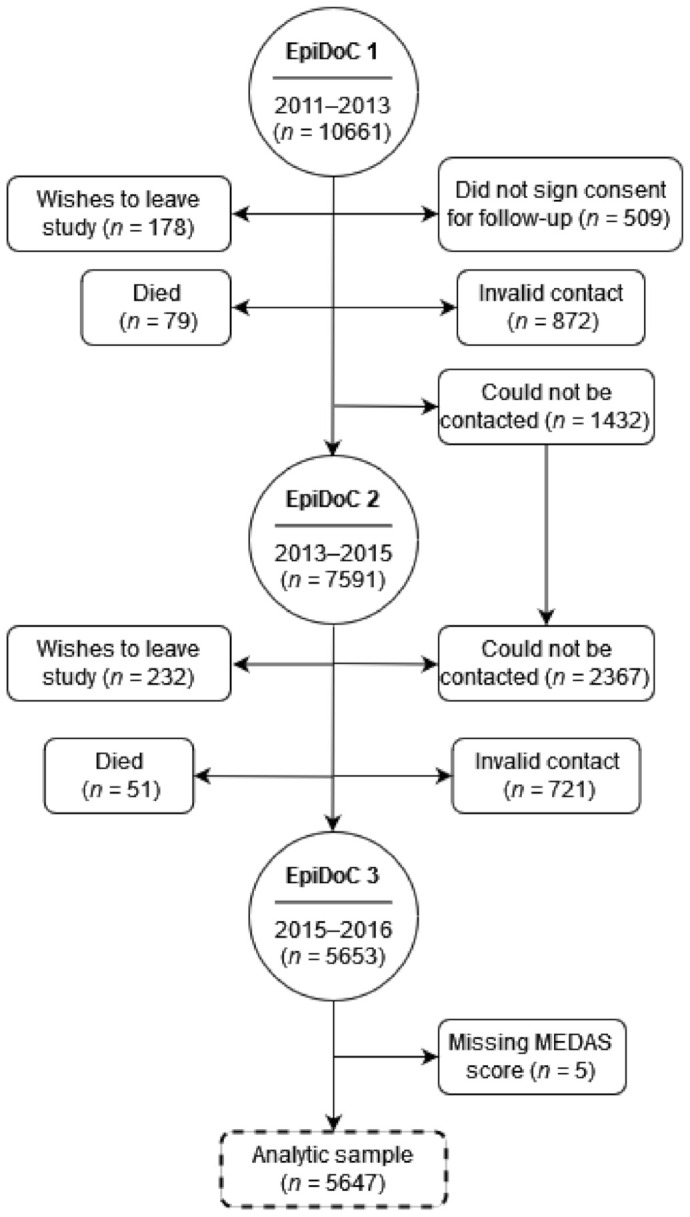
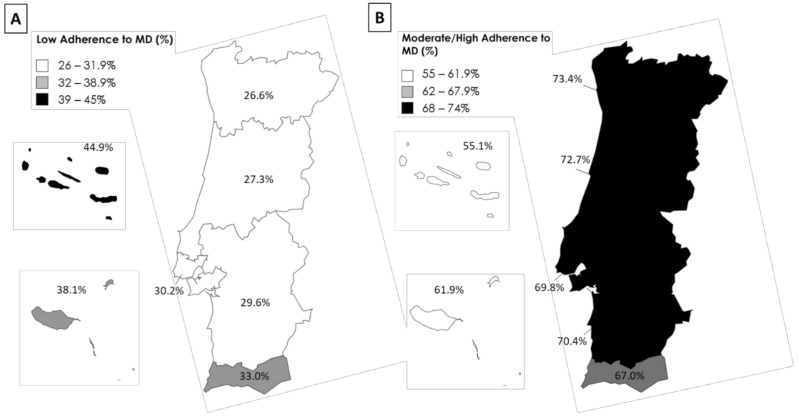
The Mediterranean diet (MD) is recognized as one of the healthiest dietary patterns as it has been consistently associated with several beneficial health outcomes. Adherence to the MD pattern has been decreasing in southern European countries for the last decades, especially among low socioeconomic groups. The aim of this study was to assess the adherence to the MD in Portugal, to evaluate regional differences, and explore associated factors (sociodemographic, economic, and lifestyles behaviors). This study used the third data collection wave of the Epidemiology of Chronic Diseases Cohort Study (EpiDoC 3). MD adherence was assessed using the Portuguese-validated MD adherence score (MEDAS) questionnaire. Non-adjusted and adjusted logistic regression models were used to assess the risk factors for low MD adherence and individual MEDAS items. In this cross-sectional evaluation of the EpiDoC 3 cohort study ( = 5647), 28.8% of the Portuguese population had low adherence to a MD. Azores and Madeira had lower adherence to the MD than the rest of the country. Younger individuals in lower income categories (e.g., OR = 1.48; 95% CI 1.16-1.91) and with a lower educational level (e.g., OR = 2.63; 95% CI 2.09-3.32) had higher odds of having a lower adherence to the MD. Portuguese adults have a high prevalence of low adherence to the MD, especially among those who are younger and have lower socioeconomic status. Public health policies to promote adherence to the MD should pay special attention to these groups.
地中海饮食(MD)被认为是最健康的饮食模式之一,因为它与许多有益的健康结果一直相关。在过去几十年中,南欧国家的 MD 模式的依从率一直在下降,尤其是在社会经济水平较低的群体中。本研究旨在评估葡萄牙 MD 的依从率,评估地区差异,并探讨相关因素(社会人口学、经济和生活方式行为)。本研究使用了慢性疾病流行病学队列研究(EpiDoC 3)的第三次数据收集。使用葡萄牙验证的 MD 依从性评分(MEDAS)问卷评估 MD 依从性。使用非调整和调整的逻辑回归模型评估 MD 低依从性和个体 MEDAS 项目的危险因素。在 EpiDoC 3 队列研究的这项横断面评估中(n=5647),28.8%的葡萄牙人口 MD 依从性较低。亚速尔群岛和马德拉群岛的 MD 依从性低于该国其他地区。收入较低的年轻人(例如,OR=1.48;95%CI 1.16-1.91)和教育水平较低的年轻人(例如,OR=2.63;95%CI 2.09-3.32)具有更低的 MD 依从性。葡萄牙成年人 MD 低依从率较高,尤其是那些年轻且社会经济地位较低的成年人。促进 MD 依从性的公共卫生政策应特别关注这些群体。