Ismail Saba, Abbasi Sumra Wajid, Yousaf Maha, Ahmad Sajjad, Muhammad Khalid, Waheed Yasir
Foundation University Medical College, Foundation University Islamabad, Islamabad 44000, Pakistan.
NUMS Department of Biological Sciences, National University of Medical Sciences, Abid Majeed Rd, The Mall, Rawalpindi 46000, Pakistan.
Vaccines (Basel). 2022 Feb 28;10(3):378. doi: 10.3390/vaccines10030378.
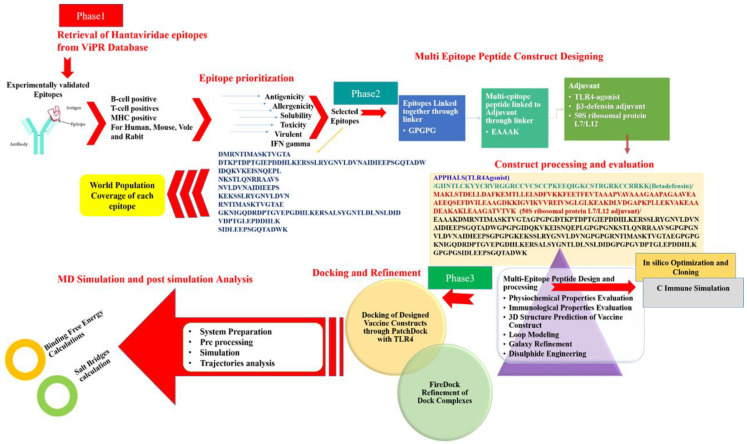
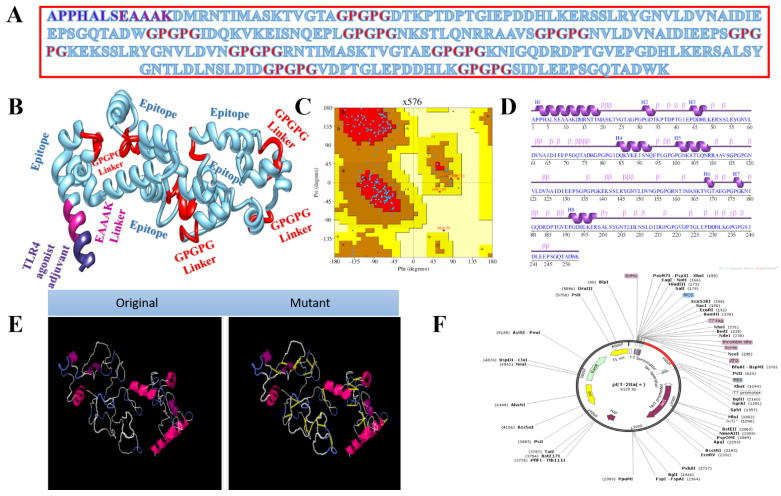
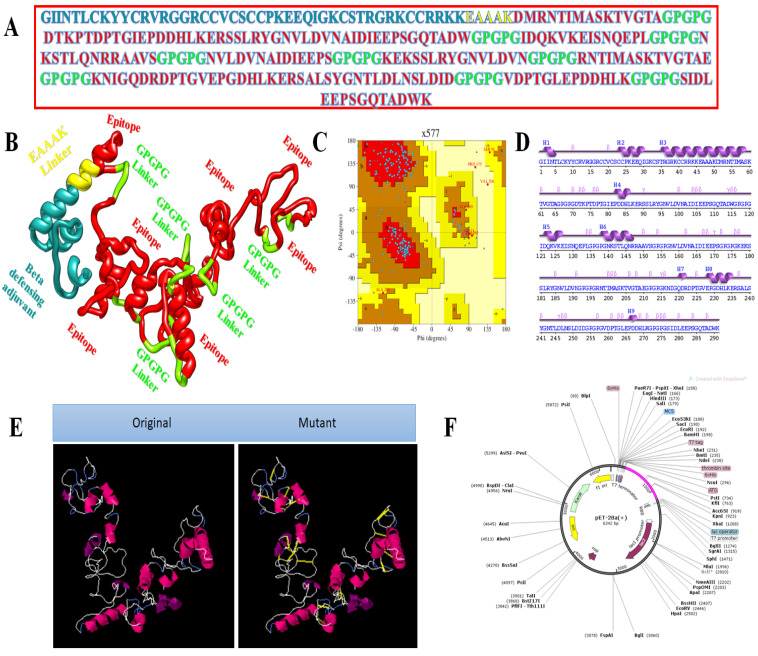
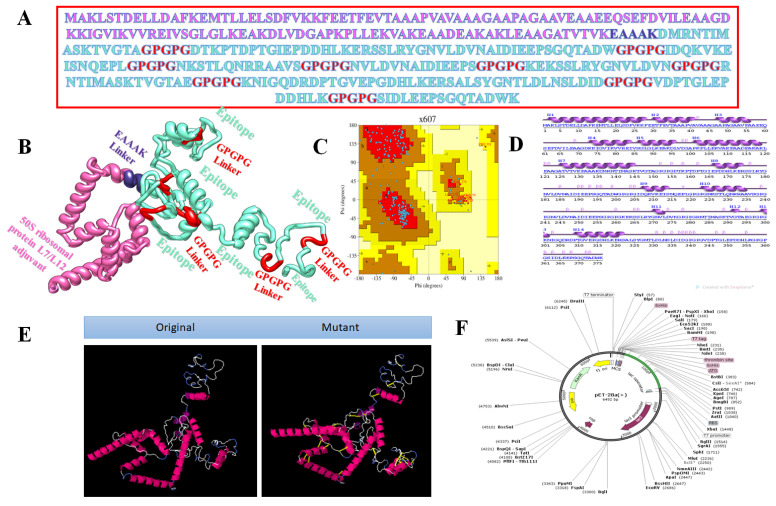
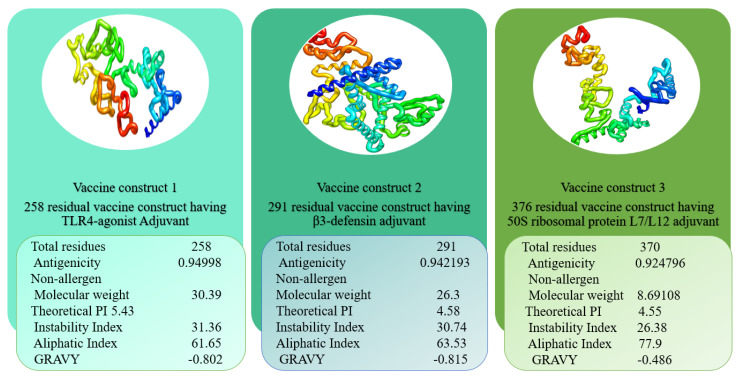
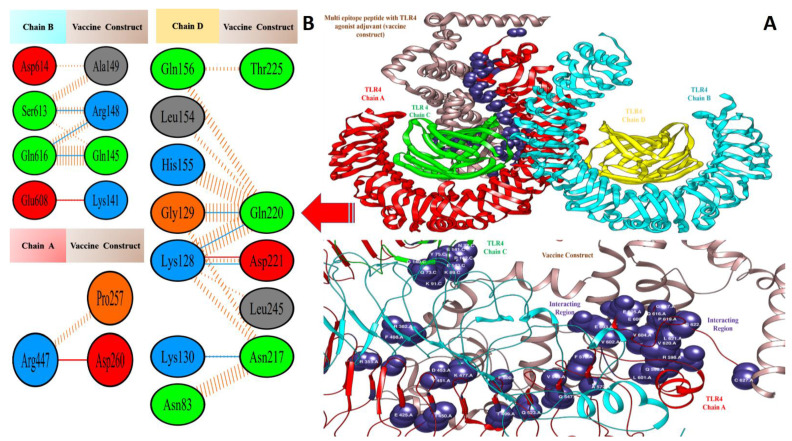
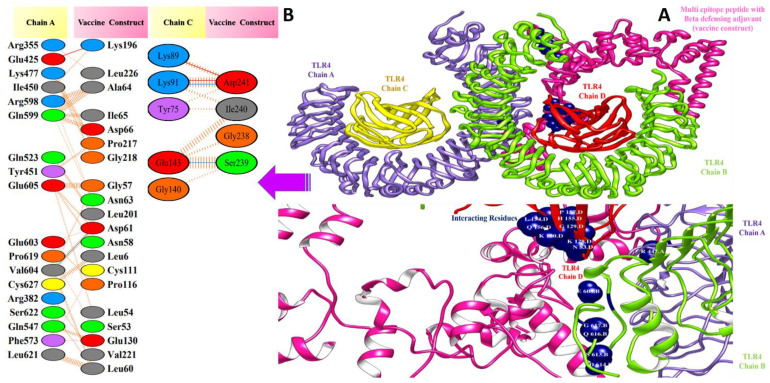
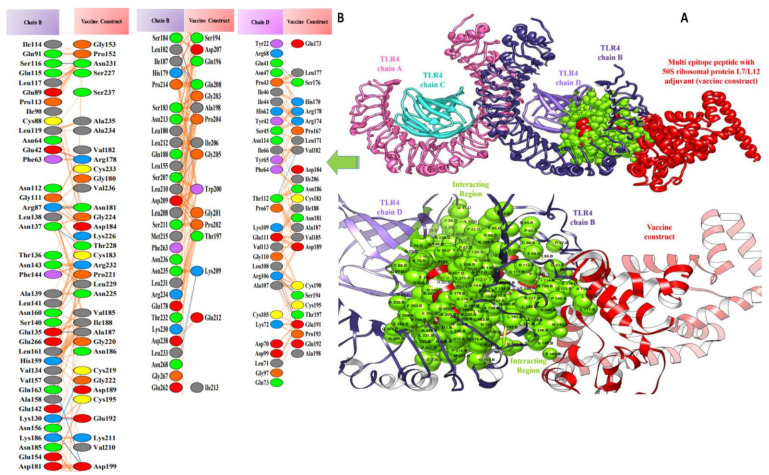
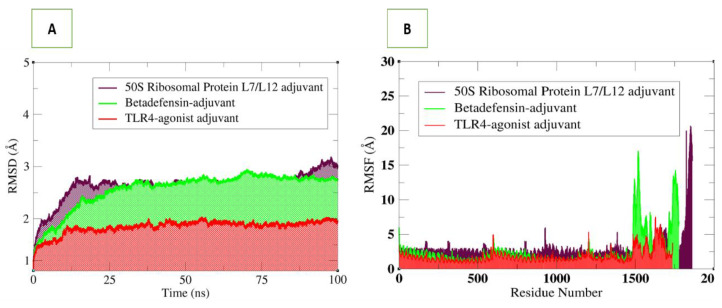
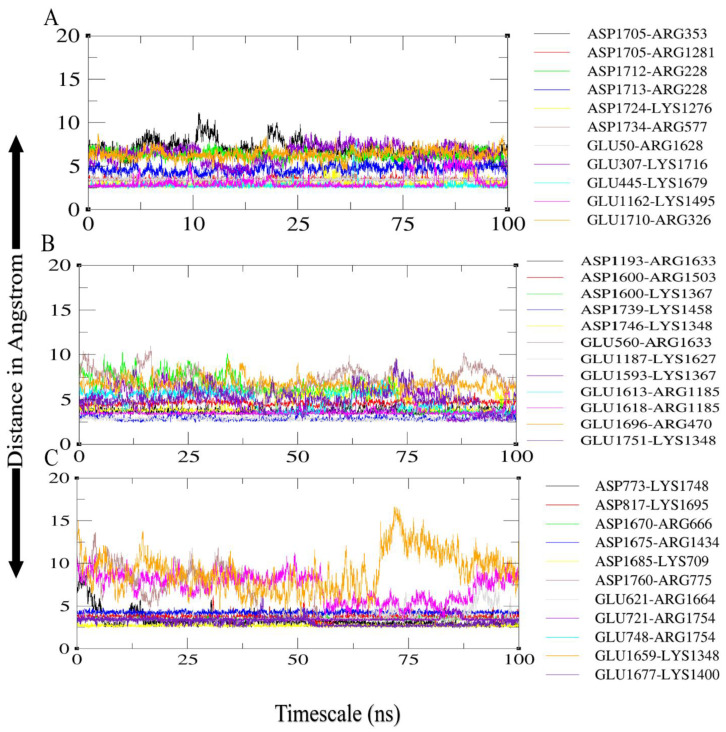
Hantaviruses are negative-sense, enveloped, single-stranded RNA viruses of the family Hantaviridae. In recent years, rodent-borne hantaviruses have emerged as novel zoonotic viruses posing a substantial health issue and socioeconomic burden. In the current research, a reverse vaccinology approach was applied to design a multi-epitope-based vaccine against hantavirus. A set of 340 experimentally reported epitopes were retrieved from Virus Pathogen Database and Analysis Resource (ViPR) and subjected to different analyses such as antigenicity, allergenicity, solubility, IFN gamma, toxicity, and virulent checks. Finally, 10 epitopes which cleared all the filters used were linked with each other through specific GPGPG linkers to construct a multi-antigenic epitope vaccine. The designed vaccine was then joined to three different adjuvants-TLR4-agonist adjuvant, β-defensin, and 50S ribosomal protein L7/L12-using an EAAAK linker to boost up immune-stimulating responses and check the potency of vaccine with each adjuvant. The designed vaccine structures were modelled and subjected to error refinement and disulphide engineering to enhance their stability. To understand the vaccine binding affinity with immune cell receptors, molecular docking was performed between the designed vaccines and TLR4; the docked complex with a low level of global energy was then subjected to molecular dynamics simulations to validate the docking results and dynamic behaviour. The docking binding energy of vaccines with TLR4 is -29.63 kcal/mol (TLR4-agonist), -3.41 kcal/mol (β-defensin), and -11.03 kcal/mol (50S ribosomal protein L7/L12). The systems dynamics revealed all three systems to be highly stable with a root-mean-square deviation (RMSD) value within 3 Å. To test docking predictions and determine dominant interaction energies, binding free energies of vaccine(s)-TLR4 complexes were calculated. The net binding energy of the systems was as follows: TLR4-agonist vaccine with TLR4 (MM-GBSA, -1628.47 kcal/mol and MM-PBSA, -37.75 kcal/mol); 50S ribosomal protein L7/L12 vaccine with TLR4 complex (MM-GBSA, -194.62 kcal/mol and MM-PBSA, -150.67 kcal/mol); β-defensin vaccine with TLR4 complex (MM-GBSA, -9.80 kcal/mol and MM-PBSA, -42.34 kcal/mol). Finally, these findings may aid experimental vaccinologists in developing a very potent hantavirus vaccine.
汉坦病毒是汉坦病毒科的负链、包膜、单链RNA病毒。近年来,啮齿动物传播的汉坦病毒已成为新型人畜共患病毒,带来了重大的健康问题和社会经济负担。在当前的研究中,采用反向疫苗学方法设计了一种针对汉坦病毒的多表位疫苗。从病毒病原体数据库和分析资源库(ViPR)中检索到一组340个实验报告的表位,并对其进行了不同的分析,如抗原性、致敏性、溶解性、干扰素γ、毒性和毒力检查。最后,通过特定的GPGPG接头将通过所有筛选的10个表位相互连接,构建了一种多抗原表位疫苗。然后,使用EAAAK接头将设计的疫苗与三种不同的佐剂——Toll样受体4(TLR4)激动剂佐剂、β-防御素和50S核糖体蛋白L7/L12连接,以增强免疫刺激反应,并检查每种佐剂的疫苗效力。对设计的疫苗结构进行建模,并进行误差细化和二硫键工程,以提高其稳定性。为了解疫苗与免疫细胞受体的结合亲和力,在设计的疫苗和TLR4之间进行了分子对接;然后对具有低全局能量水平的对接复合物进行分子动力学模拟,以验证对接结果和动态行为。疫苗与TLR4的对接结合能分别为-29.63千卡/摩尔(TLR4激动剂)、-3.41千卡/摩尔(β-防御素)和-11.03千卡/摩尔(50S核糖体蛋白L7/L12)。系统动力学显示,所有三个系统都高度稳定,均方根偏差(RMSD)值在3埃以内。为了测试对接预测并确定主要相互作用能,计算了疫苗-TLR4复合物的结合自由能。各系统的净结合能如下:TLR4激动剂疫苗与TLR4(MM-GBSA,-1628.47千卡/摩尔;MM-PBSA,-37.75千卡/摩尔);50S核糖体蛋白L7/L12疫苗与TLR4复合物(MM-GBSA,-194.62千卡/摩尔;MM-PBSA,-150.67千卡/摩尔);β-防御素疫苗与TLR4复合物(MM-GBSA,-9.80千卡/摩尔;MM-PBSA,-42.34千卡/摩尔)。最后,这些发现可能有助于实验疫苗学家开发一种非常有效的汉坦病毒疫苗。