Massonnaud Clément R, Roux Jonathan, Colizza Vittoria, Crépey Pascal
RSMS-U 1309, ARENES-UMR 6051, EHESP, CNRS, Inserm, Université de Rennes, 35043 Rennes, France.
Biostatistics Unit, University Hospital Charles Nicolle, 76000 Rouen, France.
Vaccines (Basel). 2022 Mar 19;10(3):479. doi: 10.3390/vaccines10030479.
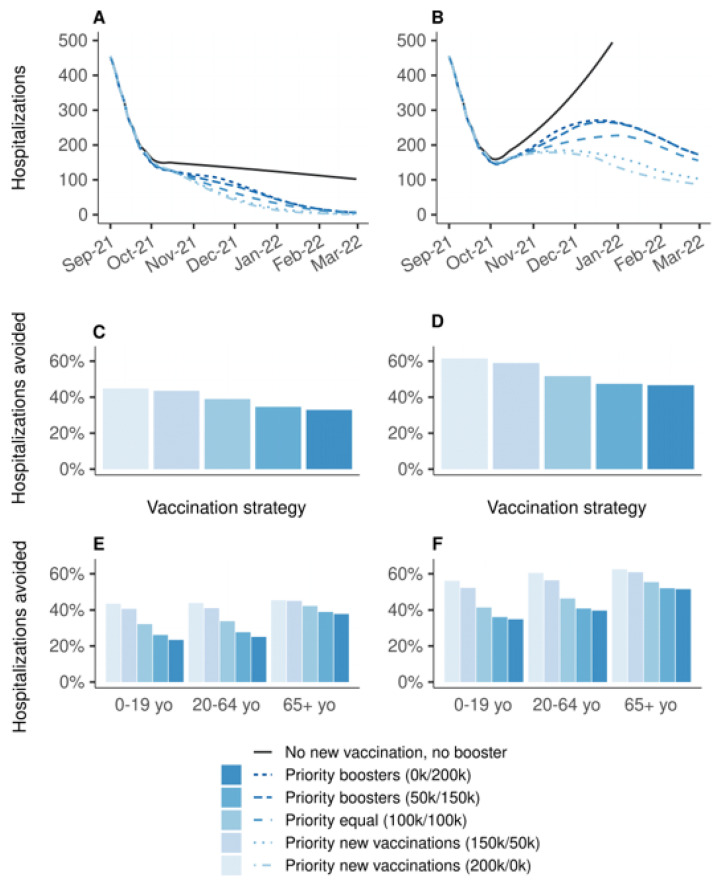
Several countries are implementing COVID-19 booster vaccination campaigns. The objective of this study was to model the impact of different primary and booster vaccination strategies.
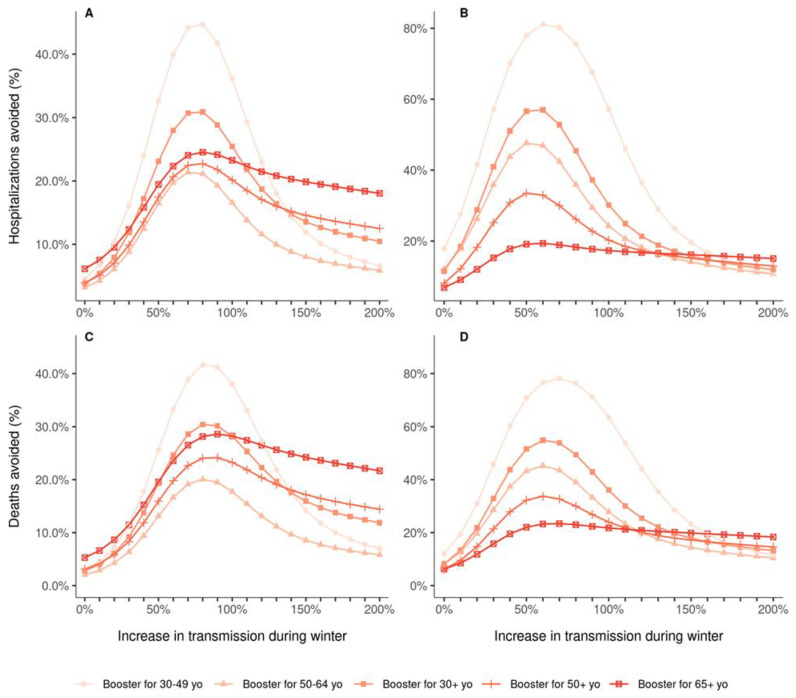
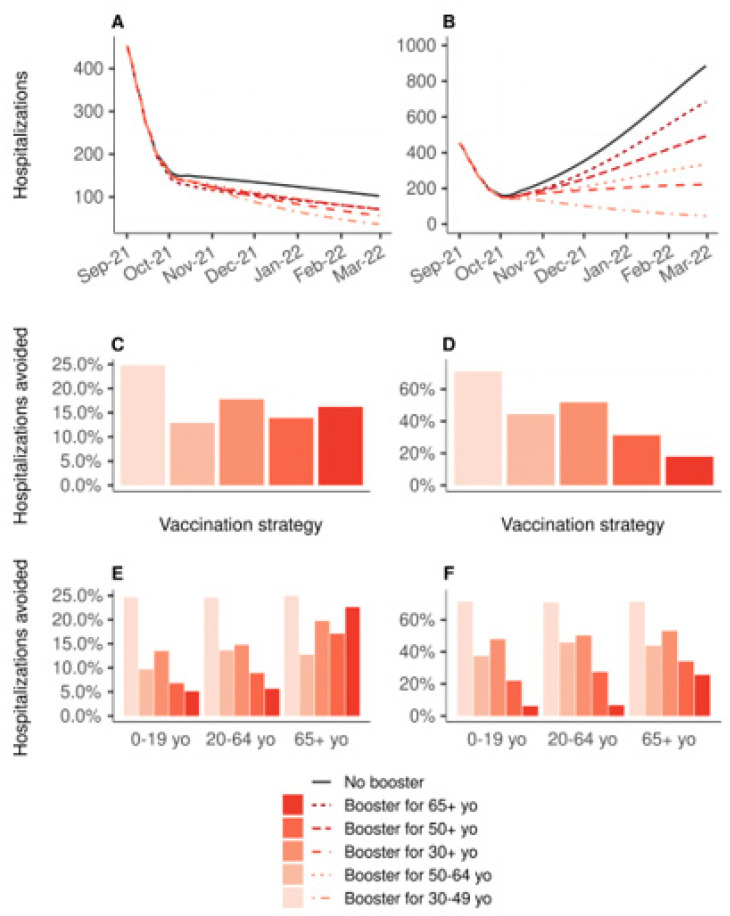
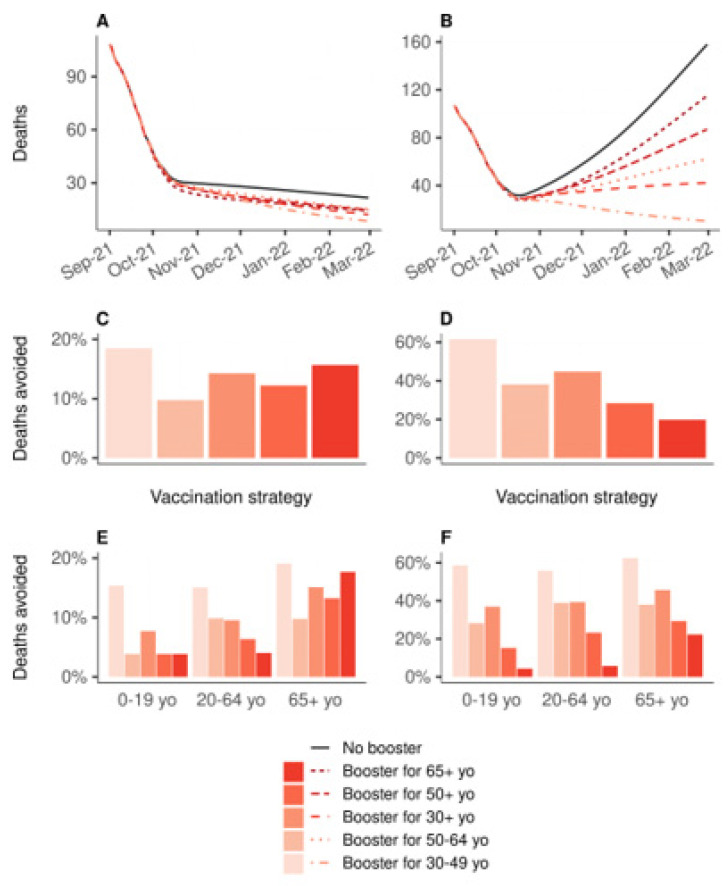
We used a compartmental model fitted to hospital admission data in France to analyze the impact of primary and booster vaccination strategies on morbidity and mortality, assuming waning of immunity and various levels of virus transmissibility during winter.
Strategies prioritizing primary vaccinations were systematically more effective than strategies prioritizing boosters. Regarding booster strategies targeting different age groups, their effectiveness varied with immunity and virus transmissibility levels. If the waning of immunity affects all adults, people aged 30 to 49 years should be boosted in priority, even for low transmissibility levels.
Increasing the primary vaccination coverage should remain a priority. If a plateau has been reached, boosting the immunity of younger adults could be the most effective strategy, especially if SARS-CoV-2 transmissibility is high.
多个国家正在开展新冠病毒加强针疫苗接种活动。本研究的目的是模拟不同的初次和加强针疫苗接种策略的影响。
我们使用一个适用于法国医院入院数据的 compartments 模型,来分析初次和加强针疫苗接种策略对发病率和死亡率的影响,假设在冬季免疫力会下降以及病毒具有不同程度的传播性。
优先进行初次疫苗接种的策略系统性地比优先进行加强针接种的策略更有效。关于针对不同年龄组的加强针策略,其有效性会随免疫力和病毒传播水平而变化。如果免疫力下降影响所有成年人,即使在低传播水平下,30至49岁的人群也应优先接种加强针。
提高初次疫苗接种覆盖率应仍然是优先事项。如果已经达到平稳状态,增强年轻成年人的免疫力可能是最有效的策略,特别是在新冠病毒传播性较高的情况下。