Muehler Denise, Mao Xiaojun, Czemmel Stefan, Geißert Janina, Engesser Christina, Hiller Karl-Anton, Widbiller Matthias, Maisch Tim, Buchalla Wolfgang, Al-Ahmad Ali, Cieplik Fabian
Department of Conservative Dentistry and Periodontology, University Hospital Regensburg, 93053 Regensburg, Germany.
Quantitative Biology Center, University of Tübingen, 72074 Tübingen, Germany.
Microorganisms. 2022 Mar 4;10(3):561. doi: 10.3390/microorganisms10030561.
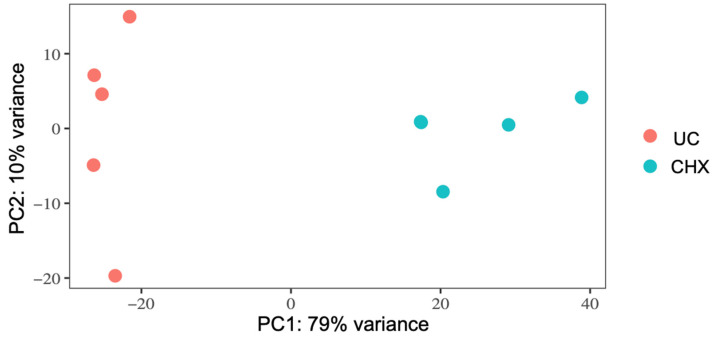
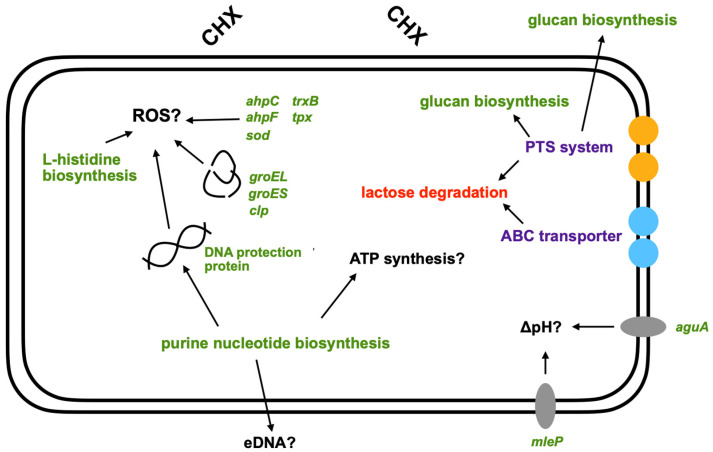
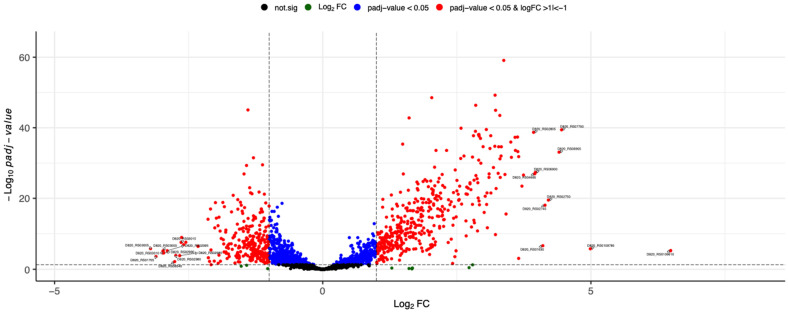
Despite the widespread use of antiseptics such as chlorhexidine digluconate (CHX) in dental practice and oral care, the risks of potential resistance toward these antimicrobial compounds in oral bacteria have only been highlighted very recently. Since the molecular mechanisms behind antiseptic resistance or adaptation are not entirely clear and the bacterial stress response has not been investigated systematically so far, the aim of the present study was to investigate the transcriptomic stress response in after treatment with CHX using RNA sequencing (RNA-seq). Planktonic cultures of stationary-phase were treated with a sublethal dose of CHX (125 µg/mL) for 5 min. After treatment, RNA was extracted, and RNA-seq was performed on an Illumina NextSeq 500. Differentially expressed genes were analyzed and validated by qRT-PCR. Analysis of differential gene expression following pathway analysis revealed a considerable number of genes and pathways significantly up- or downregulated in after sublethal treatment with CHX. In summary, the expression of 404 genes was upregulated, and that of 271 genes was downregulated after sublethal CHX treatment. Analysis of differentially expressed genes and significantly regulated pathways showed regulation of genes involved in purine nucleotide synthesis, biofilm formation, transport systems and stress responses. In conclusion, the results show a transcriptomic stress response in upon exposure to CHX and offer insight into potential mechanisms that may result in development of resistances.
尽管葡萄糖酸氯己定(CHX)等防腐剂在牙科实践和口腔护理中被广泛使用,但口腔细菌对这些抗菌化合物产生潜在耐药性的风险直到最近才受到关注。由于防腐剂耐药性或适应性背后的分子机制尚不完全清楚,且细菌应激反应迄今尚未得到系统研究,本研究的目的是使用RNA测序(RNA-seq)研究CHX处理后[具体细菌名称未给出]的转录组应激反应。用亚致死剂量的CHX(125 µg/mL)处理稳定期[具体细菌名称未给出]的浮游培养物5分钟。处理后,提取RNA,并在Illumina NextSeq 500上进行RNA-seq。通过qRT-PCR分析和验证差异表达基因。通路分析后对差异基因表达的分析显示,在亚致死剂量CHX处理后的[具体细菌名称未给出]中有相当数量的基因和通路显著上调或下调。总之,亚致死剂量CHX处理后,404个基因的表达上调,271个基因的表达下调。对差异表达基因和显著调控通路的分析表明,参与嘌呤核苷酸合成、生物膜形成、转运系统和应激反应的基因受到调控。总之,结果显示[具体细菌名称未给出]在接触CHX后出现转录组应激反应,并深入了解了可能导致耐药性产生的潜在机制。