Yi Yake, Peng Yaqiong, Song Tao, Lu Siqiong, Teng Zhenning, Zheng Qin, Zhao Fankai, Meng Shuan, Liu Bohang, Peng Yan, Chen Guanghui, Zhang Jianhua, Ye Nenghui
College of Agriculture, Hunan Agricultural University, Changsha 410128, China.
Co-Innovation Center for Sustainable Forestry in Southern China, College of Biology and the Environment, Nanjing Forestry University, Nanjing 210037, China.
Plants (Basel). 2022 Mar 17;11(6):795. doi: 10.3390/plants11060795.
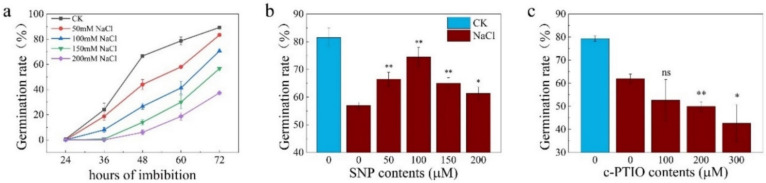
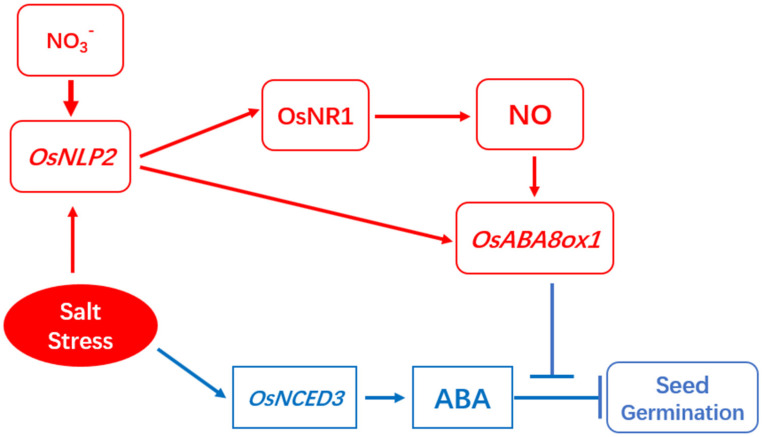
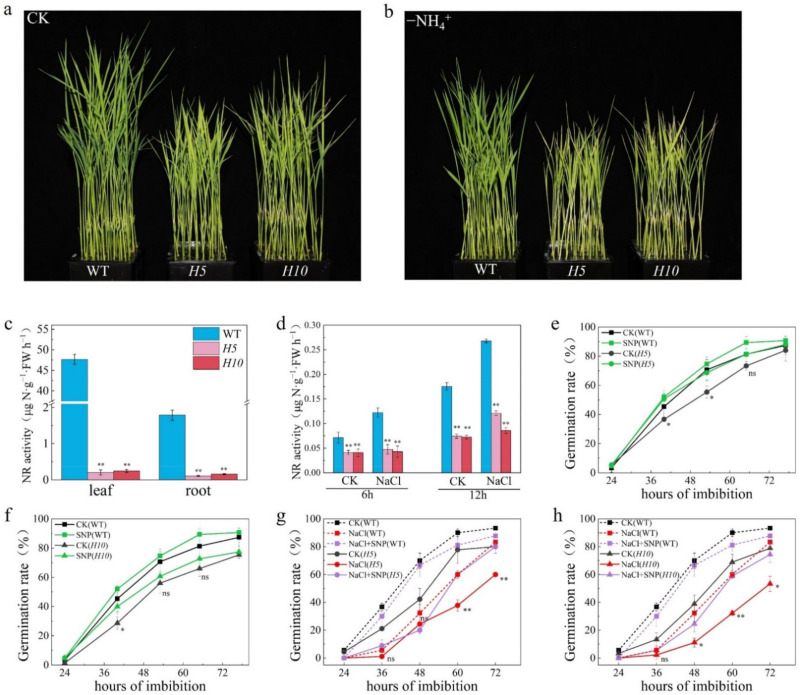
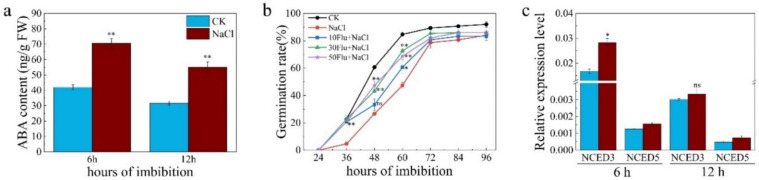
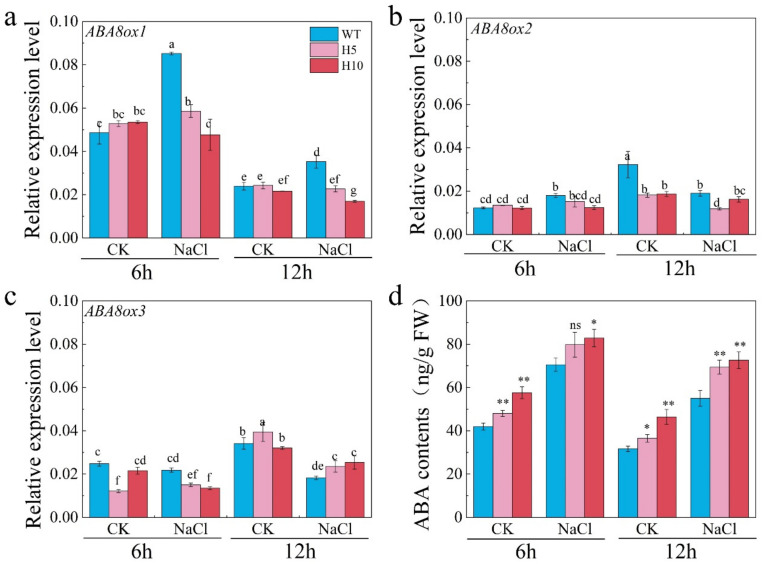
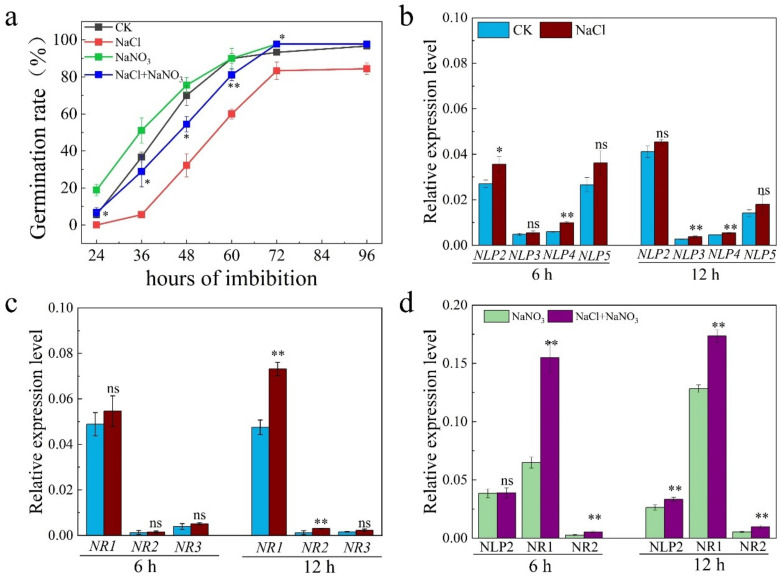
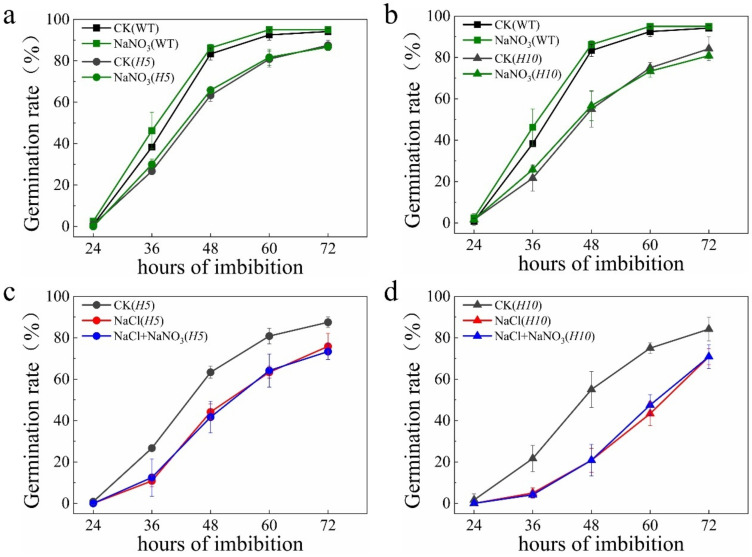
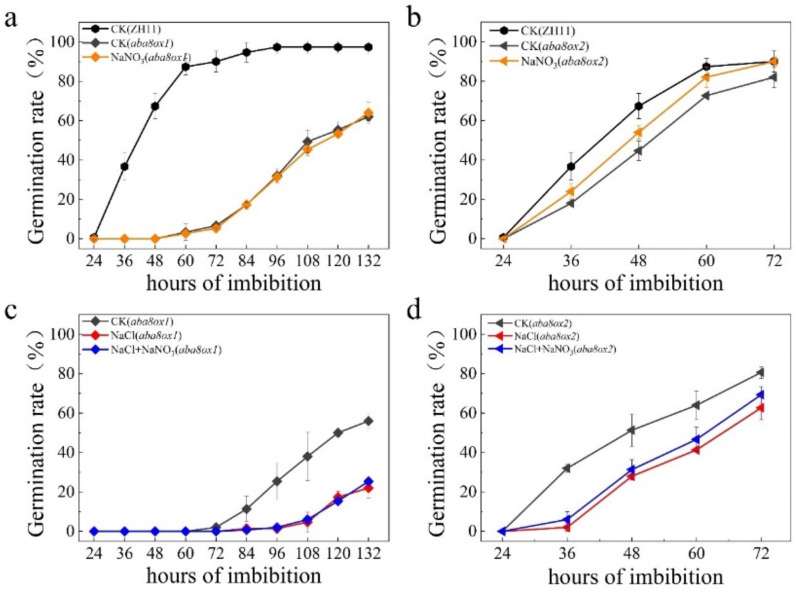
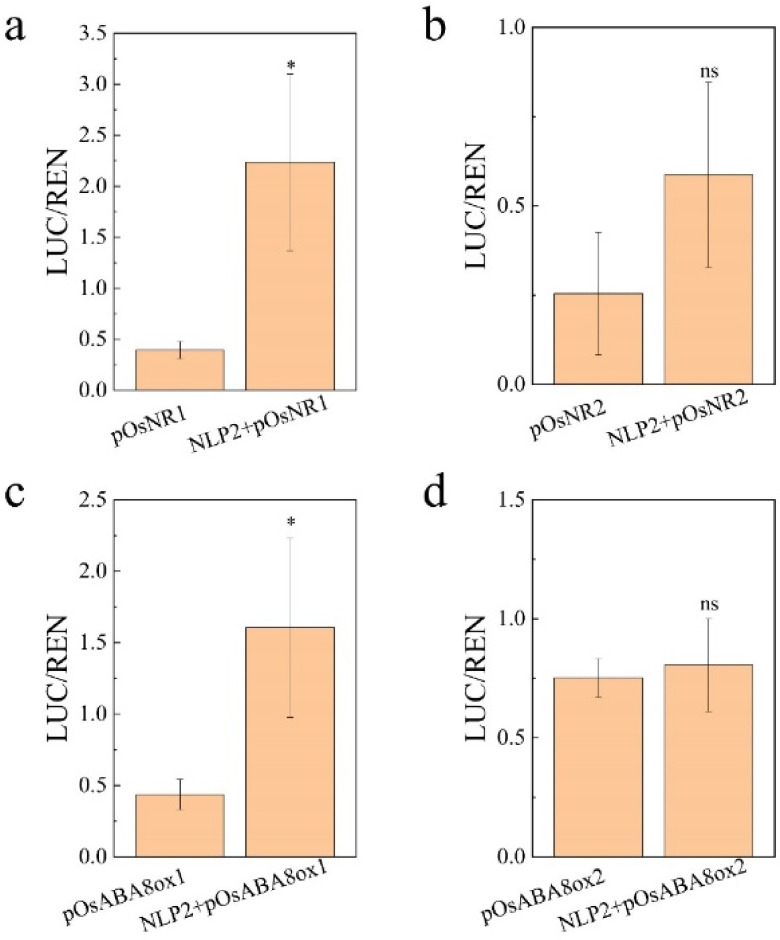
Salt stress has the most severe impact on plant growth and development, including seed germination. However, little is known about the mechanism of NR (nitrate reductase)-associated nitric oxide (NO) regulates salt tolerance during seed germination in rice. Herein, we shown that inhibition of seed germination by salt stress was significantly impaired by sodium nitroferricyanide (SNP), a NO donor. Then a triple mutant, , was generated. Results shown that germination of triple mutants were delayed and were much more sensitive to salt stress than WT plant, which can be rescued by application of SNP. qPCR analysis revealed that expressions of abscisic acid (ABA) catabolism gene, , was suppressed in triple mutants under salt stress, resulting in an elevated ABA content. Similar to SNP, application of nitrate also rescued seed germination under salt stress, which, however, was blocked in the triple mutants. Further study revealed that a nitrate responsive transcript factor, , was induced by salt stress, which thus up-regulates the expression of and NR activity, resulting in promoted salt tolerance during seed germination. In addition, nitrate-mediated salt tolerance was impaired in mutant of , a target gene for NLP2. Transient trans-activation assays further revealed NLP2 can significantly activate the expression of and , suggesting that NLP2 activates expression of ABA catabolism gene directly or indirectly via NR-associated NO. Taken together, our results demonstrate that NLP2-NR associated NO was involved in salt response by increasing ABA catabolism during seed germination and highlight the importance of NO for stress tolerance of plants.
盐胁迫对植物生长发育包括种子萌发具有最严重的影响。然而,关于水稻种子萌发过程中与硝酸还原酶(NR)相关的一氧化氮(NO)调节耐盐性的机制知之甚少。在此,我们表明盐胁迫对种子萌发的抑制作用被NO供体硝普钠(SNP)显著削弱。然后构建了一个三突变体。结果表明,三突变体的萌发延迟,并且比野生型植株对盐胁迫更敏感,而施加SNP可以挽救这种情况。qPCR分析显示,盐胁迫下三突变体中脱落酸(ABA)分解代谢基因的表达受到抑制,导致ABA含量升高。与SNP类似,施加硝酸盐也能挽救盐胁迫下的种子萌发,但在三突变体中这种作用受阻。进一步研究表明,盐胁迫诱导了一种硝酸盐响应转录因子,从而上调了该基因的表达和NR活性,进而促进种子萌发期间的耐盐性。此外,在NLP2的靶基因的突变体中,硝酸盐介导的耐盐性受到损害。瞬时反式激活分析进一步表明,NLP2可以显著激活该基因和的表达,这表明NLP2通过与NR相关的NO直接或间接激活ABA分解代谢基因的表达。综上所述,我们的结果表明,NLP2 - NR相关的NO通过在种子萌发期间增加ABA分解代谢参与盐响应,并突出了NO对植物胁迫耐受性的重要性。