Division of Hematology, Medical Oncology, and Palliative Care, Department of Medicine, University of Wisconsin School of Medicine and Public Health, University of Wisconsin-Madison, 1111 Highland Ave, 6507 WIMR2, Madison, WI, 53705, USA.
University of Wisconsin Carbone Cancer Center, Madison, WI, USA.
Sci Rep. 2022 Mar 25;12(1):5205. doi: 10.1038/s41598-022-08937-z.
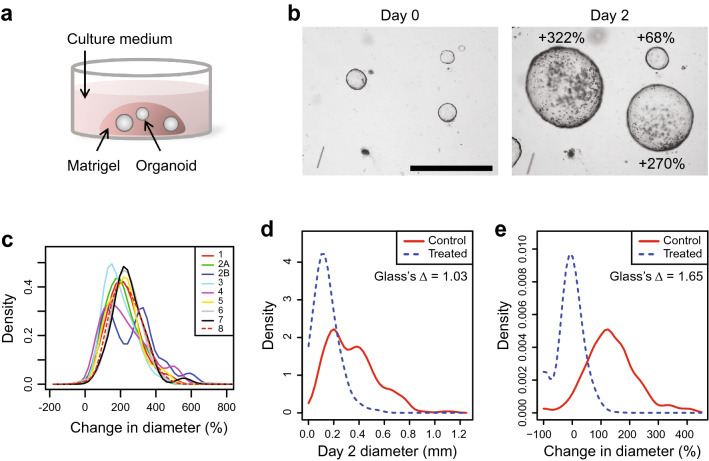
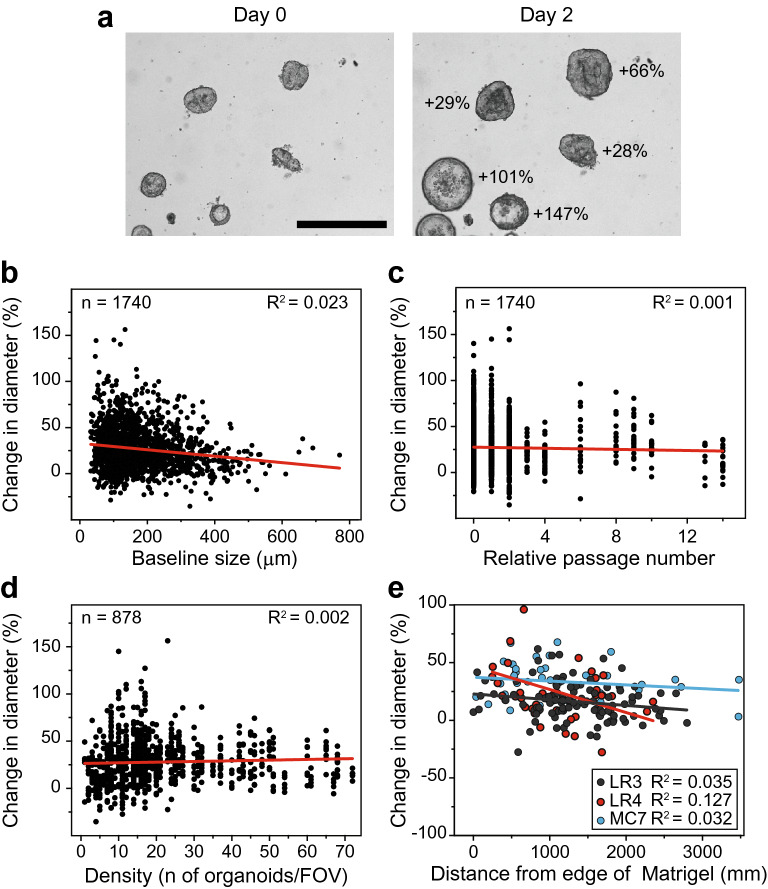
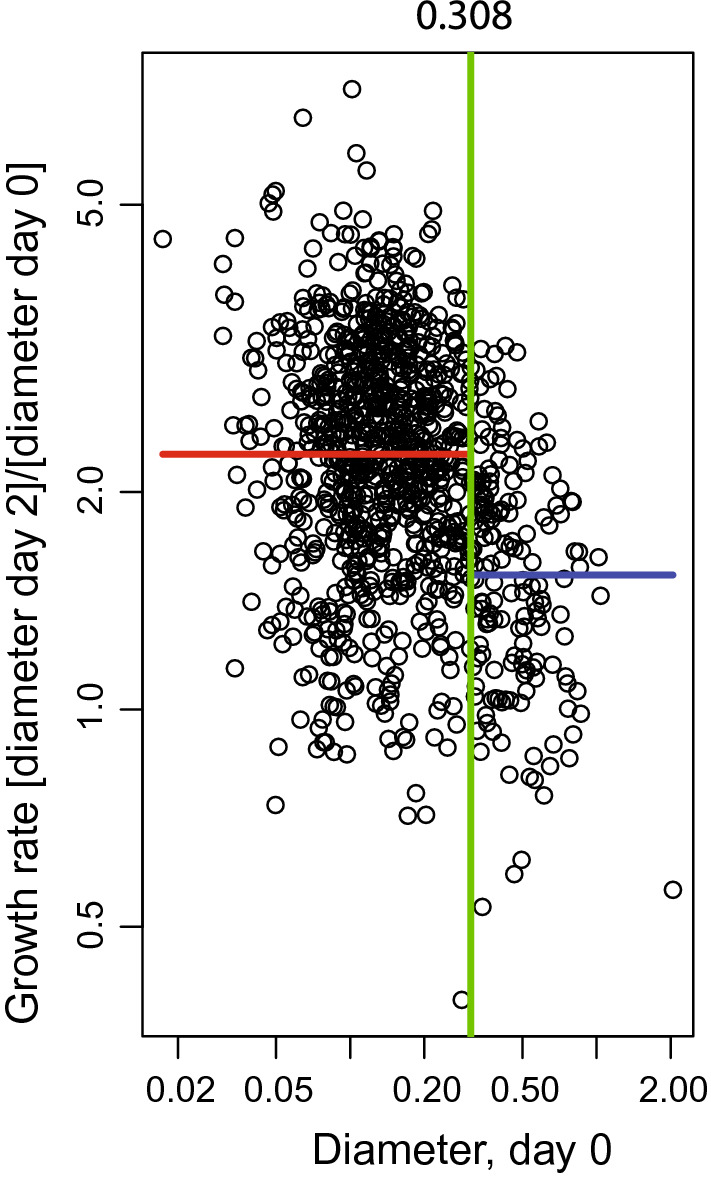
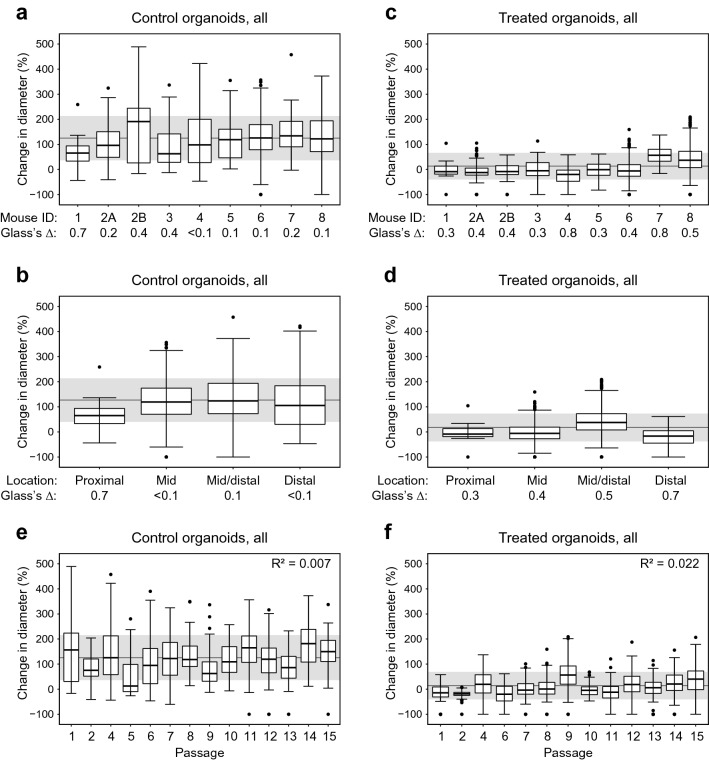
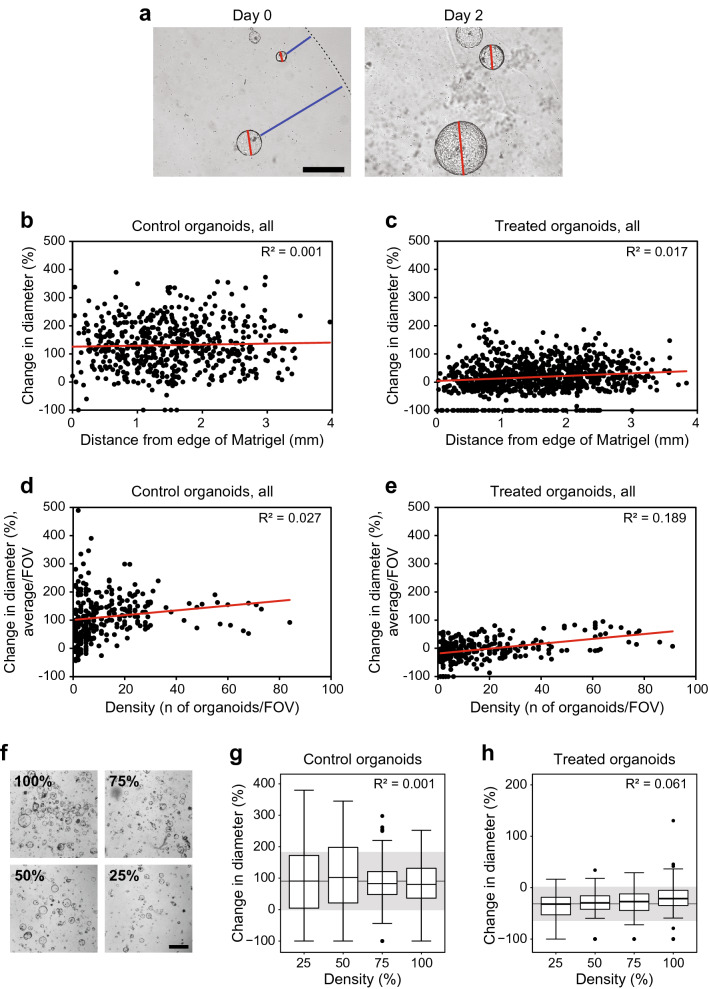
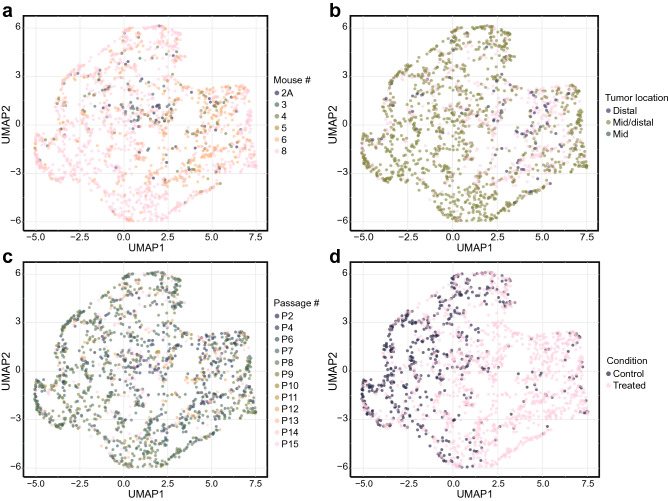
Representative models are needed to screen new therapies for patients with cancer. Cancer organoids are a leap forward as a culture model that faithfully represents the disease. Mouse-derived cancer organoids (MDCOs) are becoming increasingly popular, however there has yet to be a standardized method to assess therapeutic response and identify subpopulation heterogeneity. There are multiple factors unique to organoid culture that could affect how therapeutic response and MDCO heterogeneity are assessed. Here we describe an analysis of nearly 3500 individual MDCOs where individual organoid morphologic tracking was performed. Change in MDCO diameter was assessed in the presence of control media or targeted therapies. Individual organoid tracking was identified to be more sensitive to treatment response than well-level assessment. The impact of different generations of mice of the same genotype, different regions of the colon, and organoid specific characteristics including baseline size, passage number, plating density, and location within the matrix were examined. Only the starting size of the MDCO altered the subsequent growth. These results were corroborated using ~ 1700 patient-derived cancer organoids (PDCOs) isolated from 19 patients. Here we establish organoid culture parameters for individual organoid morphologic tracking to determine therapeutic response and growth/response heterogeneity for translational studies.
需要有代表性的模型来筛选癌症患者的新疗法。癌症类器官作为一种能够忠实反映疾病的培养模型,是一个飞跃。小鼠来源的癌症类器官(MDCO)越来越受欢迎,但仍缺乏标准化的方法来评估治疗反应和识别亚群异质性。类器官培养有许多独特的因素,可能会影响治疗反应和 MDCO 异质性的评估。在这里,我们描述了对近 3500 个个体 MDCO 的分析,其中对单个类器官形态进行了跟踪。在对照培养基或靶向治疗存在的情况下,评估 MDCO 直径的变化。与基于培养物的水平评估相比,个体类器官跟踪被发现对治疗反应更敏感。我们研究了同一基因型的不同代小鼠、结肠的不同区域以及类器官的特异性特征(包括起始大小、传代数、接种密度和在基质中的位置)对治疗反应的影响。只有 MDCO 的起始大小改变了随后的生长。这些结果通过来自 19 名患者的约 1700 个患者来源的癌症类器官(PDCO)得到了证实。在这里,我们建立了用于个体类器官形态跟踪的类器官培养参数,以确定治疗反应和生长/反应异质性,用于转化研究。