Ananthapadmanabhan Saikrishna, Jabbour Joe, Brown David, Sivapathasingam Vanaja
Department of Otolaryngology, Nepean Hospital, Kingswood, NSW 2747, Australia.
Department of Immunopathology, NSW Health Pathology-ICMPR, Westmead Hospital, Westmead, NSW, Australia.
Case Rep Otolaryngol. 2022 Mar 18;2022:9210780. doi: 10.1155/2022/9210780. eCollection 2022.
Autoimmune inner ear disease (AIED) is a rare disorder characterized by rapidly progressive, sensorineural hearing loss that demonstrates good responsiveness to corticosteroid and immunosuppressive therapy. The pathophysiology is likely driven by chronic trafficking of immune cells into the inner ear, targeting inner ear proteins to coordinate inflammation. Suppression or modulation of the immune response can minimize cochleitis allowing for potential recovery of hearing. It is an otologic emergency requiring a multidisciplinary approach to management to commence immunosuppressive therapy. This can be achieved using steroids, immunomodulators, plasmapheresis, intravenous immunoglobulin, or biologic agents. Treatment decisions are further complicated in pregnancy and require supervision by an obstetrician and maternal-fetal medicine (MFM) specialist. Concerns include safe dosing of steroids and potential for transplacental migration of immune complexes. We provide the first comprehensive literature review on AIED and its implications in pregnancy. We frame our discussion in the context of the second reported case of primary AIED in pregnancy and the first to show excellent response to immunosuppressive therapy.
We reviewed the presented case and literature on AIED.
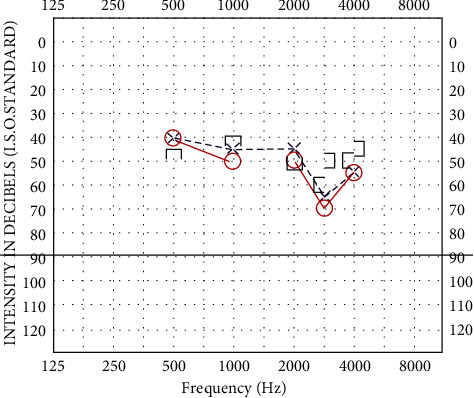
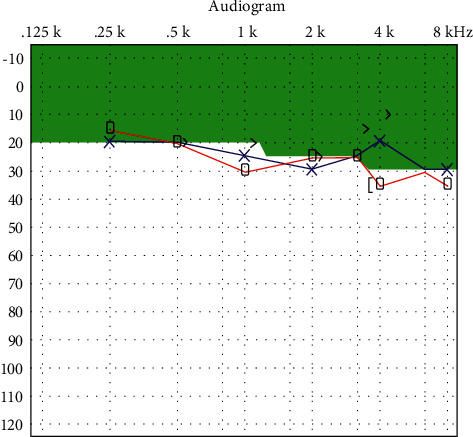
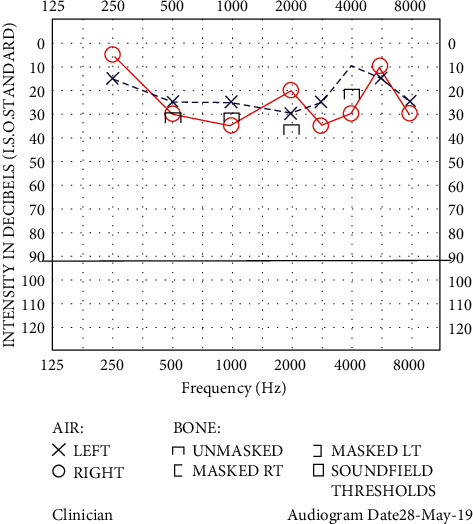
A 27-year-old, pregnant, HSP-70 positive woman was diagnosed with AIED and had excellent recovery of hearing and balance following a combination of steroid treatment, augmented by oral immunomodulators, plasmapheresis, and IVIG.
AIED is a diagnostic challenge, and treatment considerations are complex when encountered in pregnancy. Management requires multidisciplinary involvement between otolaryngologists, immunologists, and obstetricians to balance maternal and fetal health outcomes.
自身免疫性内耳疾病(AIED)是一种罕见的疾病,其特征为快速进展的感音神经性听力损失,对皮质类固醇和免疫抑制治疗反应良好。其病理生理学可能是由免疫细胞长期向内耳迁移驱动的,以内耳蛋白为靶点来协调炎症反应。抑制或调节免疫反应可使耳蜗炎最小化,从而有可能恢复听力。这是一种耳科急症,需要多学科方法进行管理以开始免疫抑制治疗。这可以通过使用类固醇、免疫调节剂、血浆置换、静脉注射免疫球蛋白或生物制剂来实现。妊娠期间治疗决策会更加复杂,需要产科医生和母胎医学(MFM)专家的监督。关注点包括类固醇的安全剂量以及免疫复合物经胎盘迁移的可能性。我们提供了关于AIED及其在妊娠中的影响的首次全面文献综述。我们在第二例妊娠原发性AIED报告病例的背景下进行讨论,该病例也是首例对免疫抑制治疗表现出良好反应的病例。
我们回顾了所呈现的病例以及关于AIED的文献。
一名27岁、怀孕且热休克蛋白70(HSP - 70)阳性的女性被诊断为AIED,在接受类固醇治疗,并辅以口服免疫调节剂、血浆置换和静脉注射免疫球蛋白后,听力和平衡功能得到了极佳的恢复。
AIED是一项诊断挑战,妊娠期间遇到时治疗考量很复杂。管理需要耳鼻喉科医生、免疫学家和产科医生多学科参与,以平衡母婴健康结果。