Liu Chuchu, Tan Xu, Zhou Tao, Zhang Wei, Liu Jianguo, Lu Xin
College of Systems Engineering, National University of Defense Technology, Changsha, 410073 China.
Shenzhen Institute of Information Technology, Shenzhen, 518172 China.
Appl Intell (Dordr). 2022;52(14):16138-16148. doi: 10.1007/s10489-022-03195-y. Epub 2022 Mar 21.
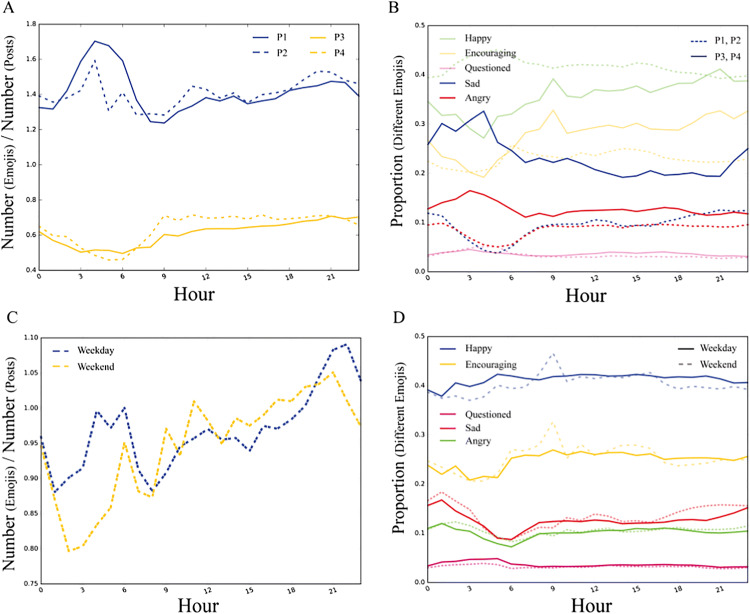
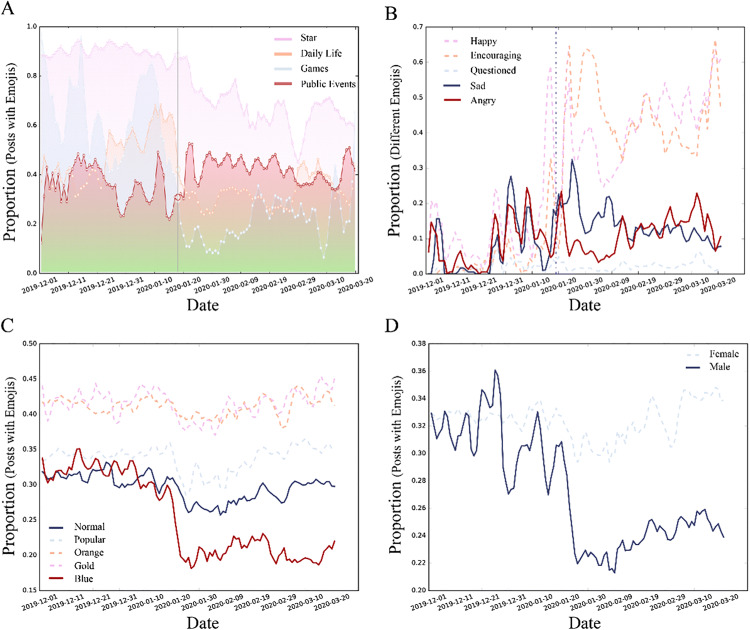
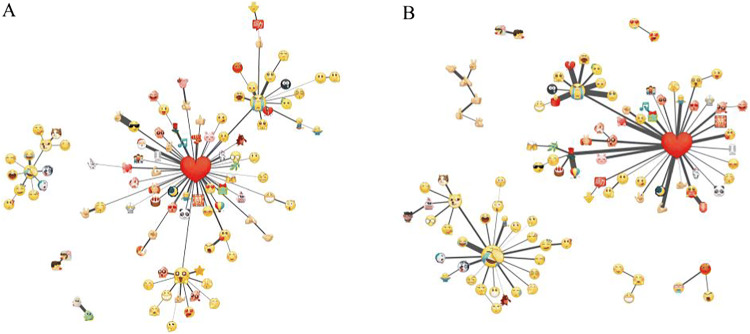
Emojis are small pictograms that are frequently embedded within micro-texts to more directly express emotional meanings. To understand the changes in the emoji usage of internet users during the COVID-19 outbreak, we analysed a large dataset collected from Weibo, the most popular Twitter-like social media platform in China, from December 1, 2019, to March 20, 2020. The data contained 38,183,194 microblog posts published by 2,239,472 unique users in Wuhan. We calculated the basic statistics of users' usage of emojis, topics, and sentiments and analysed the temporal patterns of emoji occurrence. After examining the emoji co-occurrence structure, we finally explored other factors that may affect individual emoji usage. We found that the COVID-19 outbreak greatly changed the pattern of emoji usage; i.e., both the proportion of posts containing emojis and the ratio of users using emojis declined substantially, while the number of posts remained the same. The daily proportion of Happy emojis significantly declined to approximately 32%, but the proportions of Sad- and Encouraging-related emojis rose to 24% and 34%, respectively. Despite a significant decrease in the number of nodes and edges in the emoji co-occurrence network, the average degree of the network increased from 34 to 39.8, indicating that the diversity of emoji usage increased. Most interestingly, we found that male users were more inclined towards using regular textual language with fewer emojis after the pandemic, suggesting that during public crises, male groups appeared to control their emotional display. In summary, the COVID-19 pandemic remarkably impacted individual sentiments, and the normal pattern of emoji usage tends to change significantly following a public emergency.
The online version contains supplementary material available at 10.1007/s10489-022-03195-y.
表情符号是一种小象形图,经常嵌入在微文本中以更直接地表达情感意义。为了解新冠疫情期间互联网用户表情符号使用情况的变化,我们分析了从2019年12月1日至2020年3月20日从中国最受欢迎的类似推特的社交媒体平台微博收集的一个大型数据集。数据包含武汉2239472名独立用户发布的38183194条微博帖子。我们计算了用户表情符号使用、话题和情感的基本统计数据,并分析了表情符号出现的时间模式。在研究了表情符号共现结构后,我们最终探索了可能影响个人表情符号使用的其他因素。我们发现,新冠疫情极大地改变了表情符号的使用模式;即包含表情符号的帖子比例和使用表情符号的用户比例大幅下降,而帖子数量保持不变。开心表情符号的每日比例显著下降至约32%,但悲伤和鼓励相关表情符号的比例分别升至24%和34%。尽管表情符号共现网络中的节点和边数量显著减少,但网络的平均度从34增加到39.8,表明表情符号使用的多样性增加。最有趣的是,我们发现疫情后男性用户更倾向于使用较少表情符号的常规文本语言,这表明在公共危机期间,男性群体似乎会控制自己的情感表达。总之,新冠疫情显著影响了个人情绪,公共紧急情况后表情符号的正常使用模式往往会发生显著变化。
在线版本包含可在10.1007/s10489-022-03195-y获取的补充材料。