Department of Biology, La Sierra University, Riverside, CA, United States of America.
Faculty of Biology, Department of Vertebrate Zoology, Moscow State University, Moscow, Russia.
PeerJ. 2022 Mar 22;10:e13153. doi: 10.7717/peerj.13153. eCollection 2022.
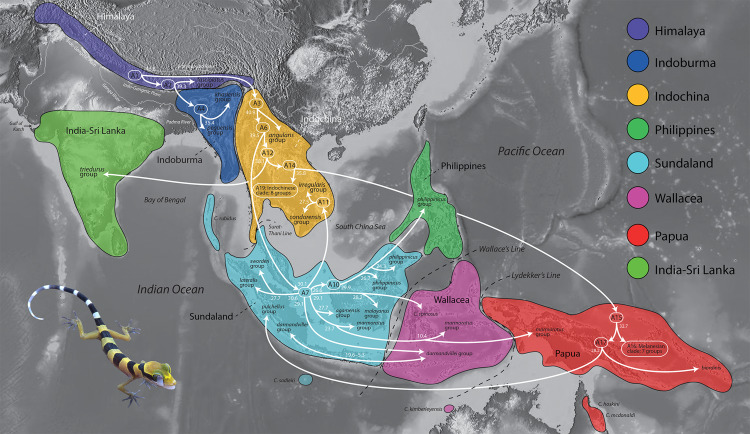
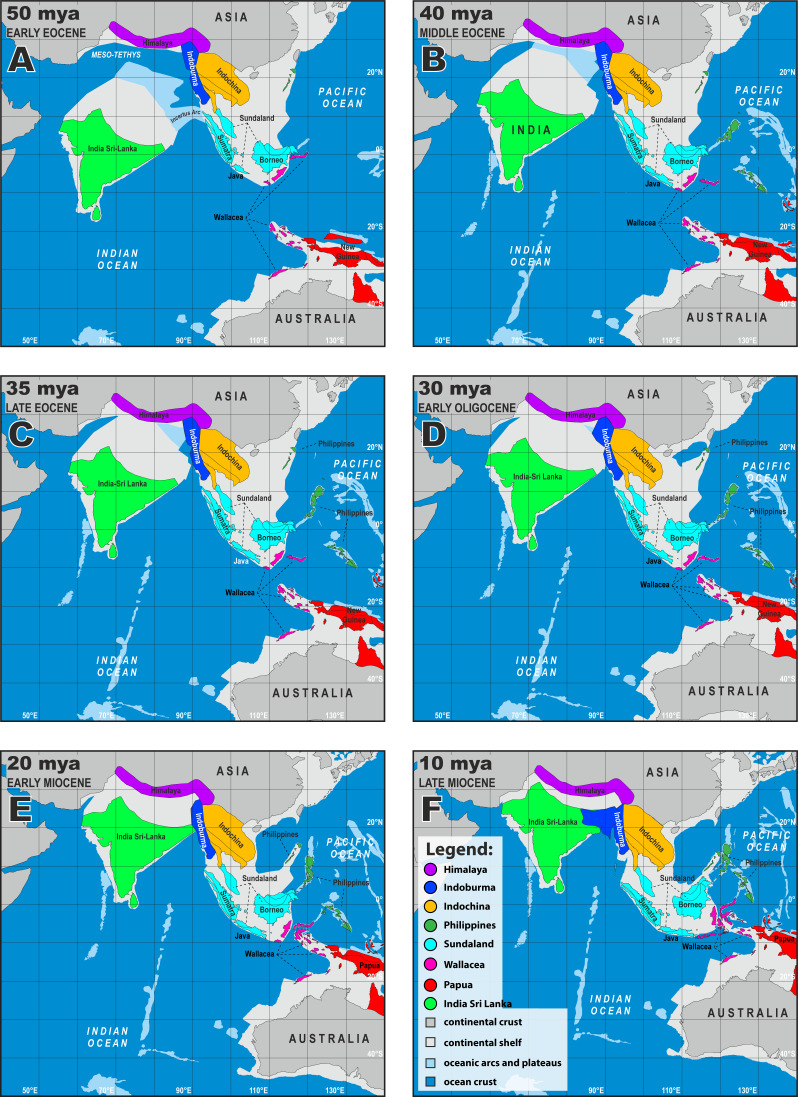
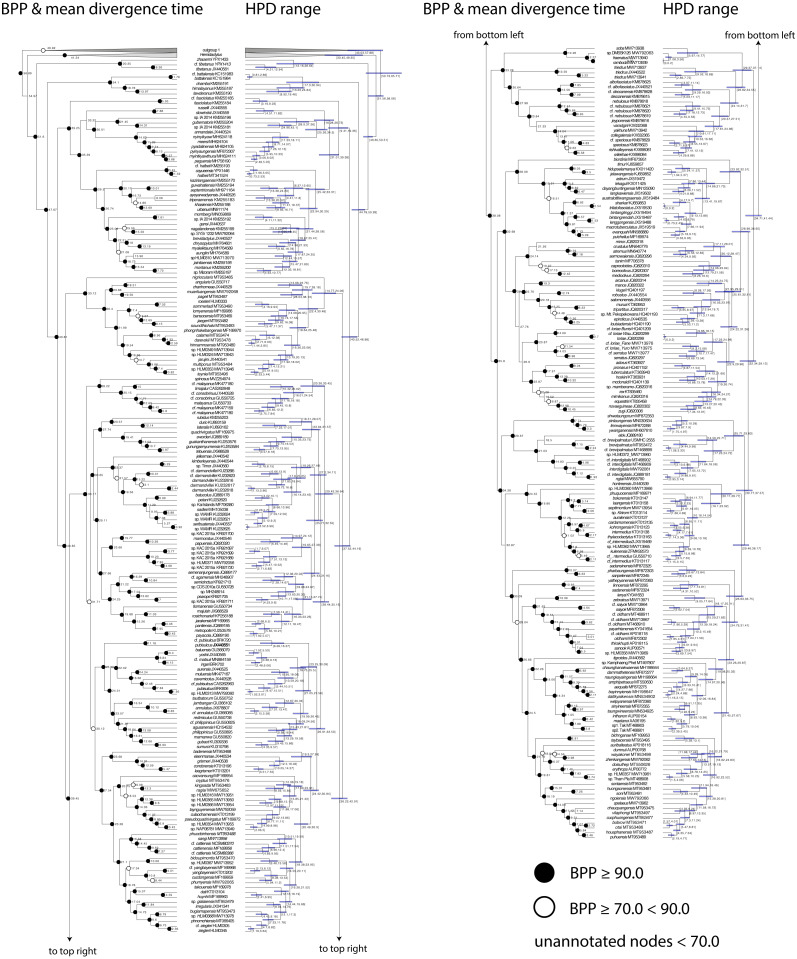
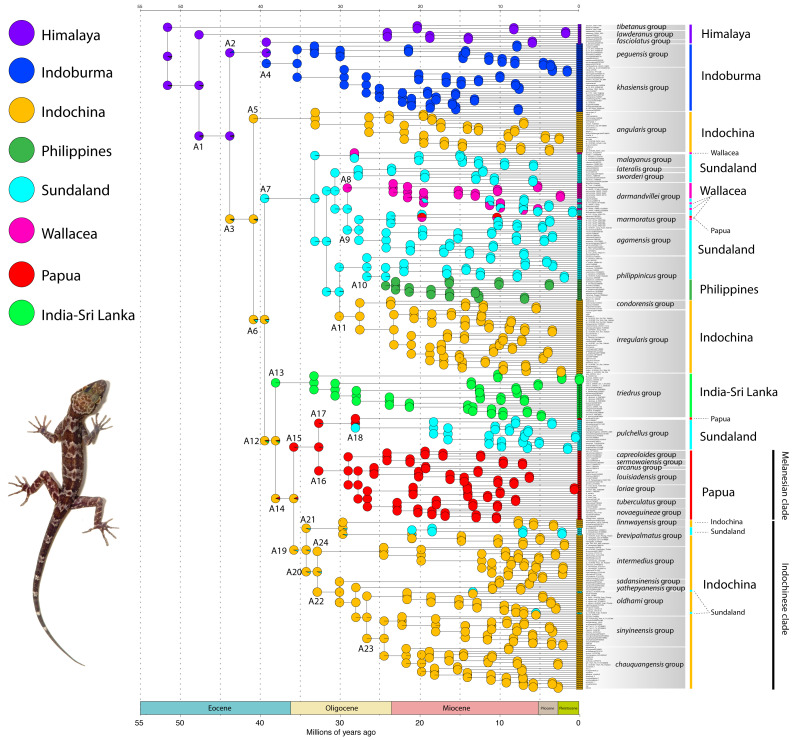
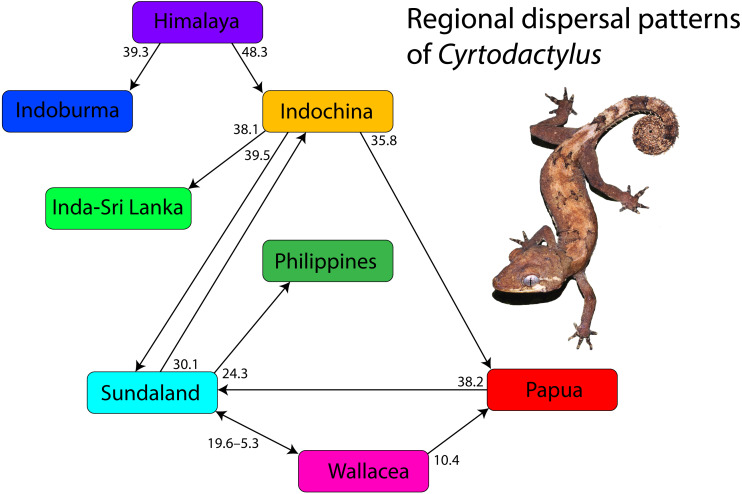
The gekkonid genus is the third largest vertebrate genus on the planet with well over 300 species that range across at least eight biogeographic regions from South Asia to Melanesia. The ecological and morphological plasticity within the genus, has contributed to its ability to disperse across ephemeral seaways, river systems, basins, land bridges, and mountain ranges-followed by diversification within specific geographic areas. Ancestral ranges were reconstructed on a mitochondrial phylogeny with 346 described and undescribed species from which it was inferred that evolved in a proto-Himalaya region during the early Eocene. From there, it dispersed to what is currently Indoburma and Indochina during the mid-Eocene-the latter becoming the first major center of origin for the remainder of the genus that seeded dispersals to the Indian subcontinent, Papua, and Sundaland. Sundaland became a second major center of radiation during the Oligocene and gave rise to a large number of species that radiated further within Sundaland and dispersed to Wallacea, the Philippines, and back to Indochina. One Papuan lineage dispersed west to recolonize and radiate in Sundaland. Currently, Indochina and Sundaland still harbor the vast majority of species of .
壁虎科属是地球上第三大脊椎动物属,拥有超过 300 个物种,分布在至少八个生物地理区域,从南亚到美拉尼西亚。该属内的生态和形态可塑性,有助于其在短暂的海峡、河流系统、盆地、陆桥和山脉之间扩散,并在特定地理区域内多样化。祖先范围是根据线粒体系统发育重建的,包括 346 种已描述和未描述的物种,从中推断出它是在始新世早期在喜马拉雅原型地区进化而来的。从那里,它在中始新世扩散到现在的印度缅甸和印度支那——后者成为该属其余部分的第一个主要起源中心,为该属的其余部分向印度次大陆、巴布亚和巽他陆架的传播奠定了基础。巽他陆架在渐新世成为第二个主要辐射中心,产生了大量在巽他陆架内部辐射并传播到华莱士区、菲律宾和再回到印度支那的物种。一条巴布亚谱系向西扩散,重新在巽他陆架上殖民并辐射。目前,印度支那和巽他陆架仍然拥有绝大多数的壁虎属物种。