Department of Pathology, St. Jude Children's Research Hospital, Memphis, TN, USA.
Center for Applied Bioinformatics, St. Jude Children's Research Hospital, Memphis, TN, USA.
J Pathol. 2022 Aug;257(5):579-592. doi: 10.1002/path.5899. Epub 2022 Apr 26.
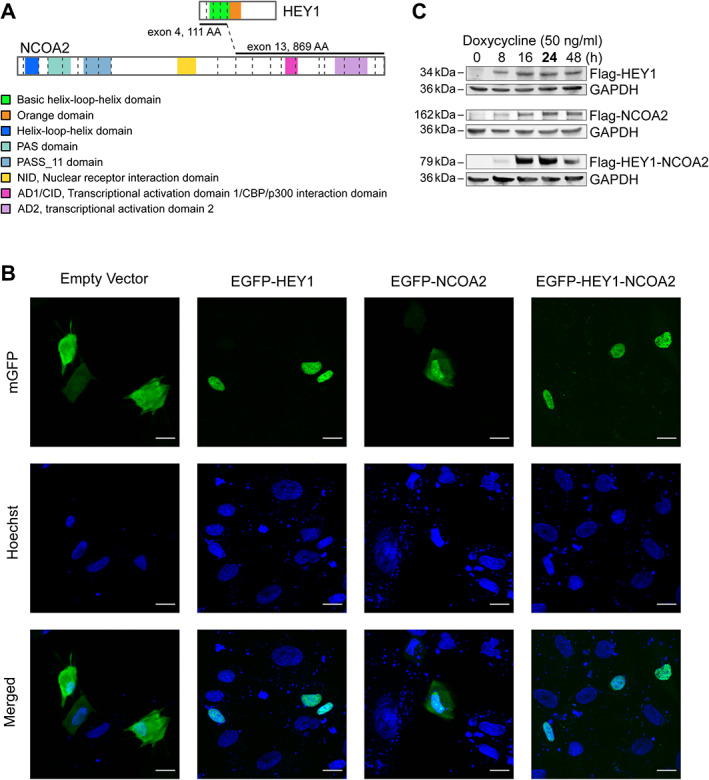
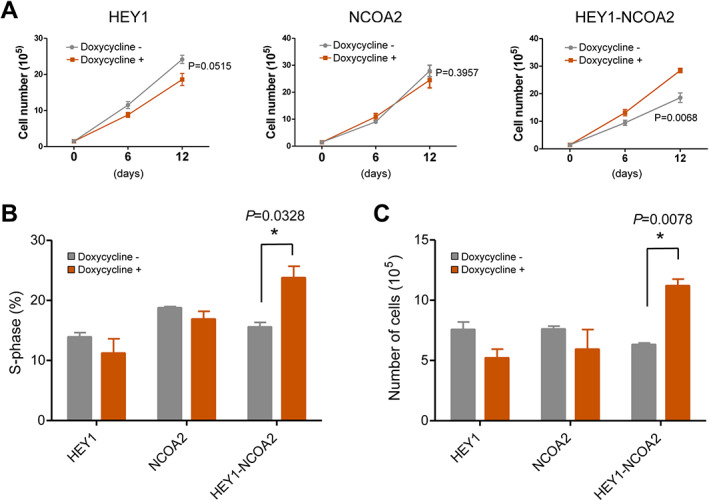
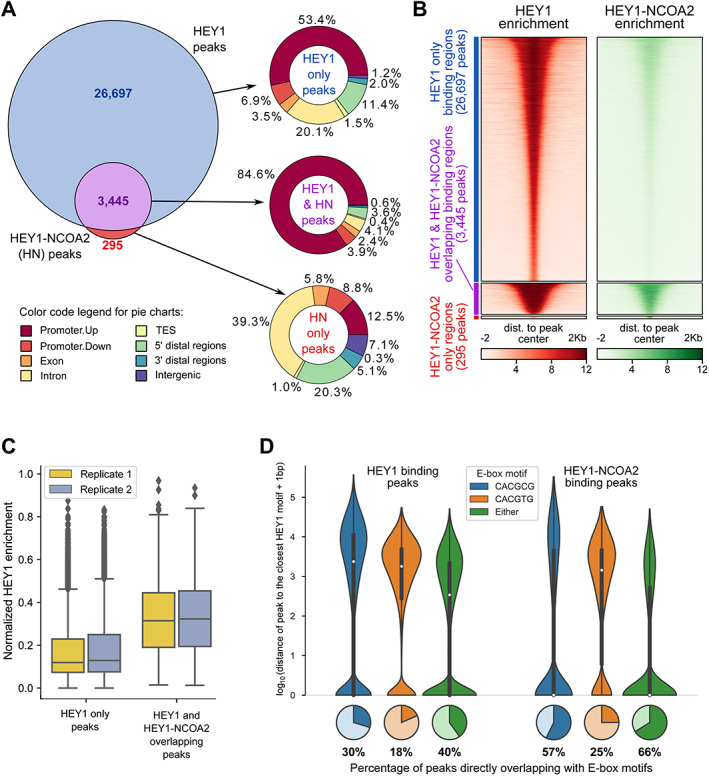
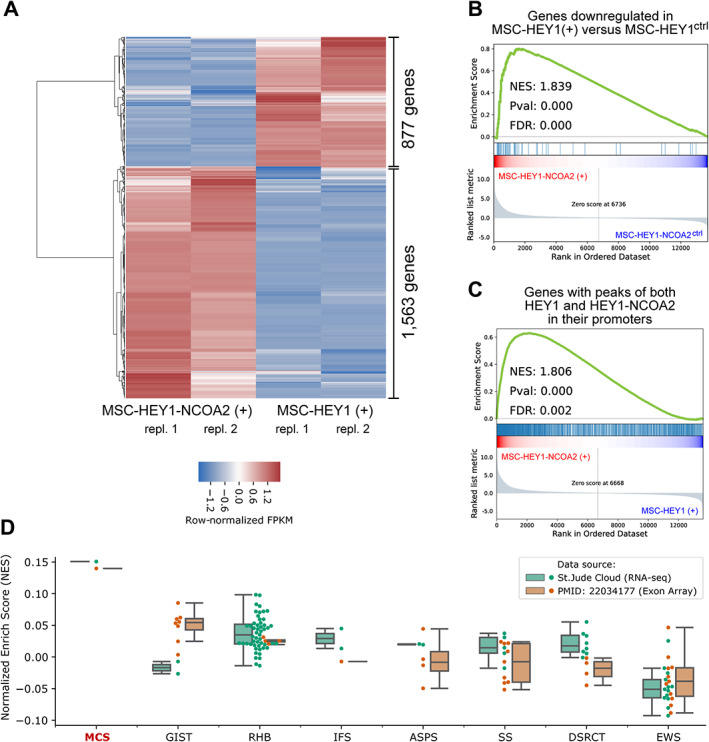
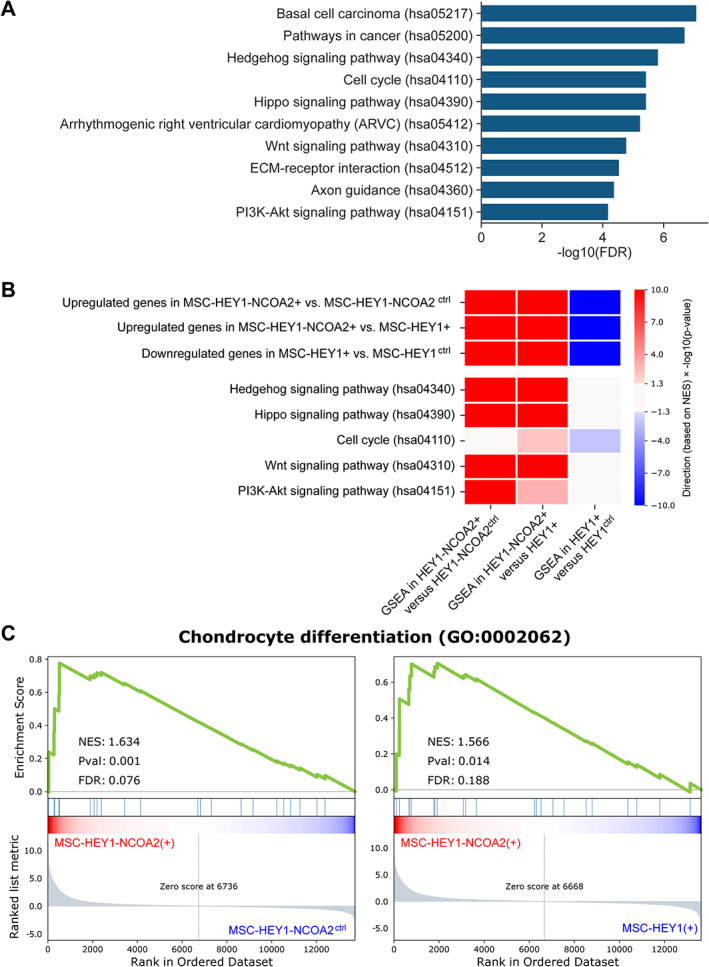
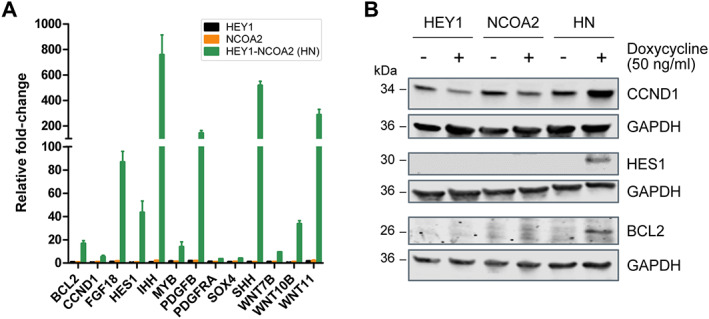
Mesenchymal chondrosarcoma is a rare, high-grade, primitive mesenchymal tumor. It accounts for around 2-10% of all chondrosarcomas and mainly affects adolescents and young adults. We previously described the HEY1-NCOA2 as a recurrent gene fusion in mesenchymal chondrosarcoma, an important breakthrough for characterizing this disease; however, little study had been done to characterize the fusion protein functionally, in large part due to a lack of suitable models for evaluating the impact of HEY1-NCOA2 expression in the appropriate cellular context. We used iPSC-derived mesenchymal stem cells (iPSC-MSCs), which can differentiate into chondrocytes, and generated stable transduced iPSC-MSCs with inducible expression of HEY1-NCOA2 fusion protein, wildtype HEY1 or wildtype NCOA2. We next comprehensively analyzed both the DNA binding properties and transcriptional impact of HEY1-NCOA2 expression by integrating genome-wide chromatin immunoprecipitation sequencing (ChIP-seq) and expression profiling (RNA-seq). We demonstrated that HEY1-NCOA2 fusion protein preferentially binds to promoter regions of canonical HEY1 targets, resulting in transactivation of HEY1 targets, and significantly enhances cell proliferation. Intriguingly, we identified that both PDGFB and PDGFRA were directly targeted and upregulated by HEY1-NCOA2; and the fusion protein, but not wildtype HEY1 or NCOA2, dramatically increased the level of phospho-AKT (Ser473). Our findings provide a rationale for exploring PDGF/PI3K/AKT inhibition in treating mesenchymal chondrosarcoma. © 2022 The Authors. The Journal of Pathology published by John Wiley & Sons Ltd on behalf of The Pathological Society of Great Britain and Ireland.
间叶性软骨肉瘤是一种罕见的、高级别、原始间叶性肿瘤。它约占软骨肉瘤的 2-10%,主要影响青少年和年轻成年人。我们之前描述了 HEY1-NCOA2 是间叶性软骨肉瘤中的一种复发性基因融合,这是对该疾病特征描述的一个重要突破;然而,对于融合蛋白的功能特性,几乎没有进行过研究,在很大程度上是因为缺乏合适的模型来评估 HEY1-NCOA2 表达在适当细胞环境中的影响。我们使用诱导多能干细胞(iPSC)衍生的间充质干细胞(iPSC-MSCs),这些细胞可以分化为软骨细胞,并生成稳定转导的 iPSC-MSCs,其可诱导表达 HEY1-NCOA2 融合蛋白、野生型 HEY1 或野生型 NCOA2。接下来,我们通过整合全基因组染色质免疫沉淀测序(ChIP-seq)和表达谱分析(RNA-seq),全面分析了 HEY1-NCOA2 表达的 DNA 结合特性和转录影响。我们证明了 HEY1-NCOA2 融合蛋白优先结合到经典 HEY1 靶基因的启动子区域,导致 HEY1 靶基因的反式激活,并显著增强细胞增殖。有趣的是,我们发现 PDGFB 和 PDGFRA 均被 HEY1-NCOA2 直接靶向和上调;并且融合蛋白(而不是野生型 HEY1 或 NCOA2)显著增加了磷酸化 AKT(Ser473)的水平。我们的研究结果为探索 PDGF/PI3K/AKT 抑制在治疗间叶性软骨肉瘤中的作用提供了依据。