Lee Dong-Hyun, Park Han-Ki, Lee Hee-Ra, Sohn Hyeukjun, Sim Soyoon, Park Hyeon Ju, Shin Yoo Seob, Kim Yoon-Keun, Choi Youngwoo, Park Hae-Sim
Department of Allergy and Clinical Immunology, Ajou University School of Medicine, Suwon, Korea.
Department of Allergy and Clinical Immunology, School of Medicine, Kyungpook National University, Daegu, Korea.
Clin Transl Allergy. 2022 Mar;12(3):e12138. doi: 10.1002/clt2.12138.
Probiotics have been shown to prevent various allergic diseases by producing extracellular vesicles (EVs). However, the role of EVs in allergic asthma has not yet been completely determined.
Gut microbial composition, mainly genera related to probiotics, was investigated in allergic asthmatic mice. Moreover, EVs were isolated from Lactococcus lactis (L. lactis, a selected bacterium) and EV proteins were identified by peptide mass fingerprinting. EV functions in immune responses were evaluated in vivo or ex vivo. Furthermore, the levels of specific IgG antibodies (an alternative marker for EV quantification) to L. lactis-EVs were measured by ELISA in the sera of 27 asthmatic patients and 26 healthy controls.
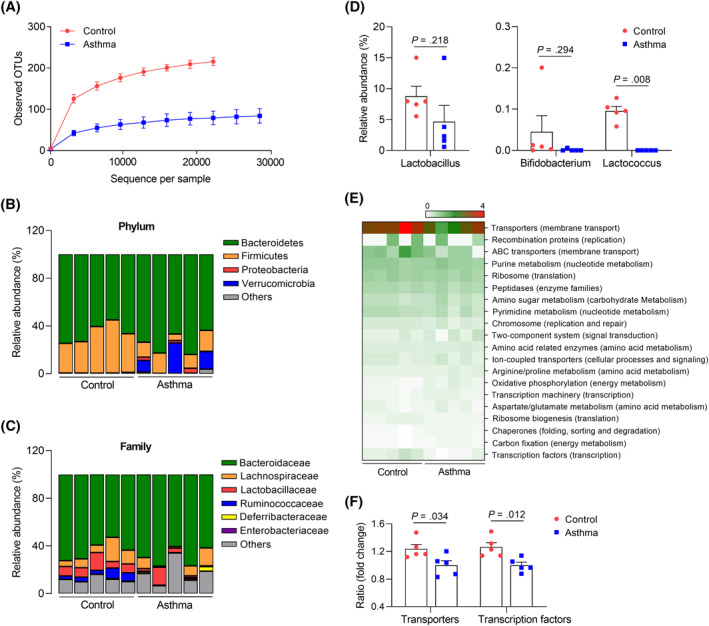
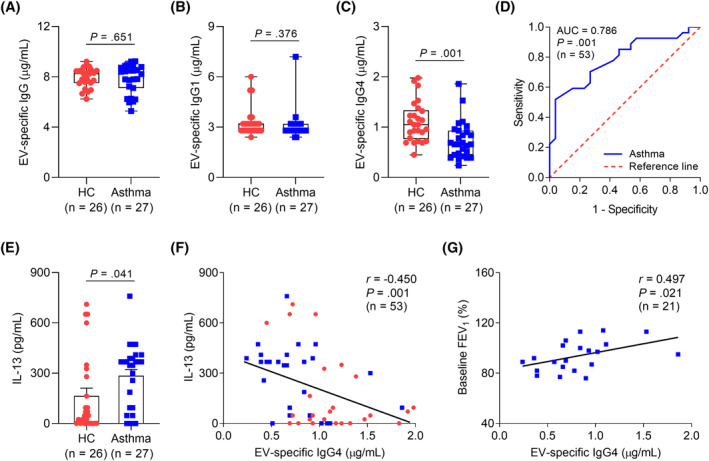
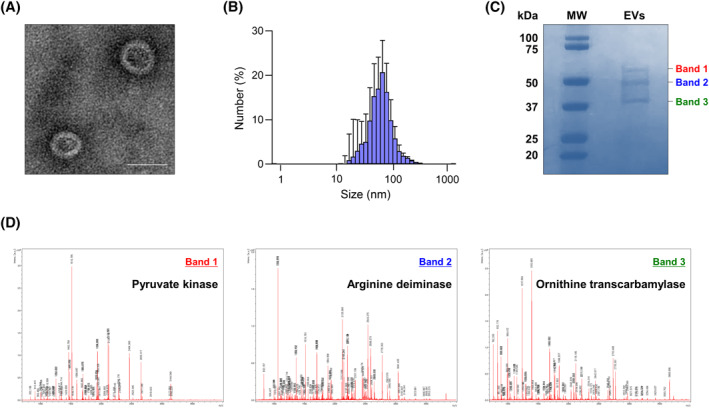
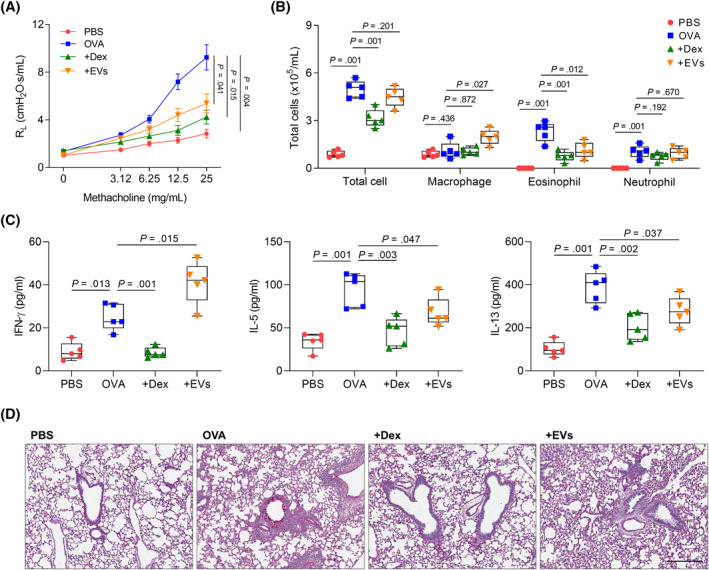
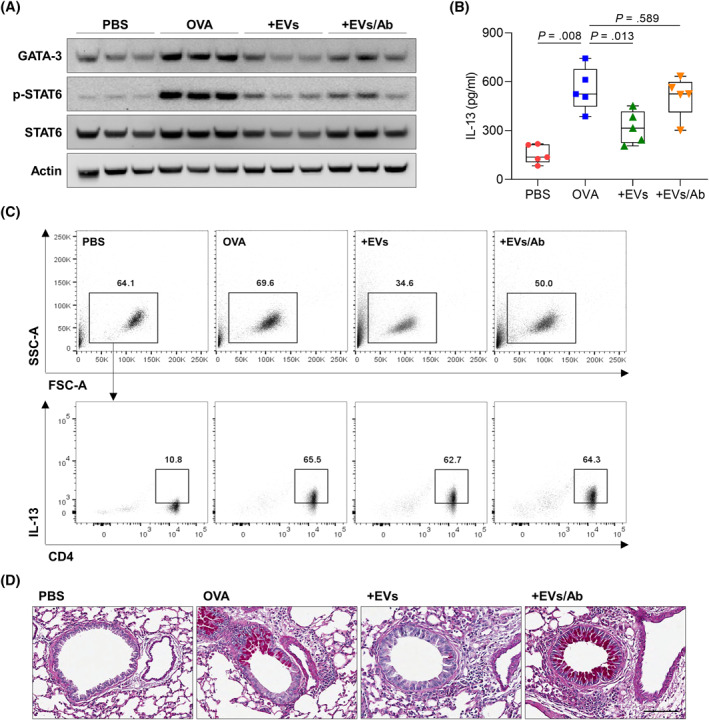
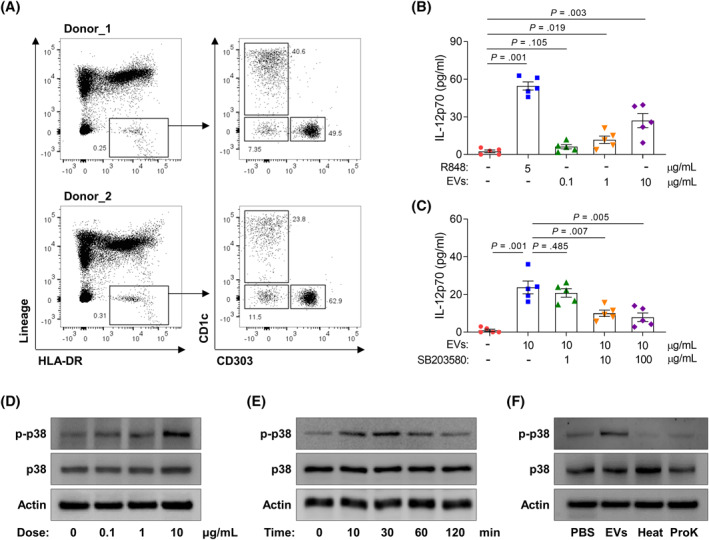
Allergic asthmatic mice showed a lower proportion of Lactococcus compared to healthy mice. L. lactis was cultured and its EVs abundantly contained pyruvate kinase. When allergic asthmatic mice were intranasally treated with EVs, airway hyperresponsiveness, eosinophil number, cytokine secretion, and mucus production were significantly decreased. Moreover, L. lactis-EV treatment shifted immune responses from Th2 to Th1 by stimulating dendritic cells to produce IL-12. In addition, significantly lower levels of serum specific IgG4 (but not IgG1) to L. lactis-EVs were noted in asthmatic patients than in healthy controls. A positive correlation between the levels of EV-specific IgG4 and FEV (%), but a negative correlation between the levels of EV-specific IgG4 and IL-13 were observed.
These findings suggest that L. lactis-EVs may have immune-regulating effects on airway inflammation mediated by dendritic cell activation, providing a potential benefit for allergic asthma.
益生菌已被证明可通过产生细胞外囊泡(EVs)预防多种过敏性疾病。然而,EVs在过敏性哮喘中的作用尚未完全确定。
对过敏性哮喘小鼠的肠道微生物组成进行了研究,主要关注与益生菌相关的菌属。此外,从乳酸乳球菌(乳酸乳球菌,一种选定的细菌)中分离出EVs,并通过肽质量指纹图谱鉴定EV蛋白。在体内或体外评估了EVs在免疫反应中的功能。此外,通过酶联免疫吸附测定(ELISA)检测了27例哮喘患者和26例健康对照血清中针对乳酸乳球菌-EVs的特异性IgG抗体(EV定量的替代标志物)水平。
与健康小鼠相比,过敏性哮喘小鼠的乳酸乳球菌比例较低。培养了乳酸乳球菌,其EVs中富含丙酮酸激酶。当用EVs对过敏性哮喘小鼠进行鼻内治疗时,气道高反应性、嗜酸性粒细胞数量、细胞因子分泌和黏液分泌均显著降低。此外,乳酸乳球菌-EV治疗通过刺激树突状细胞产生IL-12,使免疫反应从Th2型转变为Th1型。此外,哮喘患者血清中针对乳酸乳球菌-EVs的特异性IgG4(而非IgG1)水平显著低于健康对照。观察到EV特异性IgG4水平与第一秒用力呼气容积(FEV)(%)呈正相关,但与IL-13水平呈负相关。
这些发现表明,乳酸乳球菌-EVs可能对由树突状细胞激活介导的气道炎症具有免疫调节作用,为过敏性哮喘提供了潜在益处。