Department of Medicine and Surgery, University of Milano - Bicocca, Via Cadore 48, 20900, Monza, Italy.
Department of Biomedicine and Prevention, University of Rome "Tor Vergata", Rome, Italy.
BMC Public Health. 2022 Mar 28;22(1):598. doi: 10.1186/s12889-022-12913-7.
Self-care is important at all stages of life and health status to promote well-being, prevent disease, and improve health outcomes. Currently, there is a need to better conceptualize self-care in the general adult population and provide an instrument to measure self-care in this group. Therefore, the aim of this study was to develop and evaluate the Self-Care Inventory (SCI), a theory-based instrument to measure self-care in the general adult population.
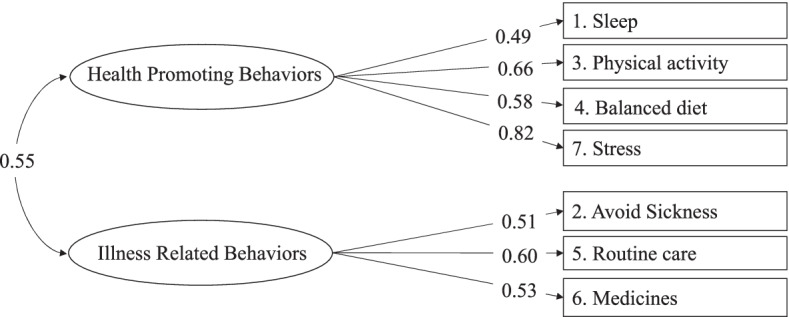
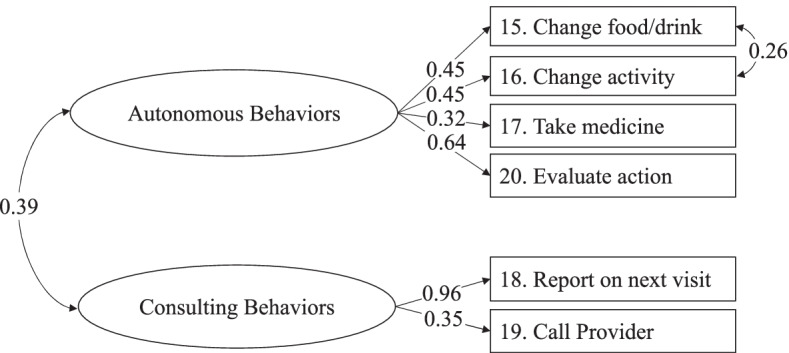
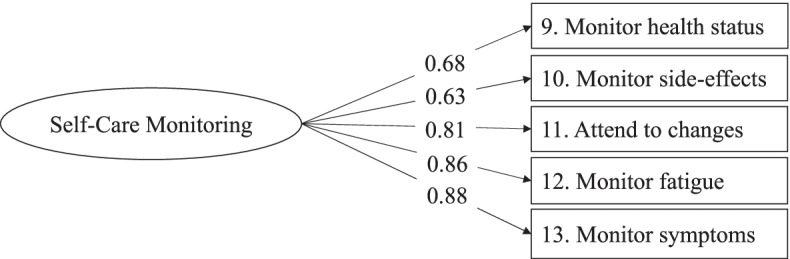
Based on the Middle Range Theory of Self-Care, the 20-item SCI was developed with three scales: Self-Care Maintenance (8 items), Self-Care Monitoring (6 items), and Self-Care Management (6 items). A cross sectional study with a US-based sample (n = 294) was conducted to test the SCI. Internal validity was assessed with Confirmatory Factor Analysis. Internal consistency reliability was assessed with Cronbach alpha for unidimensional scales or composite reliability and the global reliability index for multidimensional scales. Construct validity was investigated with Pearson correlation to test the relationship between general self-efficacy, positivity, stress, and self-care scores.
The Self-Care Maintenance and Management scales were multidimensional and the Self-Care Monitoring scale was unidimensional. The global reliability index for multidimensional scales was 0.85 (self-care maintenance) and 0.88 (self-care management). Cronbach alpha coefficient of the self-care monitoring scale was 0.88. Test-retest reliability was 0.81 (self-care maintenance), 0.91 (self-care monitoring), and 0.76 (self-care management). The General Self-Efficacy Scale was positively related to all three self-care scale scores: self-care maintenance r = 0.46, p < 0. 001, self-care monitoring r = 0.31, p < 0. 001, and self-care management r = 0.32, p < 0. 001. The positivity score was positively related to self-care maintenance (r = 0.42, p < 0. 001), self-care monitoring (r = 0.29, p < 0. 001), and self-care management (r = 0.34, p < 0. 001) scores. The perceived stress was positively related to the self-care management (r = 0.20, p < 0. 001) score.
The SCI is a theoretically based instrument designed to measure self-care in the general adult population. Preliminary evidence of validity and reliability supports its use in the general adult population.
自我护理在生命的各个阶段和健康状况下都很重要,可促进健康、预防疾病并改善健康结果。目前,需要更好地理解普通成年人群中的自我护理,并为此人群提供一种测量自我护理的工具。因此,本研究旨在开发和评估自我护理量表(SCI),这是一种基于理论的测量普通成年人群中自我护理的工具。
基于自我护理的中程理论,用包含 8 项自我护理维持、6 项自我护理监测和 6 项自我护理管理的 20 项条目构建 SCI。采用横断面研究,在美国人群(n=294)中进行测试。采用验证性因子分析评估内部有效性。采用多维量表的克朗巴赫α系数或综合可靠性和多维量表的整体可靠性指数,单维量表的 Cronbach α 评估内部一致性可靠性。采用 Pearson 相关分析评估结构有效性,以检验一般自我效能感、积极性、压力和自我护理评分之间的关系。
自我护理维持和管理量表为多维量表,自我护理监测量表为单维量表。多维量表的整体可靠性指数为 0.85(自我护理维持)和 0.88(自我护理管理)。自我护理监测量表的 Cronbach α 系数为 0.88。重测信度为 0.81(自我护理维持)、0.91(自我护理监测)和 0.76(自我护理管理)。一般自我效能感量表与所有三个自我护理量表评分呈正相关:自我护理维持 r=0.46,p<0.001;自我护理监测 r=0.31,p<0.001;自我护理管理 r=0.32,p<0.001。积极性评分与自我护理维持(r=0.42,p<0.001)、自我护理监测(r=0.29,p<0.001)和自我护理管理(r=0.34,p<0.001)评分呈正相关。感知压力与自我护理管理评分呈正相关(r=0.20,p<0.001)。
SCI 是一种基于理论的工具,旨在测量普通成年人群中的自我护理。初步的有效性和可靠性证据支持其在普通成年人群中的使用。