Department of Emergency, The First Affiliated Hospital of Nanchang University, Nanchang, Jiangxi, China.
Department of Infectious Disease, The First Affiliated Hospital of Nanchang University, Nanchang, Jiangxi, China.
Aging (Albany NY). 2022 Mar 28;14(6):2548-2557. doi: 10.18632/aging.203860.
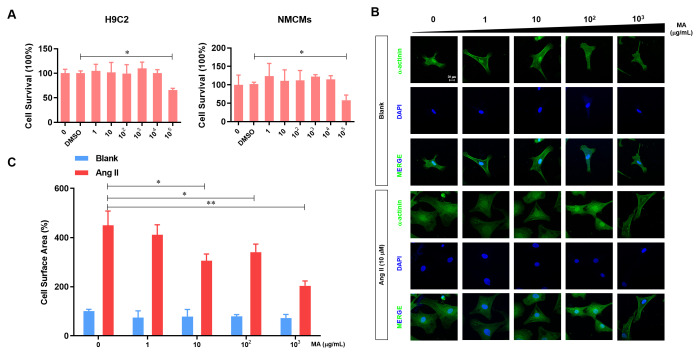
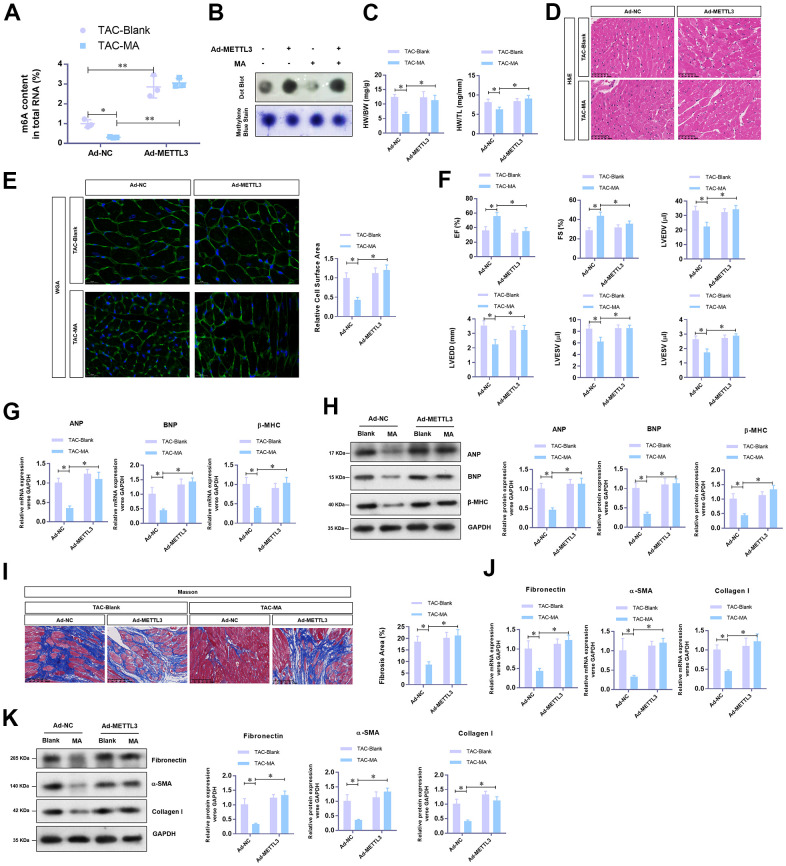
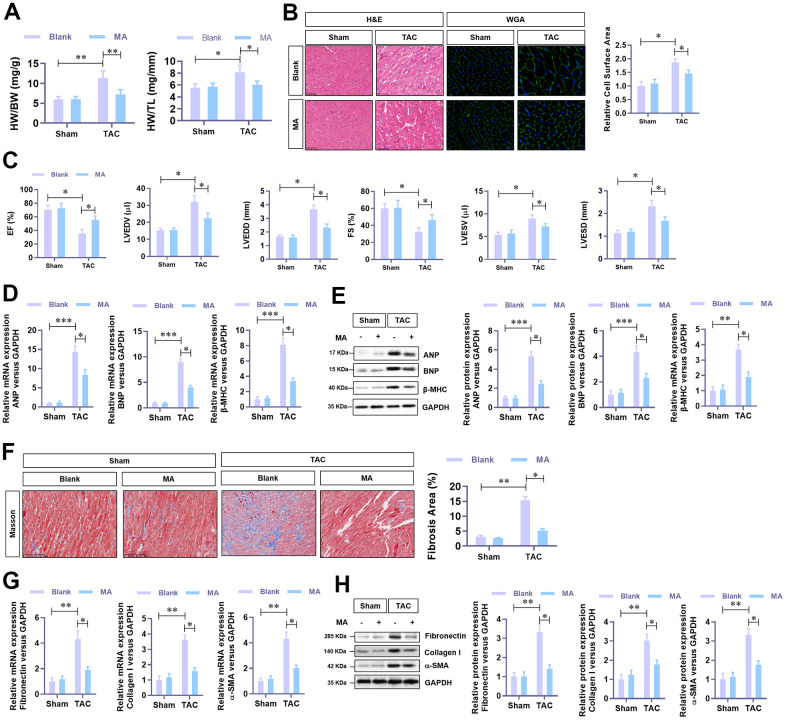
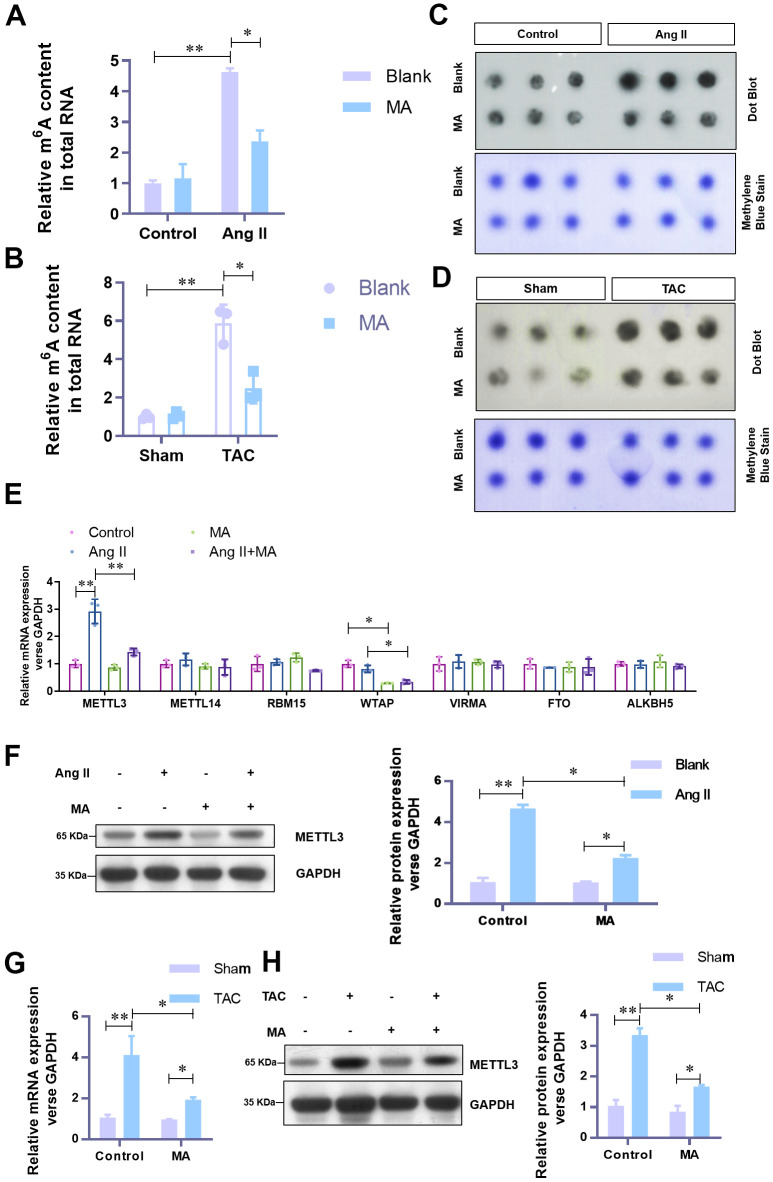
Coordinated response of the heart to physiological stressors (including stress overload, ischemia, hypothyroidism, and metabolic signals) is a hallmark of heart disease. However, effective treatment and its molecular targets are unknown. Although Maslinic Acid (MA) has been shown to inhibit inflammatory responses with strong anti-tumor, anti-bacterial, and antioxidant effects, information on its role and underlying mechanism in cardiac hypertrophy are scanty. The present study revealed that 10-10 μg/ml MA treatment significantly inhibited Ang-II induced hypertrophy in NMCMs and the dosage did not influence the cell viability of H9C2 and NCMCs. Moreover, the anti-hypertrophy effect of MA (30 mg/kg·day) was verified in the TAC-induced hypertrophy mouse model . Further analysis showed that MA administration decreased the total RNA mA methylation and METTL3 levels in Ang-II treated NMCMs and TAC stressed hearts. Rescue experiments under adenovirus-mediated myocardial METTL3 overexpression confirmed that METTL3-mediated mA methylation is essential in M-driven inhibition of myocardial hypertrophy. Collectively, MA exerts a significant anti-hypertrophy effect by regulating the modification of METTL3-mediated mA methylation and . These findings may provide a platform for establishing a new target and strategy for cardiac hypertrophy treatment.
心脏对生理应激(包括应激过载、缺血、甲状腺功能减退和代谢信号)的协调反应是心脏病的标志。然而,有效的治疗方法及其分子靶点尚不清楚。尽管齐墩果酸(MA)已被证明具有抑制炎症反应的作用,具有很强的抗肿瘤、抗菌和抗氧化作用,但关于其在心肌肥厚中的作用及其潜在机制的信息却很少。本研究表明,10-10μg/ml MA 处理可显著抑制 Ang-II 诱导的 NMCMs 肥大,且该剂量不影响 H9C2 和 NCMCs 的细胞活力。此外,在 TAC 诱导的肥厚小鼠模型中也验证了 MA(30mg/kg·天)的抗肥厚作用。进一步的分析表明,MA 给药可降低 Ang-II 处理的 NMCMs 和 TAC 应激心脏中的总 RNA mA 甲基化和 METTL3 水平。通过腺病毒介导的心肌 METTL3 过表达的挽救实验证实,METTL3 介导的 mA 甲基化在 MA 驱动的心肌肥厚抑制中是必需的。总之,MA 通过调节 METTL3 介导的 mA 甲基化修饰发挥显著的抗肥厚作用,这为心脏肥厚的治疗提供了一个新的靶点和策略。