Center for Life Nano- & Neuro-Science, Istituto Italiano Di Tecnologia, 00161, Rome, Italy.
Department of Chemistry and Technology of Drugs, Department of Excellence 2018-2022, Sapienza University of Rome, 00185, Rome, Italy.
Sci Rep. 2022 Mar 28;12(1):5257. doi: 10.1038/s41598-022-09016-z.
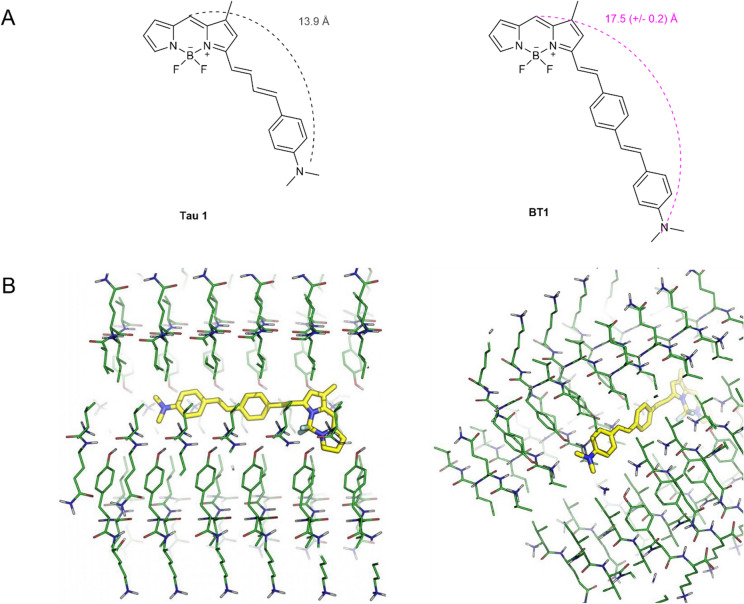
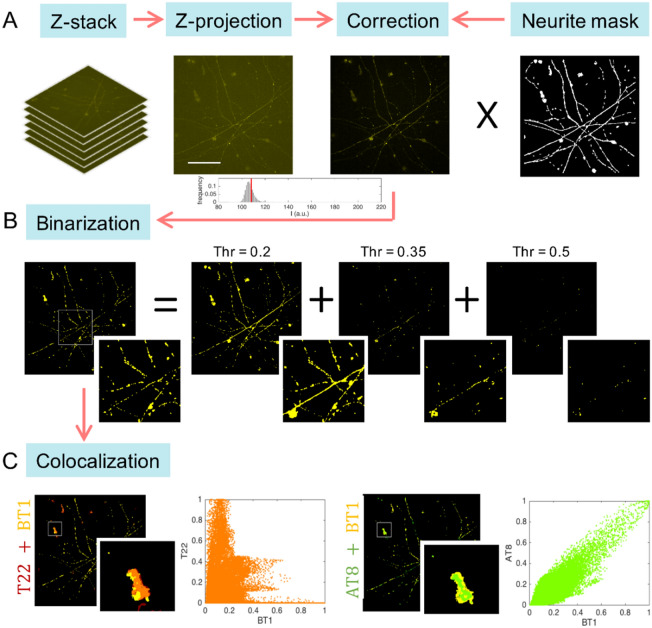
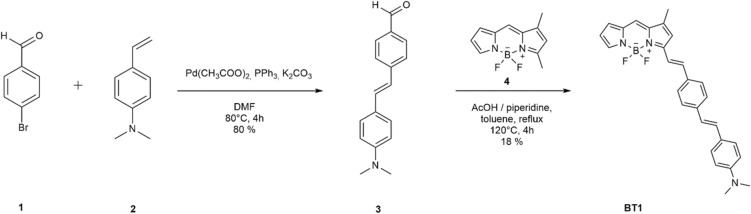
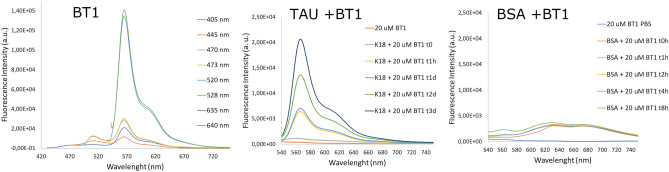
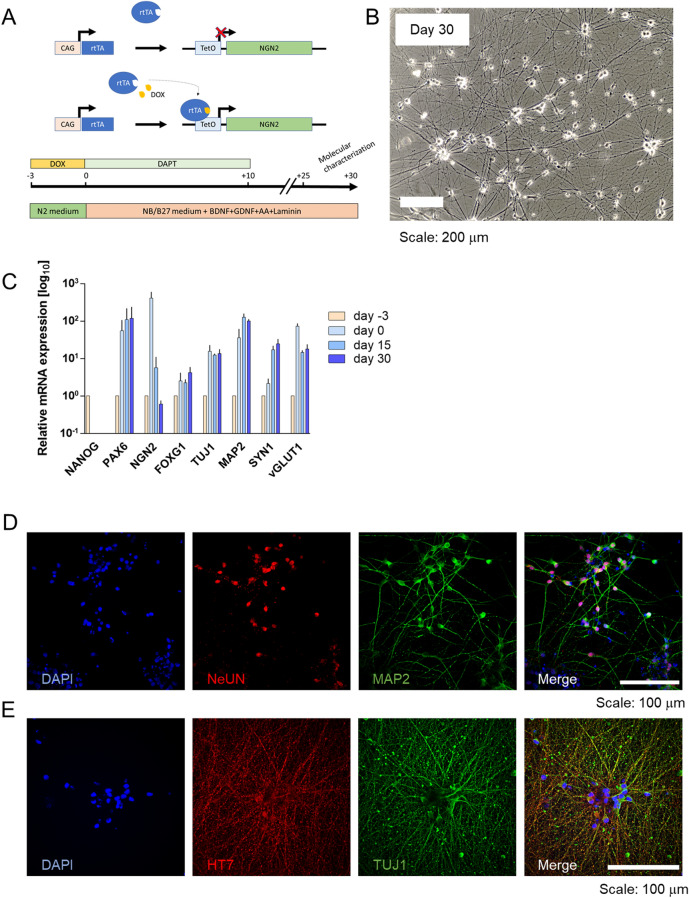
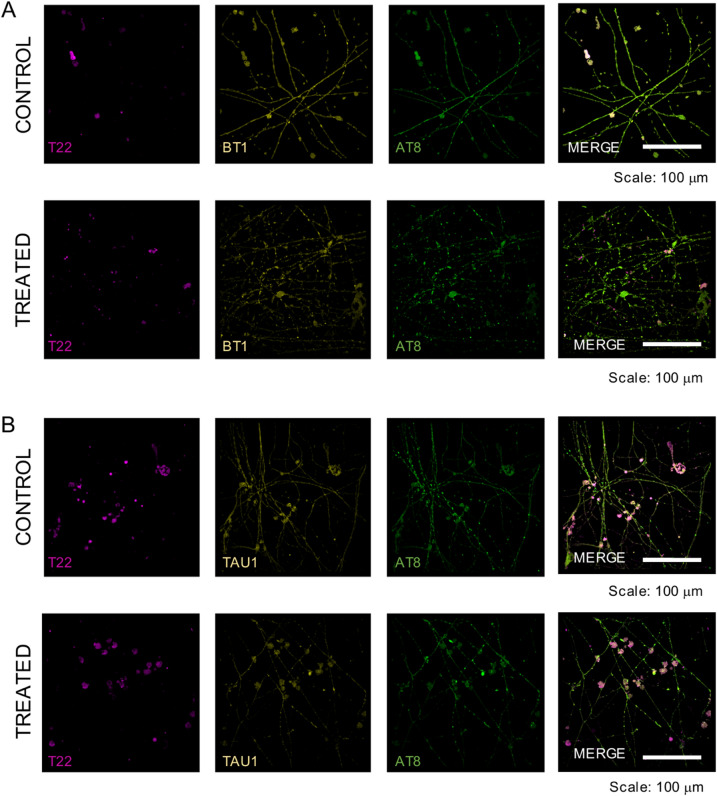
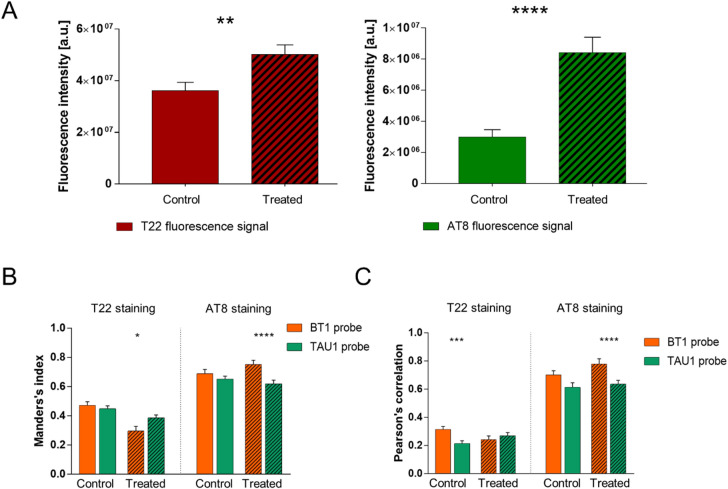
Numerous studies have shown a strong correlation between the number of neurofibrillary tangles of the tau protein and Alzheimer's disease progression, making the quantitative detection of tau very promising from a clinical point of view. However, the lack of highly reliable fluorescent probes for selective imaging of tau neurofibrillary tangles is a major challenge due to sharing similar β-sheet motifs with homologous Amyloid-β fibrils. In the current work, we describe the rational design and the in silico evaluation of a small-size focused library of fluorescent probes, consisting of a BODIPY core (electron acceptor) featuring highly conjugated systems (electron donor) with a length in the range 13-19 Å at C3. Among the most promising probes in terms of binding mode, theoretical affinity and polarity, BT1 has been synthesized and tested in vitro onto human induced pluripotent stem cells derived neuronal cell cultures. The probe showed excellent photophysical properties and high selectivity allowing in vitro imaging of hyperphosphorylated tau protein filaments with minimal background noise. Our findings offer new insight into the structure-activity relationship of this class of tau selective fluorophores, paving the way for boosting tau tangle detection in patients possibly through retinal spectral scans.
大量研究表明,tau 蛋白神经原纤维缠结的数量与阿尔茨海默病的进展之间存在很强的相关性,因此从临床角度来看,tau 的定量检测非常有前景。然而,由于与同源的淀粉样β纤维具有相似的β-折叠结构基序,缺乏对 tau 神经原纤维缠结进行选择性成像的高可靠性荧光探针是一个主要挑战。在当前的工作中,我们描述了一种小型聚焦荧光探针文库的合理设计和计算机模拟评估,该文库由一个 BODIPY 核心(电子受体)组成,具有高度共轭体系(电子供体),在 C3 位上的长度在 13-19Å 范围内。在结合模式、理论亲和力和极性方面最有前途的探针中,我们已经合成了 BT1 并在体外对人类诱导多能干细胞衍生的神经元细胞培养物进行了测试。该探针表现出优异的光物理性质和高选择性,可在最小背景噪声下对过度磷酸化的 tau 蛋白丝进行体外成像。我们的研究结果为这类 tau 选择性荧光团的结构-活性关系提供了新的见解,为通过视网膜光谱扫描增强对患者 tau 缠结的检测铺平了道路。