Division of Transplantation and Cellular Therapies, Dana-Farber Cancer Institute, Harvard Medical School, Boston, Massachusetts, USA.
Koch Institute for Integrative Cancer Research and Department of Biology, Massachusetts Institute of Technology, Cambridge, Massachusetts, USA.
J Clin Invest. 2022 Jun 1;132(11). doi: 10.1172/JCI154334.
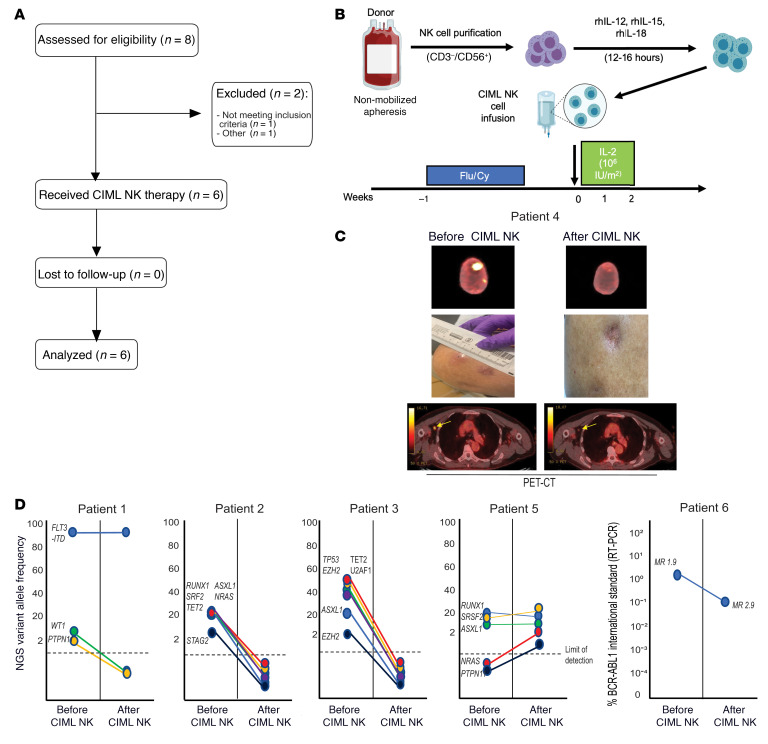
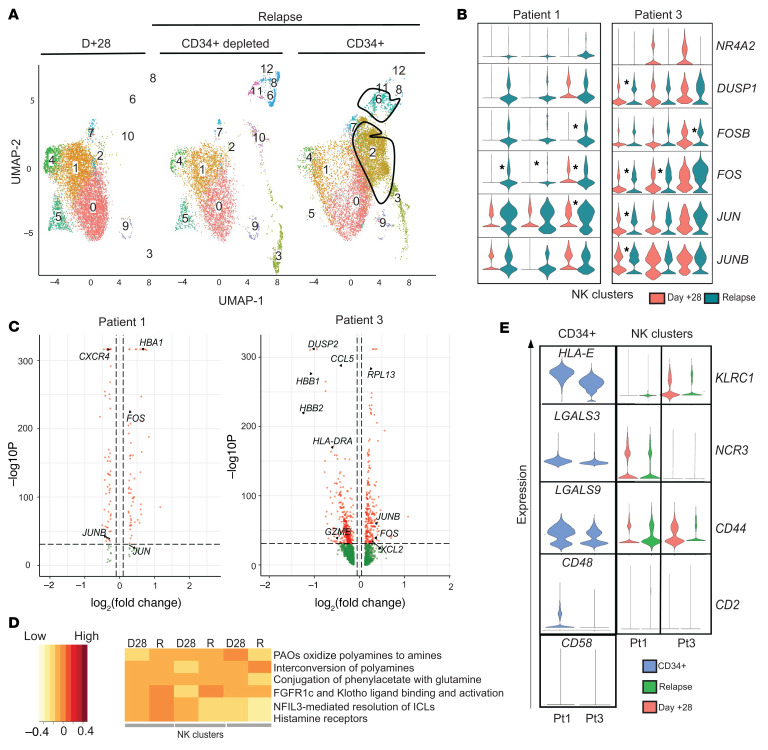
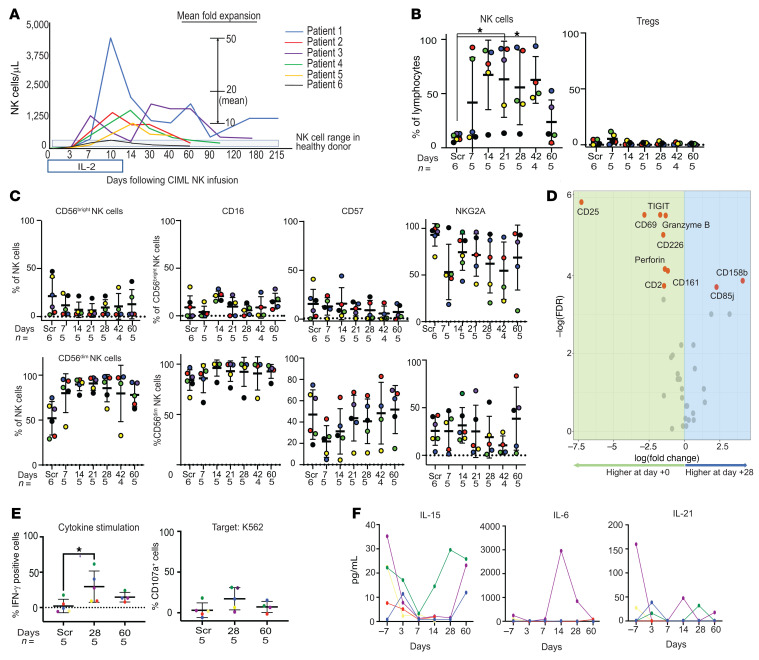
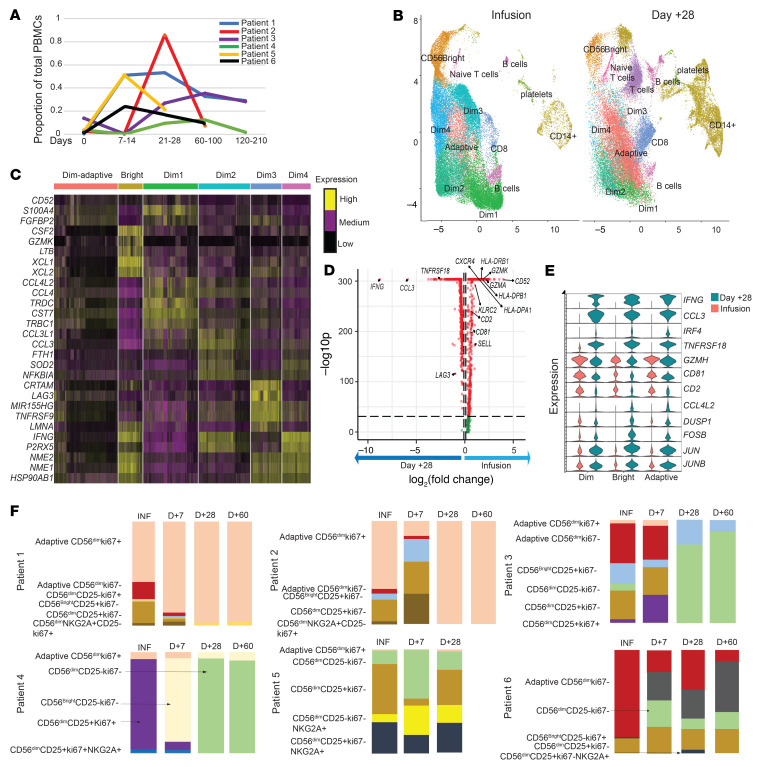
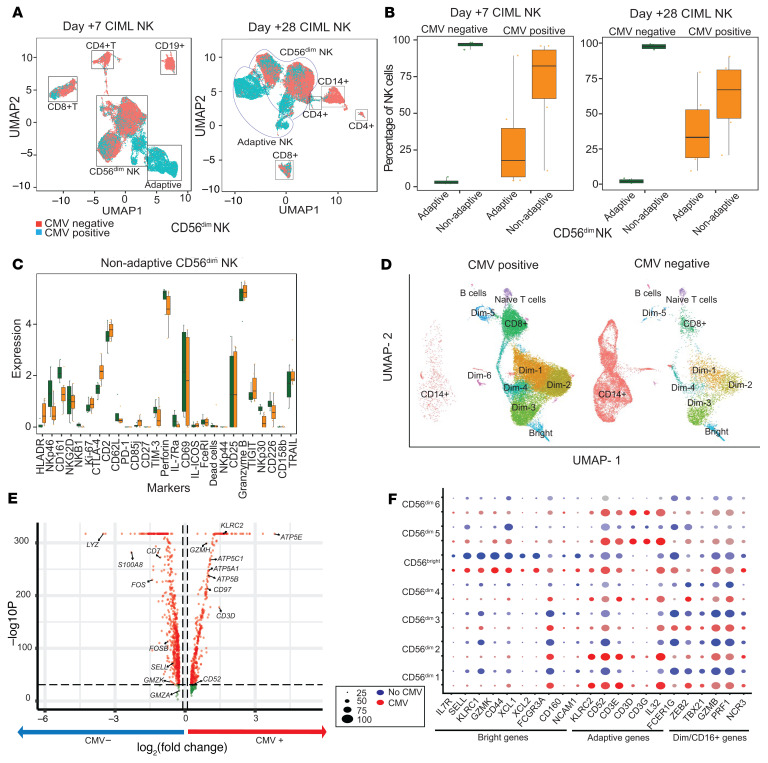
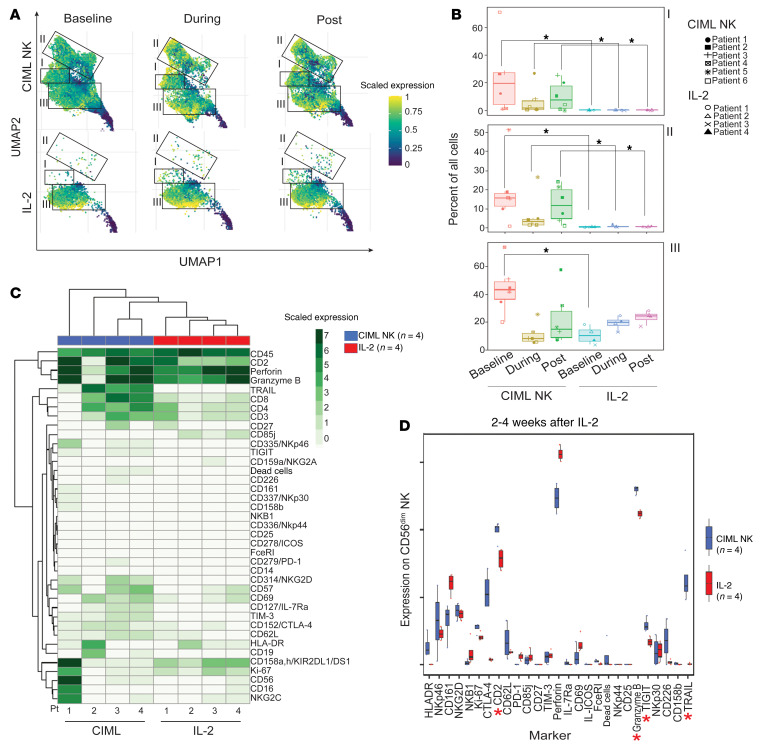
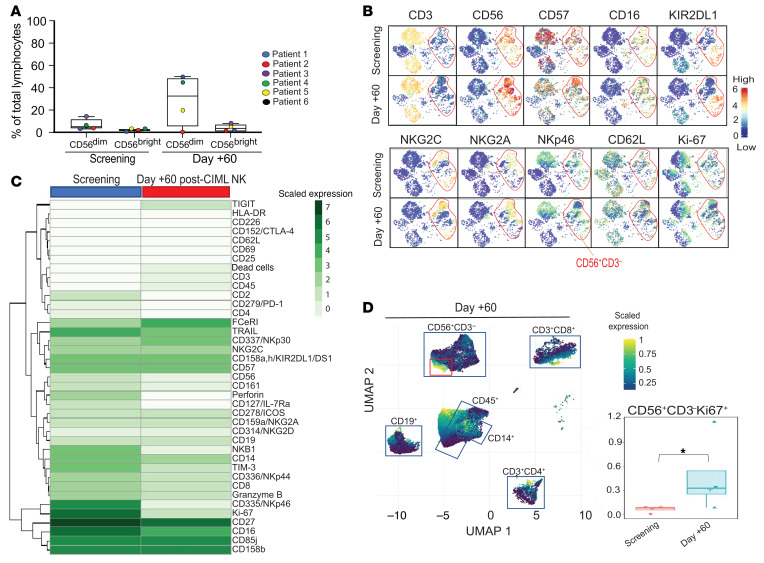
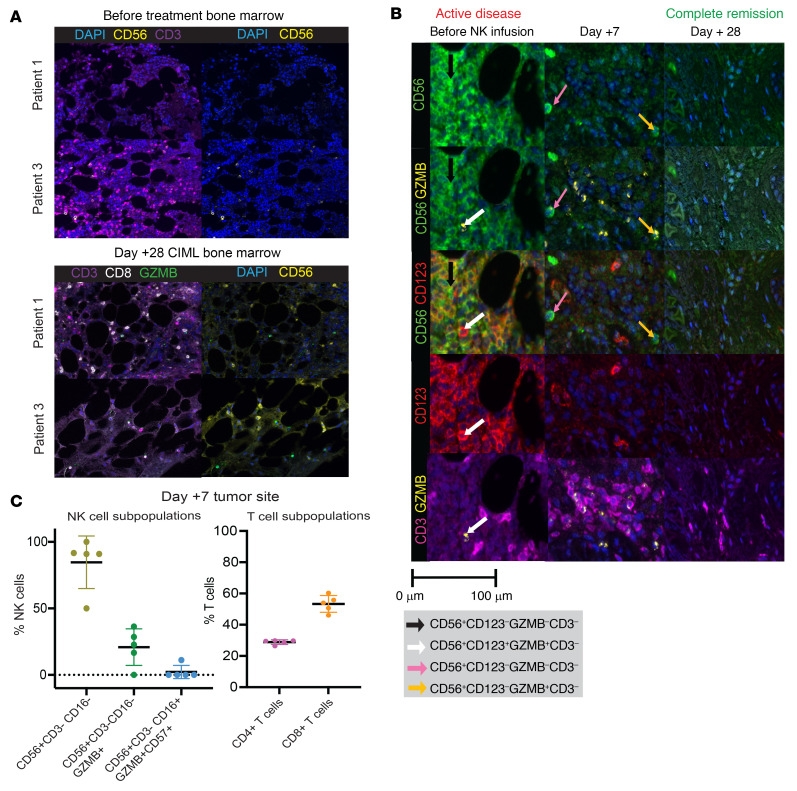
BackgroundResponses to conventional donor lymphocyte infusion for postallogeneic hematopoietic cell transplantation (HCT) relapse are typically poor. Natural killer (NK) cell-based therapy is a promising modality to treat post-HCT relapse.MethodsWe initiated this ongoing phase I trial of adoptively transferred cytokine-induced memory-like (CIML) NK cells in patients with myeloid malignancies who relapsed after haploidentical HCT. All patients received a donor-derived NK cell dose of 5 to 10 million cells/kg after lymphodepleting chemotherapy, followed by systemic IL-2 for 7 doses. High-resolution profiling with mass cytometry and single-cell RNA sequencing characterized the expanding and persistent NK cell subpopulations in a longitudinal manner after infusion.ResultsIn the first 6 enrolled patients on the trial, infusion of CIML NK cells led to a rapid 10- to 50-fold in vivo expansion that was sustained over months. The infusion was well tolerated, with fever and pancytopenia as the most common adverse events. Expansion of NK cells was distinct from IL-2 effects on endogenous post-HCT NK cells, and not dependent on CMV viremia. Immunophenotypic and transcriptional profiling revealed a dynamic evolution of the activated CIML NK cell phenotype, superimposed on the natural variation in donor NK cell repertoires.ConclusionGiven their rapid expansion and long-term persistence in an immune-compatible environment, CIML NK cells serve as a promising platform for the treatment of posttransplant relapse of myeloid disease. Further characterization of their unique in vivo biology and interaction with both T cells and tumor targets will lead to improvements in cell-based immunotherapies.Trial RegistrationClinicalTrials.gov NCT04024761.FundingDunkin' Donuts, NIH/National Cancer Institute, and the Leukemia and Lymphoma Society.
背景
对于异基因造血细胞移植(HCT)后复发的患者,常规供体淋巴细胞输注的反应通常较差。基于自然杀伤(NK)细胞的治疗是一种有前途的治疗 HCT 后复发的方法。
方法
我们在接受单倍体相合 HCT 后复发的髓系恶性肿瘤患者中启动了这项正在进行的 I 期临床试验,采用过继转移细胞因子诱导的记忆样(CIML)NK 细胞。所有患者在接受淋巴细胞清除化疗后接受 5 至 1000 万细胞/kg 的供体来源 NK 细胞剂量,随后接受 7 剂全身性白细胞介素 2(IL-2)。通过质谱流式细胞术和单细胞 RNA 测序进行高分辨率分析,以纵向方式描述输注后不断扩大和持续存在的 NK 细胞亚群。
结果
在该试验的前 6 名入组患者中,CIML NK 细胞输注导致体内迅速扩增 10 至 50 倍,并持续数月。输注耐受性良好,最常见的不良反应是发热和全血细胞减少。NK 细胞的扩增与 IL-2 对 HCT 后内源性 NK 细胞的作用不同,且不依赖于 CMV 病毒血症。免疫表型和转录谱分析显示,激活的 CIML NK 细胞表型发生了动态演变,叠加在供体 NK 细胞库的自然变异之上。
结论
鉴于 CIML NK 细胞在免疫相容环境中快速扩增和长期持续存在,它们为治疗骨髓疾病移植后复发提供了一种很有前途的平台。进一步表征其独特的体内生物学特性及其与 T 细胞和肿瘤靶标的相互作用,将导致细胞免疫疗法的改进。
试验注册
ClinicalTrials.gov NCT04024761。
资金
Dunkin' Donuts、NIH/National Cancer Institute 和白血病和淋巴瘤协会。