Institute of Physiology, Department of Physiology and Medical Physics, Medical University Innsbruck, Innsbruck, Austria.
Department of Pharmacology and Toxicology, Center for Molecular Biosciences Innsbruck, University of Innsbruck, Innsbruck, Austria.
J Gen Physiol. 2022 Sep 5;154(9). doi: 10.1085/jgp.202113028. Epub 2022 Mar 29.
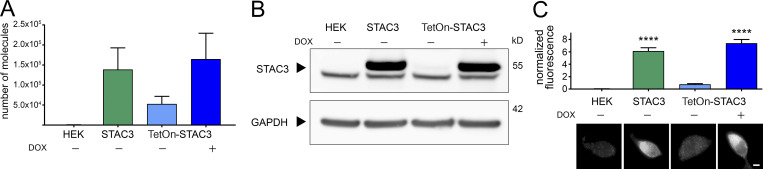
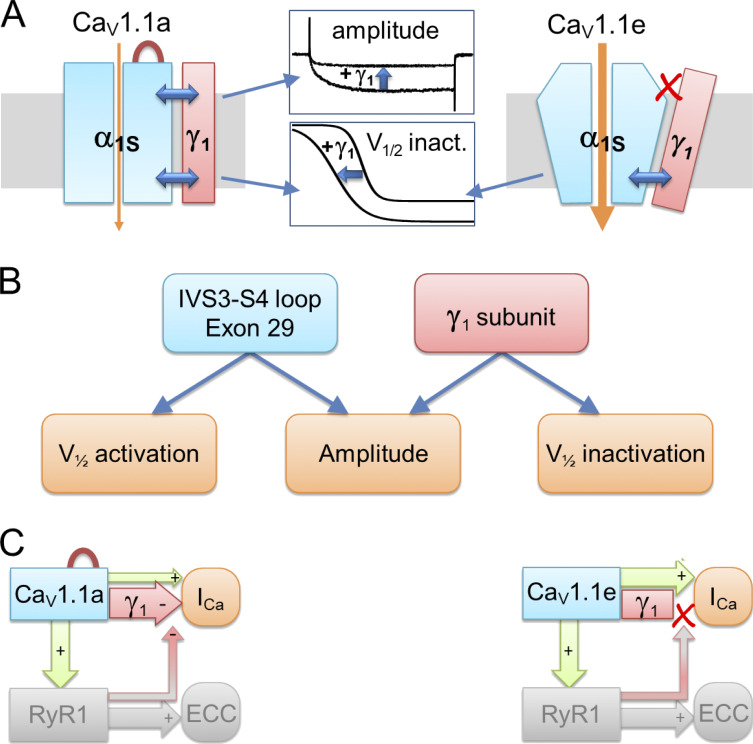
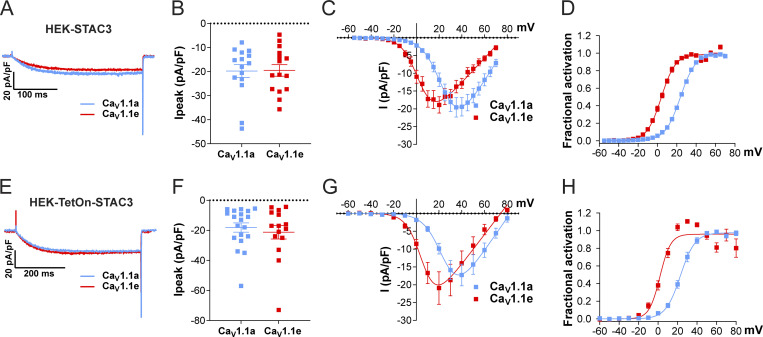
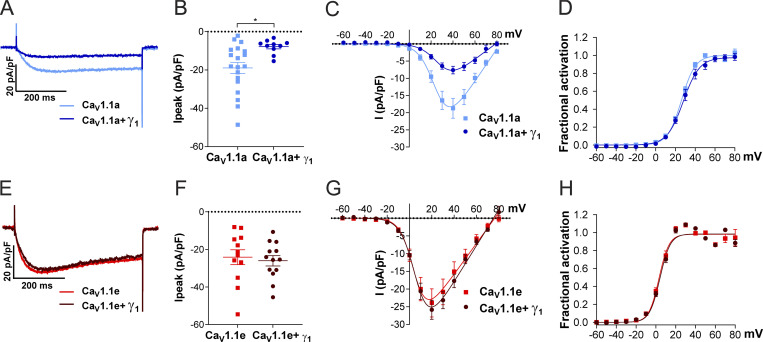
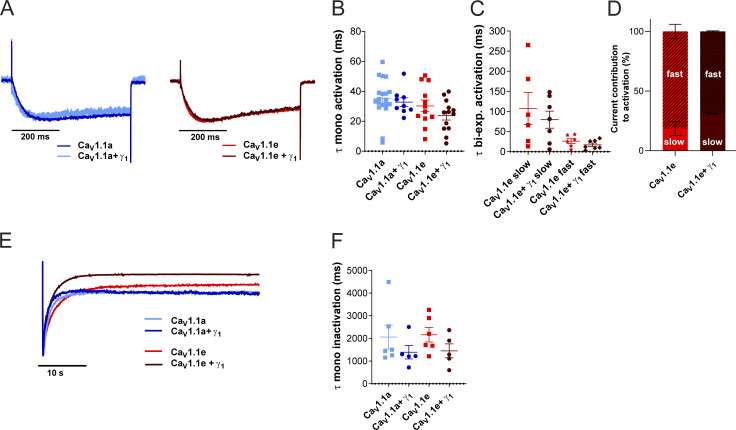
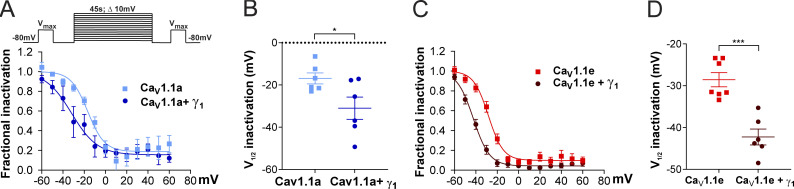
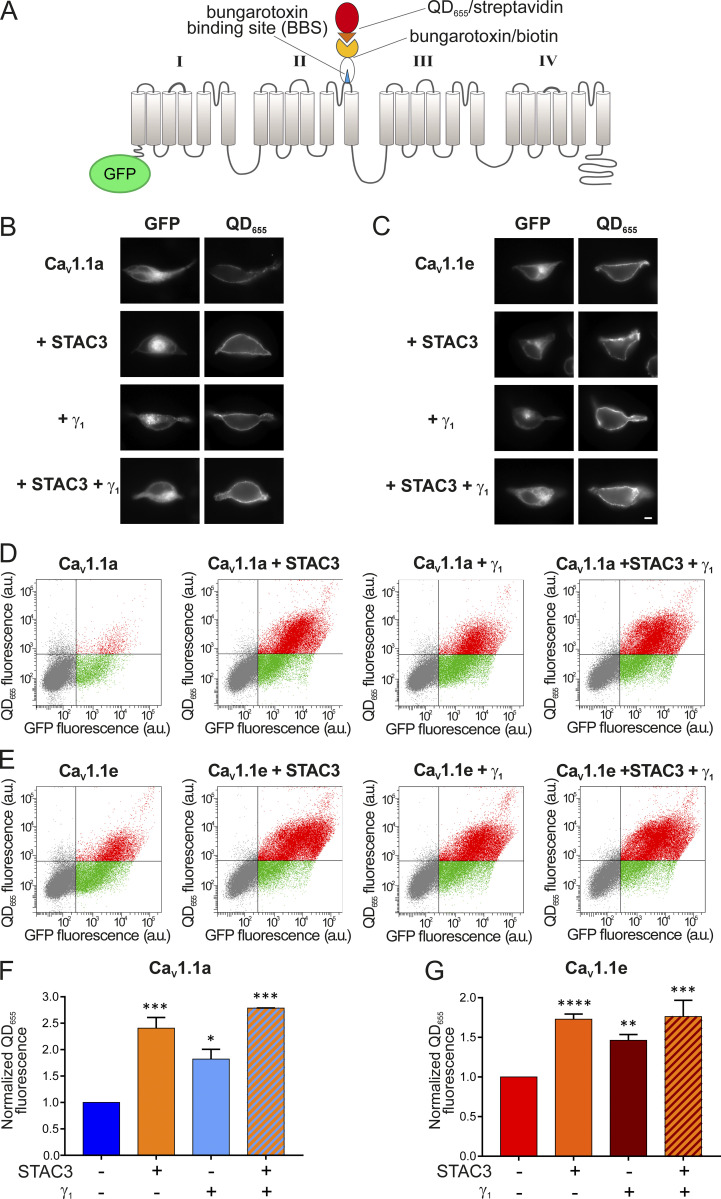
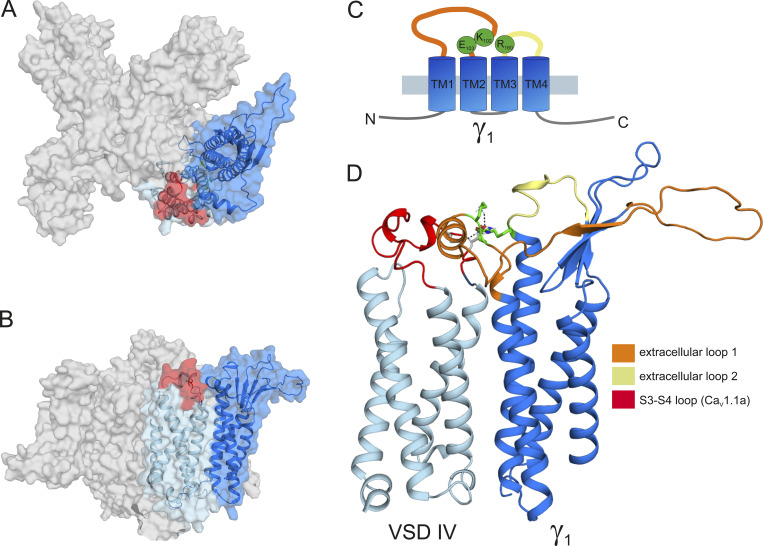
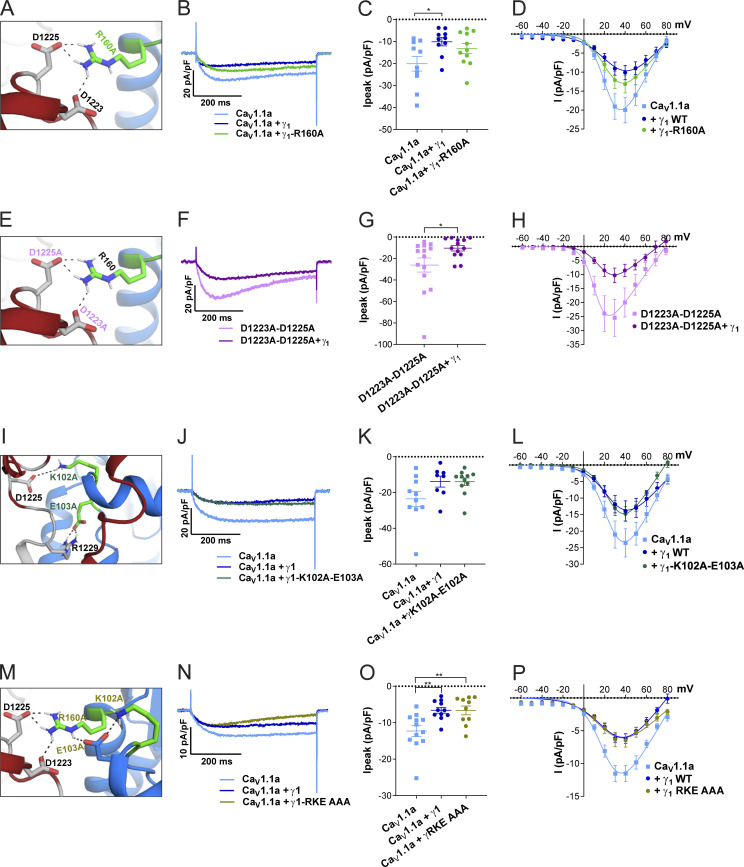
The skeletal muscle voltage-gated calcium channel (CaV1.1) primarily functions as a voltage sensor for excitation-contraction coupling. Conversely, its ion-conducting function is modulated by multiple mechanisms within the pore-forming α1S subunit and the auxiliary α2δ-1 and γ1 subunits. In particular, developmentally regulated alternative splicing of exon 29, which inserts 19 amino acids in the extracellular IVS3-S4 loop of CaV1.1a, greatly reduces the current density and shifts the voltage dependence of activation to positive potentials outside the physiological range. We generated new HEK293 cell lines stably expressing α2δ-1, β3, and STAC3. When the adult (CaV1.1a) and embryonic (CaV1.1e) splice variants were expressed in these cells, the difference in the voltage dependence of activation observed in muscle cells was reproduced, but not the reduced current density of CaV1.1a. Only when we further coexpressed the γ1 subunit was the current density of CaV1.1a, but not that of CaV1.1e, reduced by >50%. In addition, γ1 caused a shift of the voltage dependence of inactivation to negative voltages in both variants. Thus, the current-reducing effect of γ1, unlike its effect on inactivation, is specifically dependent on the inclusion of exon 29 in CaV1.1a. Molecular structure modeling revealed several direct ionic interactions between residues in the IVS3-S4 loop and the γ1 subunit. However, substitution of these residues by alanine, individually or in combination, did not abolish the γ1-dependent reduction of current density, suggesting that structural rearrangements in CaV1.1a induced by inclusion of exon 29 may allosterically empower the γ1 subunit to exert its inhibitory action on CaV1.1 calcium currents.
骨骼肌电压门控钙通道(CaV1.1)主要作为兴奋-收缩偶联的电压传感器发挥作用。相反,其离子传导功能受到孔形成α1S 亚基以及辅助α2δ-1 和γ1 亚基内的多种机制的调节。特别是,外显子 29 的发育调控选择性剪接,在外显子 29 插入 CaV1.1a 的细胞外 IVS3-S4 环中的 19 个氨基酸,极大地降低了电流密度,并将激活的电压依赖性转移到生理范围外的正电位。我们生成了稳定表达α2δ-1、β3 和 STAC3 的新 HEK293 细胞系。当在这些细胞中表达成年(CaV1.1a)和胚胎(CaV1.1e)剪接变体时,观察到肌肉细胞中激活的电压依赖性差异得到重现,但 CaV1.1a 的电流密度并未降低。只有当我们进一步共表达γ1 亚基时,CaV1.1a 的电流密度才会降低,但 CaV1.1e 的电流密度不会降低超过 50%。此外,γ1 会使两种变体的失活电压依赖性向负电压移动。因此,γ1 的电流降低效应与其对失活的影响不同,其具体取决于 CaV1.1a 中外显子 29 的包含。分子结构建模揭示了 IVS3-S4 环中的残基与γ1 亚基之间的几个直接离子相互作用。然而,这些残基的丙氨酸取代,单独或组合,都没有消除γ1 依赖性的电流密度降低,这表明 CaV1.1a 中外显子 29 的包含引起的结构重排可能使γ1 亚基能够变构地对 CaV1.1 钙电流发挥其抑制作用。