Department of Molecular, Cellular, and Developmental Biology, University of California, Santa Barbara CA 93106, USA; Institute for Collaborative Biotechnologies, University of California, Santa Barbara, CA 93106, USA.
Cancer Metabolism and Signaling Networks Program, Sanford Burnham Prebys Medical Discovery Institute, La Jolla, CA 92037, USA.
EBioMedicine. 2022 Apr;78:103965. doi: 10.1016/j.ebiom.2022.103965. Epub 2022 Mar 27.
Although sepsis accounts for 1 in 5 deaths globally, few molecular therapies exist for this condition. The development of effective biomarkers and treatments for sepsis requires a more complete understanding of host responses and pathogenic mechanisms at early stages of disease to minimize host-driven pathology.
An alternative to the current symptom-based approach used to diagnose sepsis is a precise assessment of blood proteomic changes during the onset and progression of Salmonella Typhimurium (ST) murine sepsis.
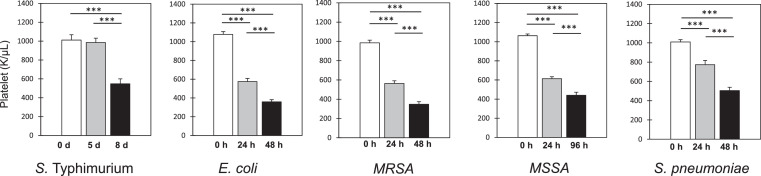
A distinct pattern of coagulation factor protein abundance was identified in the pre-septic state- prior to overt disease symptoms or bacteremia- that was predictive of the dysregulation of fibrinolytic and anti-coagulant activities and resultant consumptive coagulopathy during ST murine sepsis. Moreover, the changes in protein abundance observed generally have the same directionality (increased or decreased abundance) reported for human sepsis. Significant overlap of ST coagulopathic activities was observed in Gram-negative Escherichia coli- but not in Gram-positive staphylococcal or pneumococcal murine sepsis models. Treatment with matrix metalloprotease inhibitors prevented aberrant inflammatory and coagulopathic activities post-ST infection and increased survival. Antibiotic treatment regimens initiated after specific changes arise in the plasma proteome post-ST infection were predictive of an increase in disease relapse and death after cessation of antibiotic treatment.
Altered blood proteomics provides a platform to develop rapid and easy-to-perform tests to predict sepsis for early intervention via biomarker incorporation into existing blood tests prompted by patient presentation with general malaise, and to stratify Gram-negative and Gram-positive infections for appropriate treatment. Antibiotics are less effective in microbial clearance when initiated after the onset of altered blood proteomics as evidenced by increased disease relapse and death after termination of antibiotic therapy. Treatment failure is potentially due to altered bacterial / host-responses and associated increased host-driven pathology, providing insight into why delays in antibiotic administration in human sepsis are associated with increased risk for death. Delayed treatment may thus require prolonged therapy for microbial clearance despite the prevailing notion of antibiotic de-escalation and shortened courses of antibiotics to improve drug stewardship.
National Institutes of Health, U.S. Army.
尽管脓毒症占全球死亡人数的 1/5,但针对这种疾病的分子疗法却很少。为了开发有效的生物标志物和脓毒症治疗方法,需要在疾病早期更全面地了解宿主反应和致病机制,以最大程度地减少宿主驱动的病理。
替代目前用于诊断脓毒症的基于症状的方法是在沙门氏菌 Typhimurium(ST)鼠脓毒症的发作和进展过程中,精确评估血液蛋白质组的变化。
在出现明显疾病症状或菌血症之前的预脓毒症状态中,鉴定出凝血因子蛋白丰度的独特模式,该模式可预测 ST 鼠脓毒症期间纤溶和抗凝活性的失调以及由此产生的消耗性凝血病。此外,观察到的蛋白质丰度变化通常具有与人类脓毒症相同的方向性(增加或减少丰度)。在革兰氏阴性大肠杆菌中观察到 ST 凝血异常活动的显著重叠,但在革兰氏阳性葡萄球菌或肺炎球菌鼠脓毒症模型中则没有。在 ST 感染后使用基质金属蛋白酶抑制剂治疗可预防异常炎症和凝血异常活动,并提高生存率。在 ST 感染后血浆蛋白质组中出现特定变化后开始的抗生素治疗方案可预测抗生素治疗停止后疾病复发和死亡的增加。
改变的血液蛋白质组学为开发快速简便的测试提供了一个平台,通过将生物标志物纳入现有血液测试中,根据患者出现全身不适的情况提示,早期干预预测脓毒症,对革兰氏阴性和革兰氏阳性感染进行分层,以进行适当的治疗。抗生素治疗开始后,改变的血液蛋白质组学的出现表明微生物清除效果较差,因为抗生素治疗停止后疾病复发和死亡增加。治疗失败可能是由于改变的细菌/宿主反应以及相关的增加的宿主驱动的病理,这提供了深入了解为什么在人类脓毒症中延迟抗生素给药与死亡风险增加有关的原因。尽管存在抗生素降级和缩短抗生素疗程以改善药物管理的普遍观念,但延迟治疗可能仍需要延长微生物清除的治疗时间。
美国国立卫生研究院,美国陆军。