Hunter Stephanie R, Hannum Mackenzie E, Pellegrino Robert, O'Leary Maureen A, Rawson Nancy E, Reed Danielle R, Dalton Pamela H, Parma Valentina
Monell Chemical Senses Center, Philadelphia, PA.
Department of Psychology, Temple University, Philadelphia, PA.
medRxiv. 2022 Nov 8:2022.03.23.22272807. doi: 10.1101/2022.03.23.22272807.
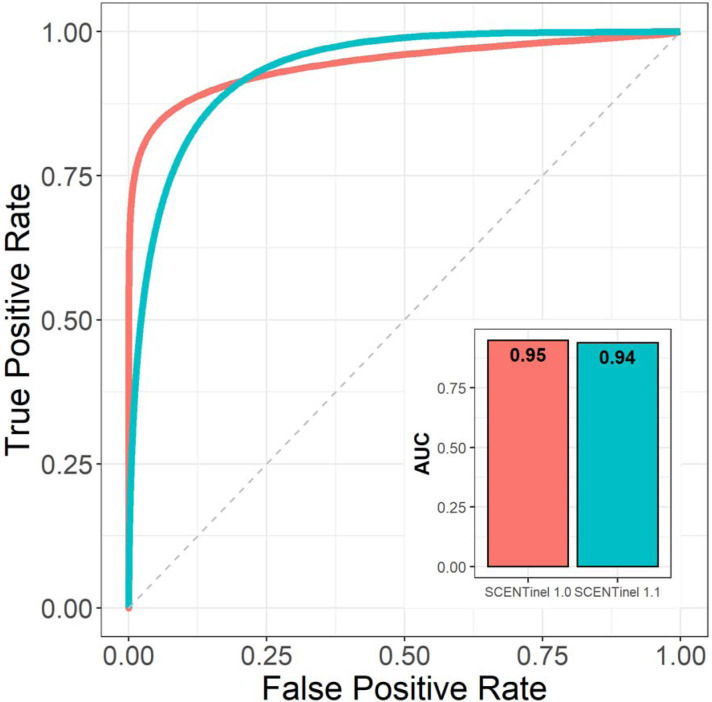
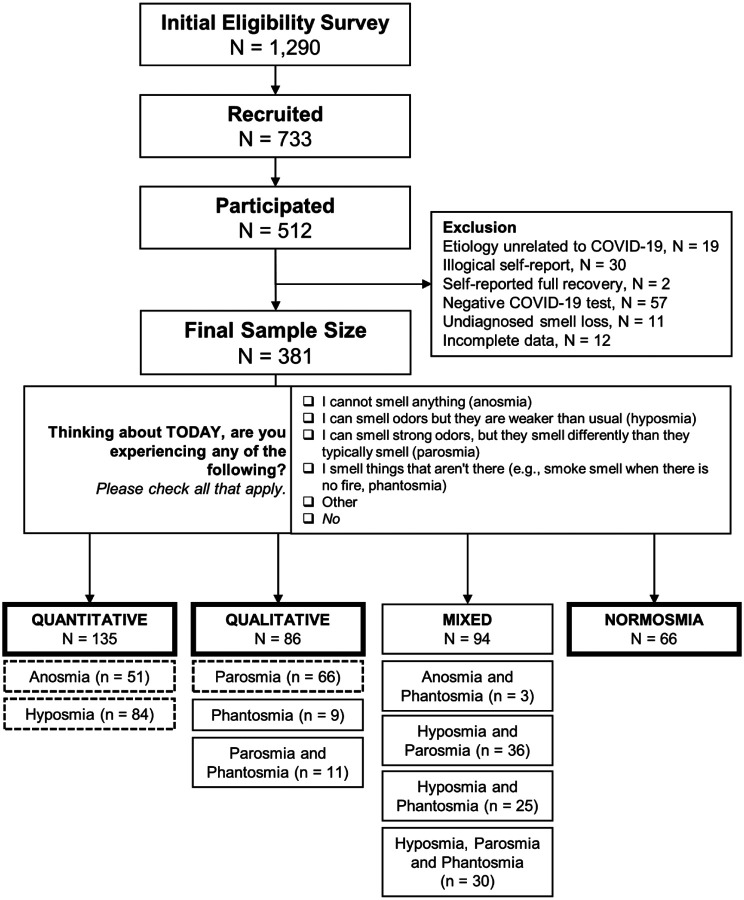
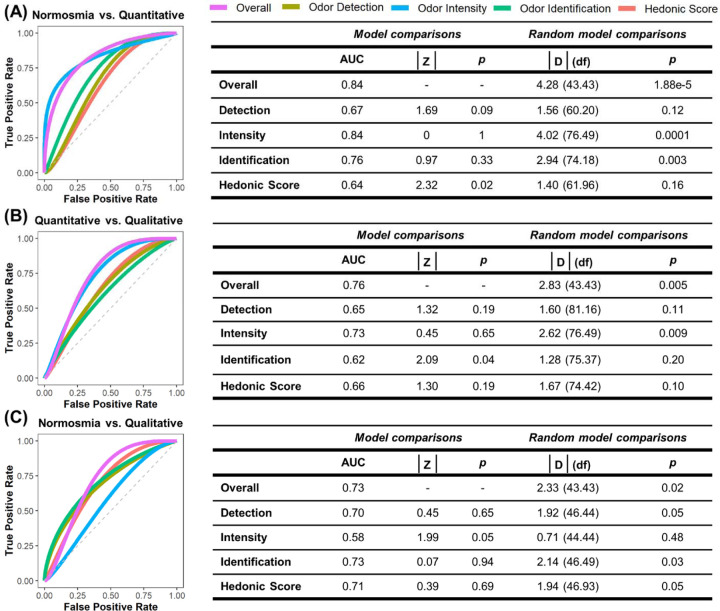
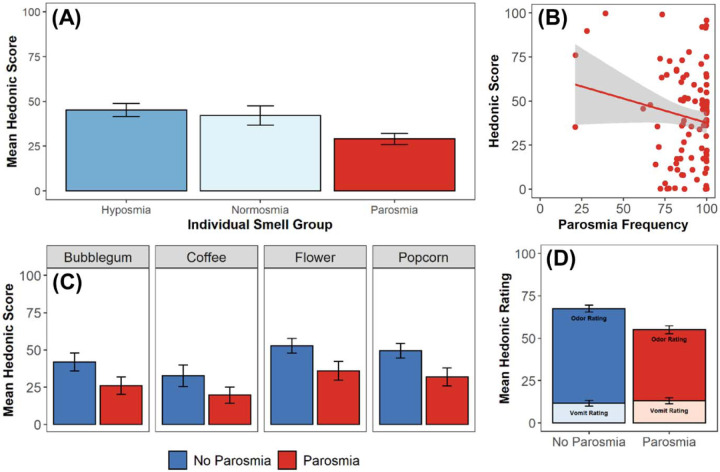
It is estimated that 20-67% of those with COVID-19 develop olfactory disorders, depending on the SARS-CoV-2 variant. However, there is an absence of quick, population-wide olfactory tests to screen for olfactory disorders. The purpose of this study was to provide a proof-of-concept that SCENTinel 1.1, a rapid, inexpensive, population-wide olfactory test, can discriminate between anosmia (total smell loss), hyposmia (reduced sense of smell), parosmia (distorted odor perception), and phantosmia (odor sensation without a source). Participants were mailed a SCENTinel 1.1 test, which measures odor detection, intensity, identification, and pleasantness, using one of four possible odors. Those who completed the test (N = 381) were divided into groups based on their self-reported olfactory function: quantitative olfactory disorder (anosmia or hyposmia, N = 135), qualitative olfactory disorder (parosmia and/or phantosmia; N = 86), and normosmia (normal sense of smell; N = 66). SCENTinel 1.1 accurately discriminates quantitative olfactory disorders, qualitative olfactory disorders, and normosmia groups. When olfactory disorders were assessed individually, SCENTinel 1.1 discriminates between hyposmia, parosmia and anosmia. Participants with parosmia rated common odors less pleasant than those without parosmia. We provide proof-of-concept that SCENTinel 1.1, a rapid smell test, can discriminate quantitative and qualitative olfactory disorders, and is the only direct test to rapidly discriminate parosmia.
据估计,20%-67%的新冠肺炎患者会出现嗅觉障碍,这取决于严重急性呼吸综合征冠状病毒2(SARS-CoV-2)的变体。然而,目前缺乏快速、针对全体人群的嗅觉测试来筛查嗅觉障碍。本研究的目的是提供一个概念验证,即SCENTinel 1.1这种快速、廉价、针对全体人群的嗅觉测试能够区分嗅觉丧失(完全嗅觉丧失)、嗅觉减退(嗅觉减弱)、嗅觉倒错(气味感知扭曲)和嗅觉幻觉(无来源的气味感觉)。研究人员给参与者邮寄了一份SCENTinel 1.1测试,该测试使用四种可能气味中的一种来测量气味检测、强度、识别和愉悦度。完成测试的参与者(N = 381)根据其自我报告的嗅觉功能被分为几组:定量嗅觉障碍(嗅觉丧失或嗅觉减退,N = 135)、定性嗅觉障碍(嗅觉倒错和/或嗅觉幻觉;N = 86)和嗅觉正常(正常嗅觉;N = 66)。SCENTinel 1.1能够准确区分定量嗅觉障碍、定性嗅觉障碍和嗅觉正常组。当单独评估嗅觉障碍时,SCENTinel 1.1能够区分嗅觉减退、嗅觉倒错和嗅觉丧失。有嗅觉倒错的参与者对常见气味的愉悦度评价低于没有嗅觉倒错的参与者。我们提供了概念验证,即SCENTinel 1.1这种快速嗅觉测试能够区分定量和定性嗅觉障碍,并且是唯一能快速区分嗅觉倒错的直接测试。