Thangavelu Sathiamoorthi, Dhandapani Ranjithkumar, Arulprakasam Ajucarmelprecilla, Paramasivam Ragul, Chinnathambi Arunachalam, Ali Alharbi Sulaiman, Durairaj Kaliannan, Shrestha Anupama
Medical Microbiology Unit, Department of Microbiology, Alagappa University, Karaikudi 630003, Tamil Nadu, India.
Chimertech Private Limited, Chennai, India.
Evid Based Complement Alternat Med. 2022 Mar 20;2022:7234586. doi: 10.1155/2022/7234586. eCollection 2022.
In recent times, urinary tract infection (UTI) is one of the most widely recognized bacterial diseases all over the planet. UTI influences individuals of any age and gender. The target of this study is to concentrate on the recurrence of uropathogens, the antimicrobial susceptibility pattern of the isolates, and the plasmid profile of people from the government clinics of Karaikudi.
From July 2017 to December 2017, 100 urine tests were gathered and handled for the isolation of pathogenic microbes. In total, 89 isolates were found from the samples collected.
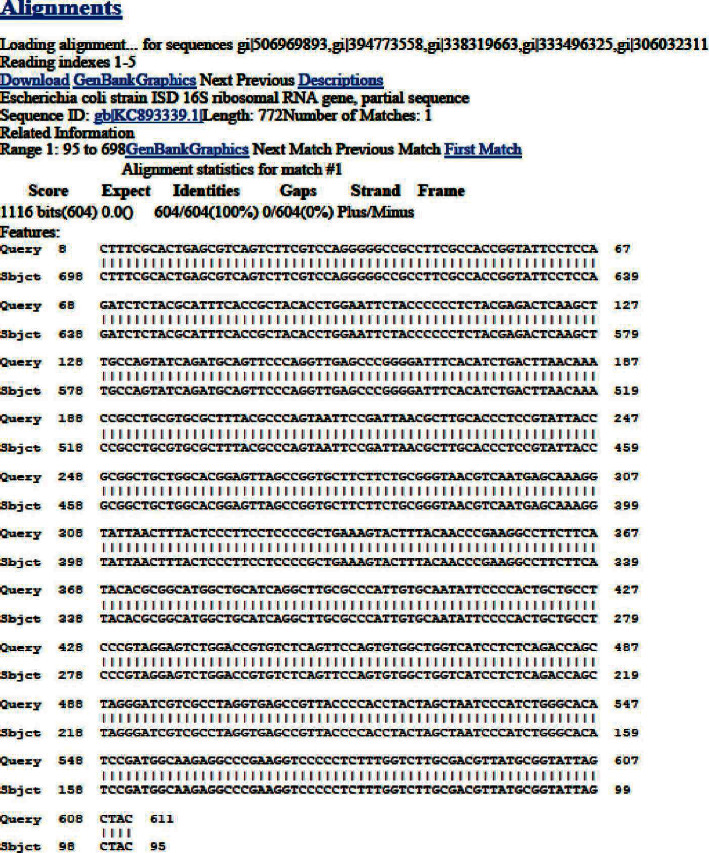
was discovered as the most common bacterial isolate screened from the UTI-infected people, accounting for 28.09 percent of all isolates. was seen to be the highest prevalent bacterium for UTI in all age groups and demonstrated resistance to routinely used medications, especially cefpodoxime and novobiocin, which have been 100 percent resistant. The isolates screened were positive for beta-lactamase and film generation, and they have strong antimicrobial resistance. As a result, the strains with the highest prevalence of virulence determinants have become more resistant to many medications because they support the microorganism in overcoming the host's defense and colonizing or entering the urinary system. The amplified 16S rRNA product was analyzed, and phylogenetic relationships were determined. The presence of TEM (56 percent), CTX-M (64 percent), SHV (40 percent), and OXA (60 percent) was discovered. Among isolates, CTX-M was the most common extended spectrum-beta lactamase (ESBL). Multiplex PCR was also used to identify the existence of CTX-M subgroups in isolates.
Finally, we urge that antibiotic selection should be predicated on the awareness of the specific prevalence and that novel antimicrobial medicines for urinary infections be developed to combat the overuse of antibiotics.
近年来,尿路感染(UTI)是全球最广为人知的细菌性疾病之一。UTI影响任何年龄和性别的人群。本研究的目的是关注尿路病原体的复发情况、分离株的抗菌药敏模式以及来自卡拉伊古迪政府诊所人群的质粒图谱。
2017年7月至2017年12月,收集并处理了100份尿液样本以分离致病微生物。从采集的样本中总共分离出89株菌株。
被发现是从UTI感染人群中筛选出的最常见细菌分离株,占所有分离株的28.09%。在所有年龄组中,被视为UTI最普遍的细菌,并且对常用药物表现出耐药性,尤其是头孢泊肟和新生霉素,耐药率达100%。筛选出的分离株对β-内酰胺酶和生物膜形成呈阳性,且具有很强的抗菌耐药性。因此,毒力决定因素患病率最高的菌株对许多药物的耐药性更强,因为它们有助于微生物克服宿主防御并在泌尿系统中定殖或侵入。对扩增的16S rRNA产物进行了分析,并确定了系统发育关系。发现存在TEM(56%)、CTX-M(64%)、SHV(40%)和OXA(60%)。在分离株中,CTX-M是最常见的超广谱β-内酰胺酶(ESBL)。还使用多重PCR来鉴定分离株中CTX-M亚组的存在。
最后,我们敦促抗生素的选择应基于对特定患病率的了解,并开发用于治疗泌尿系统感染的新型抗菌药物以应对抗生素的过度使用。