Boulton Dillon P, Caino M Cecilia
Department of Pharmacology, University of Colorado School of Medicine, Aurora, CO, United States.
Pharmacology Graduate Program, University of Colorado, Aurora, CO, United States.
Front Cell Dev Biol. 2022 Mar 9;10:849962. doi: 10.3389/fcell.2022.849962. eCollection 2022.
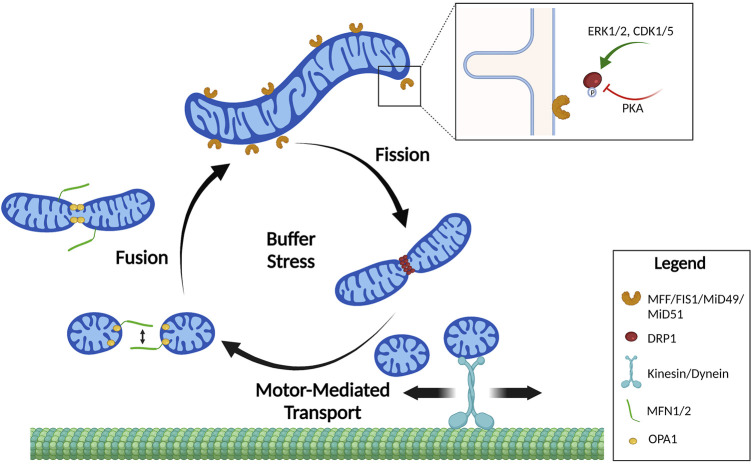
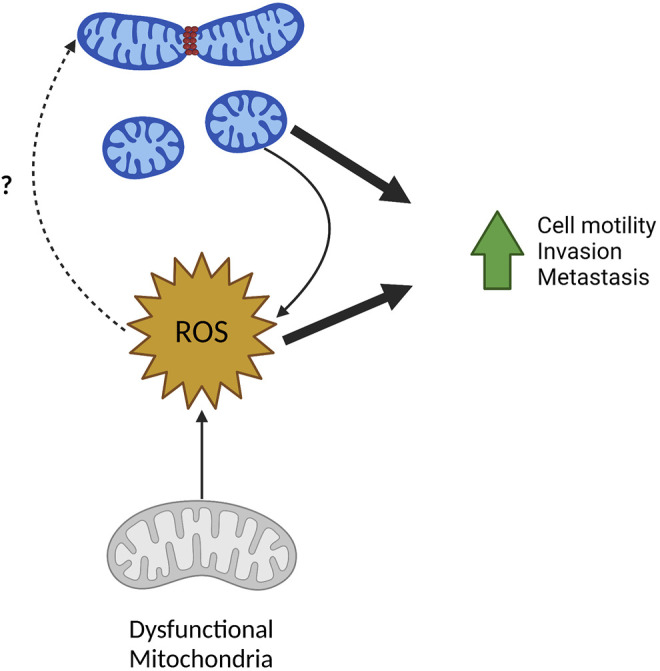
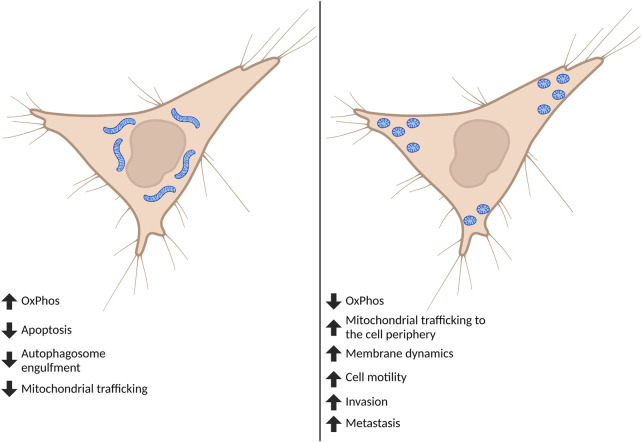
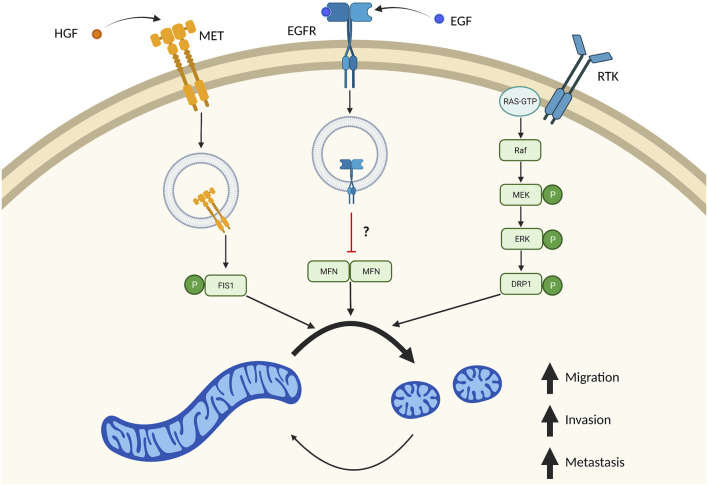
Mitochondria are highly dynamic organelles which can change their shape, via processes termed fission and fusion, in order to adapt to different environmental and developmental contexts. Due to the importance of these processes in maintaining a physiologically healthy pool of mitochondria, aberrant cycles of fission/fusion are often seen in pathological contexts. In this review we will discuss how dysregulated fission and fusion promote tumor progression. We focus on the molecular mechanisms involved in fission and fusion, discussing how altered mitochondrial fission and fusion change tumor cell growth, metabolism, motility, and invasion and, finally how changes to these tumor-cell intrinsic phenotypes directly and indirectly impact tumor progression to metastasis. Although this is an emerging field of investigation, the current consensus is that mitochondrial fission positively influences metastatic potential in a broad variety of tumor types. As mitochondria are now being investigated as vulnerable targets in a variety of cancer types, we underscore the importance of their dynamic nature in potentiating tumor progression.
线粒体是高度动态的细胞器,可通过称为裂变和融合的过程改变其形状,以适应不同的环境和发育背景。由于这些过程在维持生理上健康的线粒体库方面的重要性,在病理情况下经常会出现异常的裂变/融合循环。在本综述中,我们将讨论裂变和融合失调如何促进肿瘤进展。我们关注参与裂变和融合的分子机制,讨论线粒体裂变和融合的改变如何改变肿瘤细胞的生长、代谢、运动和侵袭,最后讨论这些肿瘤细胞内在表型的变化如何直接和间接地影响肿瘤进展至转移。尽管这是一个新兴的研究领域,但目前的共识是线粒体裂变在多种肿瘤类型中对转移潜能有积极影响。由于线粒体目前正在被研究为多种癌症类型中的脆弱靶点,我们强调其动态性质在促进肿瘤进展中的重要性。