Department of Thoracic Surgery, The Fifth People's Hospital of Shanghai, Shanghai, China.
PeerJ. 2022 Mar 24;10:e13057. doi: 10.7717/peerj.13057. eCollection 2022.
Recurrence is a risk factor for the prognosis of lung squamous carcinoma (LUSC). DNA methylation levels of RNAs are also associated with LUSC prognosis. This study aimed to construct a prognostic model with high performance in predicting LUSC prognosis using the methylation levels of lncRNAs and genes.
The differentially expressed RNAs (DERs) and differentially methylated RNAs (DMRs) between the recurrent and non-recurrent LUSC tissues in The Cancer Genome Atlas (TCGA; training dataset) were identified. Weighted correlation network analysis was performed to identify co-methylation networks. Differentially methylated genes and lncRNAs with opposite expression-methylation levels were used for the screening of prognosis-associated RNAs. The prognostic model was constructed and its performance was validated in the GSE39279 dataset.
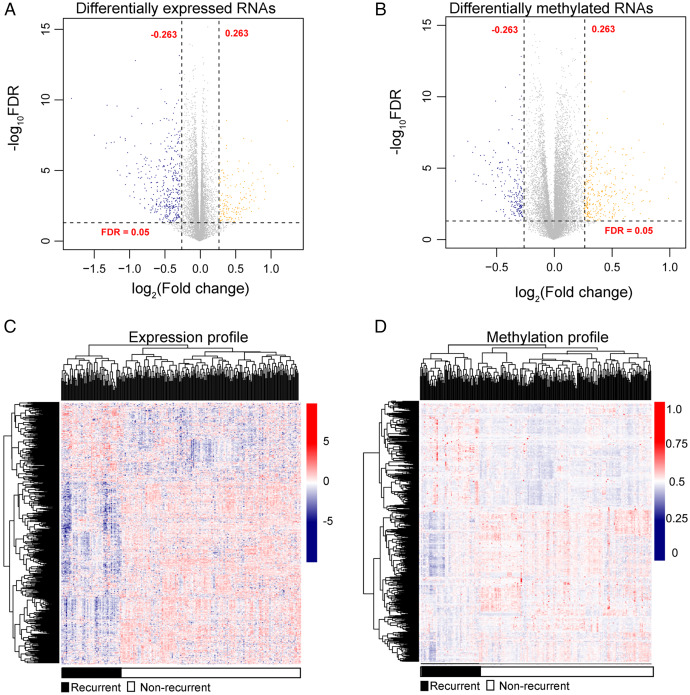
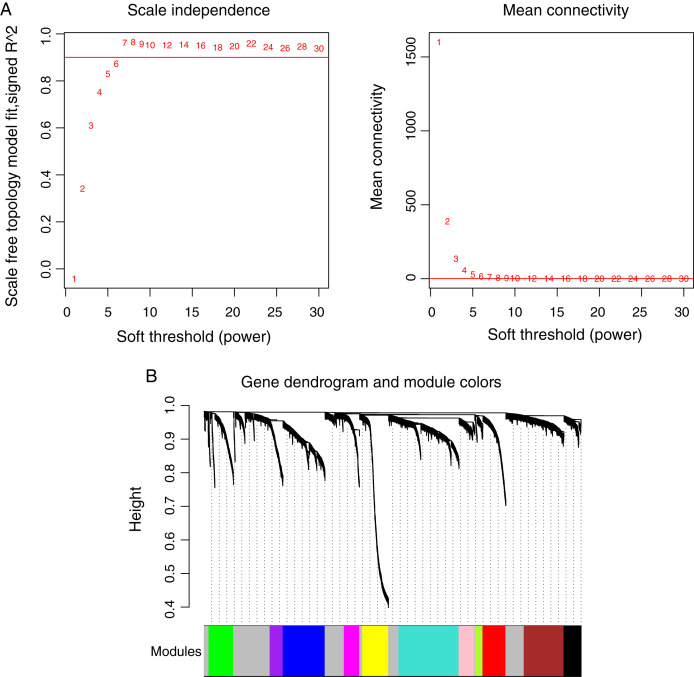
A total of 664 DERs and 981 DMRs (including 972 genes) in recurrent LUSC tissues were identified. Three co-methylation modules, including 226 differentially methylated genes, were significantly associated with LUSC. Among prognosis-associated RNAs, 18 DERs/DMRs with opposite methylation-expression levels were included in the methylation prognostic risk model. LUSC patients with high risk scores had a poor prognosis compared with patients who had low risk scores (TCGA: HR = 3.856, 95% CI [2.297-6.471]; GSE39279: HR = 3.040, 95% CI [1.435-6.437]). This model had a high accuracy in predicting the prognosis (AUC = 0.903 and 0.800, respectively), equivalent to the nomogram model inclusive of clinical variables.
Referring to the methylation levels of the 16-RNAs might help to predict the survival outcomes in LUSC.
复发是肺鳞癌(LUSC)预后的一个危险因素。RNA 的 DNA 甲基化水平也与 LUSC 的预后相关。本研究旨在构建一种使用 lncRNA 和基因的甲基化水平进行预测 LUSC 预后的高绩效预测模型。
在癌症基因组图谱(TCGA;训练数据集)中鉴定了复发性和非复发性 LUSC 组织之间差异表达的 RNA(DERs)和差异甲基化的 RNA(DMRs)。进行加权相关网络分析以鉴定共甲基化网络。使用具有相反表达-甲基化水平的差异甲基化基因和 lncRNA 筛选与预后相关的 RNA。在 GSE39279 数据集构建并验证预后模型。
在复发性 LUSC 组织中鉴定出 664 个 DER 和 981 个 DMR(包括 972 个基因)。三个共甲基化模块,包括 226 个差异甲基化基因,与 LUSC 显著相关。在与预后相关的 RNA 中,包含 18 个具有相反甲基化-表达水平的 DER/DMR,包含在甲基化预后风险模型中。高风险评分的 LUSC 患者的预后比低风险评分的患者差(TCGA:HR = 3.856,95%CI [2.297-6.471];GSE39279:HR = 3.040,95%CI [1.435-6.437])。该模型在预测预后方面具有很高的准确性(AUC 分别为 0.903 和 0.800),与包含临床变量的列线图模型相当。
参考 16 个 RNA 的甲基化水平可能有助于预测 LUSC 的生存结果。