Xu Yuhao, Zheng Qinghui, Zhou Tao, Ye Buyun, Xu Qiuran, Meng Xuli
The Second Clinical Medical College, Zhejiang Chinese Medical University, Hangzhou, China.
General Surgery, Cancer Center, Department of Breast Surgery, Zhejiang Provincial People's Hospital (Affiliated People's Hospital, Hangzhou Medical College), Hangzhou, China.
Front Oncol. 2022 May 24;12:887318. doi: 10.3389/fonc.2022.887318. eCollection 2022.
Necroptosis is a mode of programmed cell death that overcomes apoptotic resistance. We aimed to construct a steady necroptosis-related signature and identify subtypes for prognostic and immunotherapy sensitivity prediction.
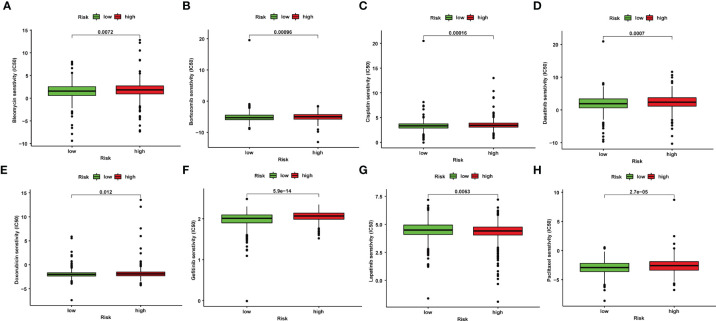
Necroptosis-related prognostic lncRNAs were selected by co-expression analysis, and were used to construct a linear stepwise regression model univariate and multivariate Cox regression, along with least absolute shrinkage and selection operator (LASSO). Quantitative reverse transcription polymerase chain reaction (RT-PCR) was used to measure the gene expression levels of lncRNAs included in the model. Based on the riskScore calculated, we separated patients into high- and low-risk groups. Afterwards, we performed CIBERSORT and the single-sample gene set enrichment analysis (ssGSEA) method to explore immune infiltration status. Furthermore, we investigated the relationships between the signature and immune landscape, genomic integrity, clinical characteristics, drug sensitivity, and immunotherapy efficacy.
We constructed a robust necroptosis-related 22-lncRNA model, serving as an independent prognostic factor for breast cancer (BRCA). The low-risk group seemed to be the immune-activated type. Meanwhile, it showed that the higher the tumor mutation burden (TMB), the higher the riskScore. PD-L1-CTLA4 combined immunotherapy seemed to be a promising treatment strategy. Lastly, patients were assigned to 4 clusters to better discern the heterogeneity among patients.
The necroptosis-related lncRNA signature and molecular clusters indicated superior predictive performance in prognosis and the immune microenvironment, which may also provide guidance to drug regimens for immunotherapy and provide novel insights into precision medicine.
坏死性凋亡是一种程序性细胞死亡模式,可克服凋亡抗性。我们旨在构建一个稳定的坏死性凋亡相关特征,并识别用于预后和免疫治疗敏感性预测的亚型。
通过共表达分析选择坏死性凋亡相关的预后lncRNA,并用于构建线性逐步回归模型、单变量和多变量Cox回归以及最小绝对收缩和选择算子(LASSO)。定量逆转录聚合酶链反应(RT-PCR)用于测量模型中包含的lncRNA的基因表达水平。根据计算出的风险评分,我们将患者分为高风险组和低风险组。之后,我们进行了CIBERSORT和单样本基因集富集分析(ssGSEA)方法以探索免疫浸润状态。此外,我们研究了该特征与免疫格局、基因组完整性、临床特征、药物敏感性和免疫治疗疗效之间的关系。
我们构建了一个强大的坏死性凋亡相关的22-lncRNA模型,作为乳腺癌(BRCA)的独立预后因素。低风险组似乎是免疫激活型。同时,结果显示肿瘤突变负担(TMB)越高,风险评分越高。PD-L1-CTLA4联合免疫治疗似乎是一种有前景的治疗策略。最后,将患者分为4个簇以更好地识别患者之间的异质性。
坏死性凋亡相关的lncRNA特征和分子簇在预后和免疫微环境方面显示出卓越的预测性能,这也可能为免疫治疗的药物方案提供指导,并为精准医学提供新的见解。