Clinical Oncology School of Fujian Medical University, Fujian Cancer Hospital, Fuzhou, 350014, China.
The Second Surgical Department of Breast Cancer, Tianjin Medical University Cancer Institute and Hospital, Tianjin, 300060, China.
BMC Cancer. 2022 Nov 4;22(1):1132. doi: 10.1186/s12885-022-10232-z.
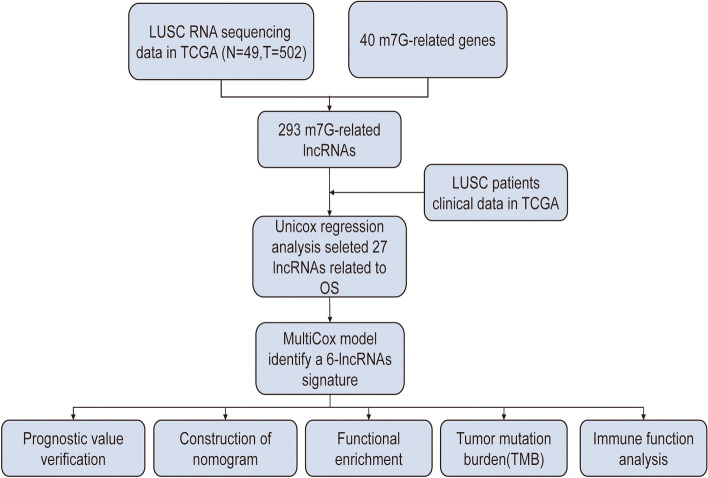
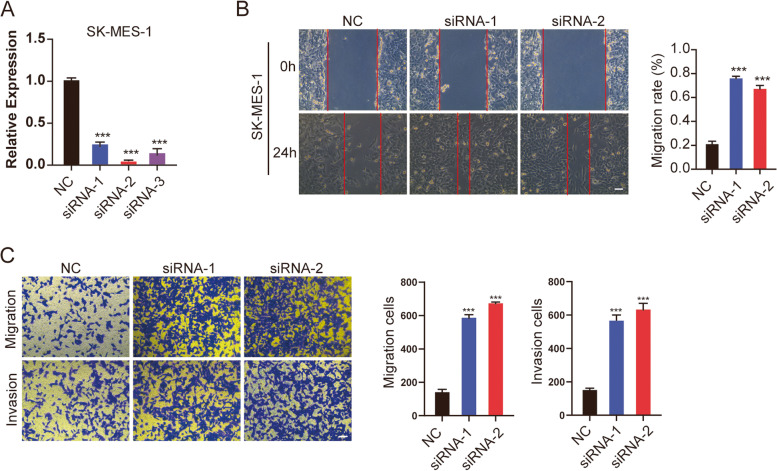
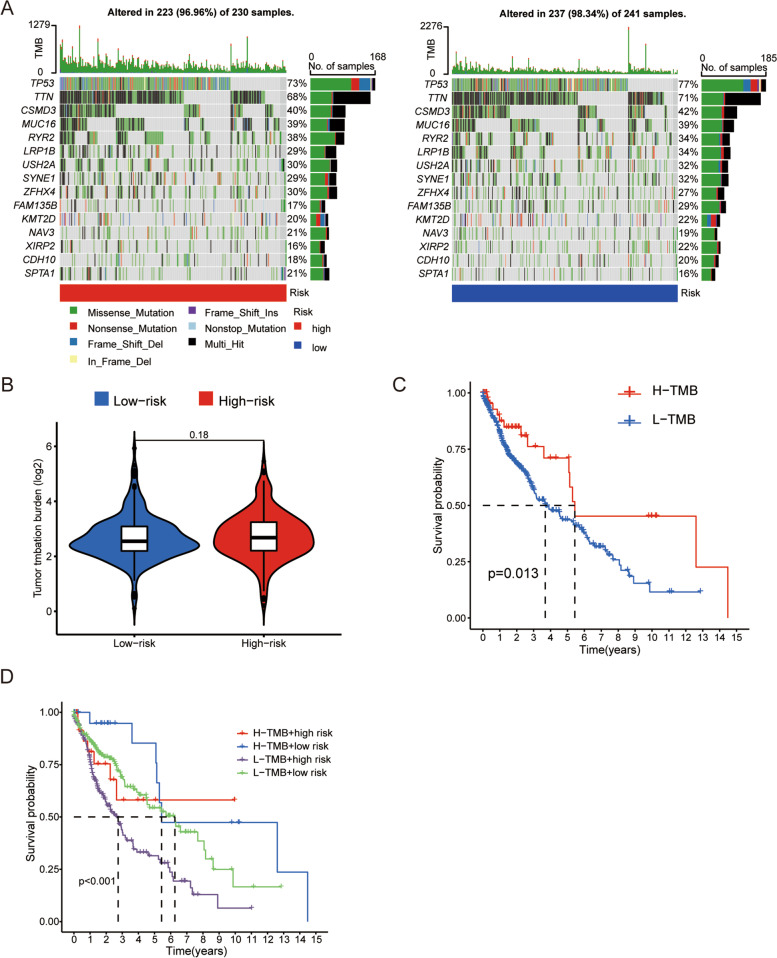
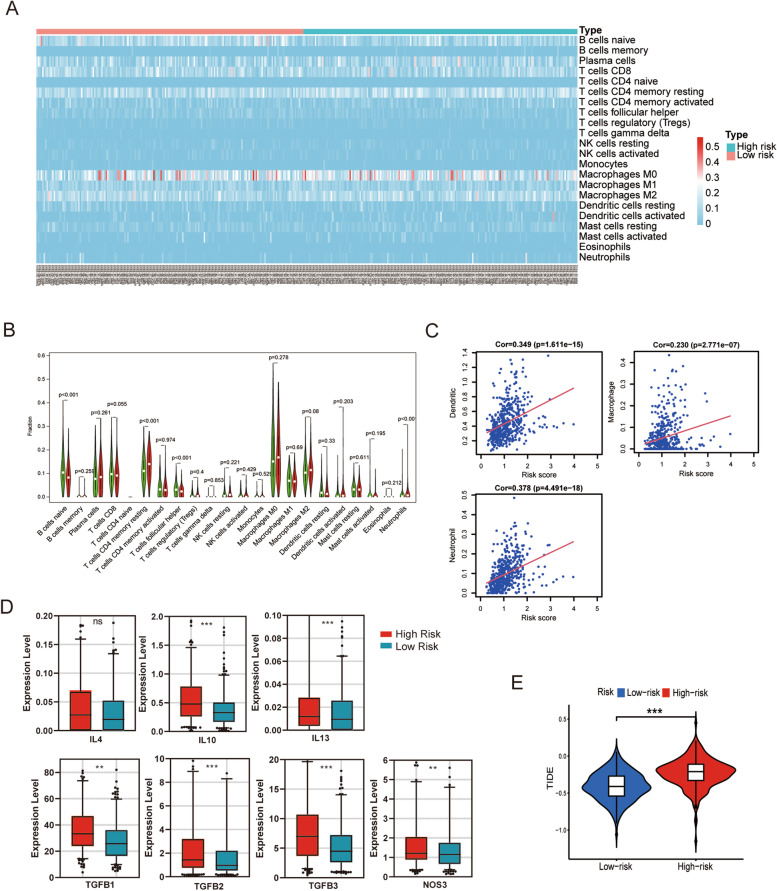
N7-Methylguanosine (m7G) and long non-coding RNAs (lncRNAs) have been widely studied in cancer and have been found to be useful for assessing tumor progression. However, the role of m7G-related lncRNAs in lung squamous cell carcinoma (LUSC) remains unclear. Thus, it is crucial to identify m7G-associated lncRNAs with definitive prognostic value. This study aimed to investigate the prognostic value, correlation with tumor mutation burden, and impact on the tumor immune microenvironment of m7G-related lncRNAs in LUSC. METHODS: LUSC transcriptome data and clinical data were downloaded from The Cancer Genome Atlas, and an m7G-related lncRNA-mRNA co-expression network was constructed using Pearson's correlation analysis. Cox regression analyses were used to determine a risk model for m7G-associated lncRNAs with prognostic value. The risk signature was verified using the Kaplan-Meier method, receiver operating characteristic curve analysis, and principal component analysis. A nomogram based on risk scores and clinical characteristics was then developed. Gene set enrichment analysis was used for functional annotation to analyze the risk signature. The association among the risk signature, tumor mutational burden, and tumor-infiltrating immune cells was then analyzed. RT-qPCR was used to investigate the expression of 6 m7G-related lncRNAs in LUSC cells. The cytological function of SRP14-AS1 was verified by wound-healing assay and transwell assay.
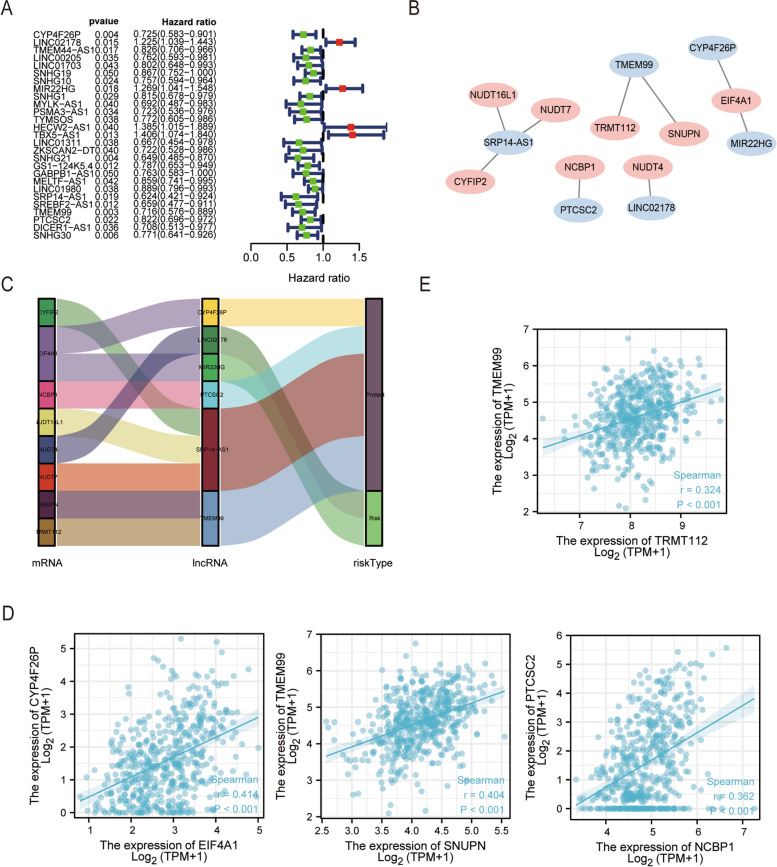
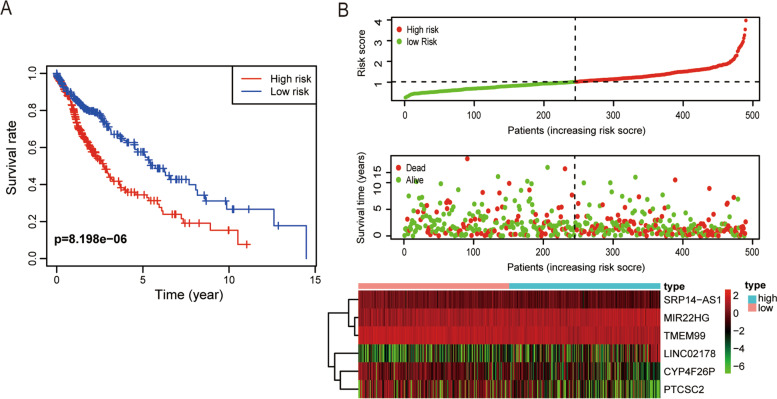
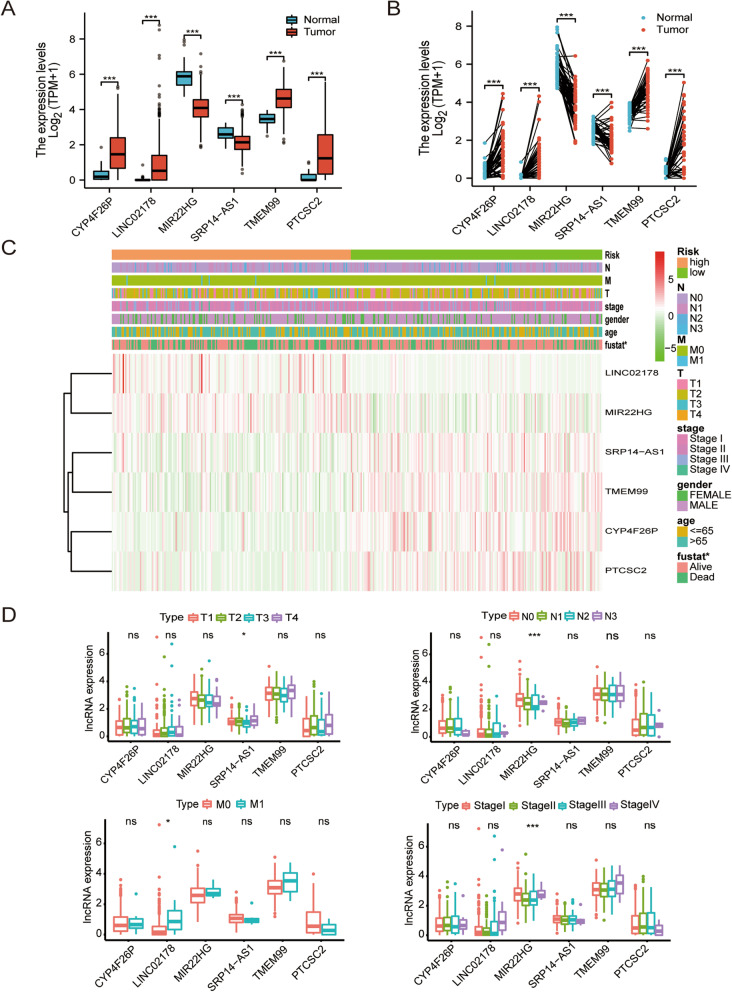
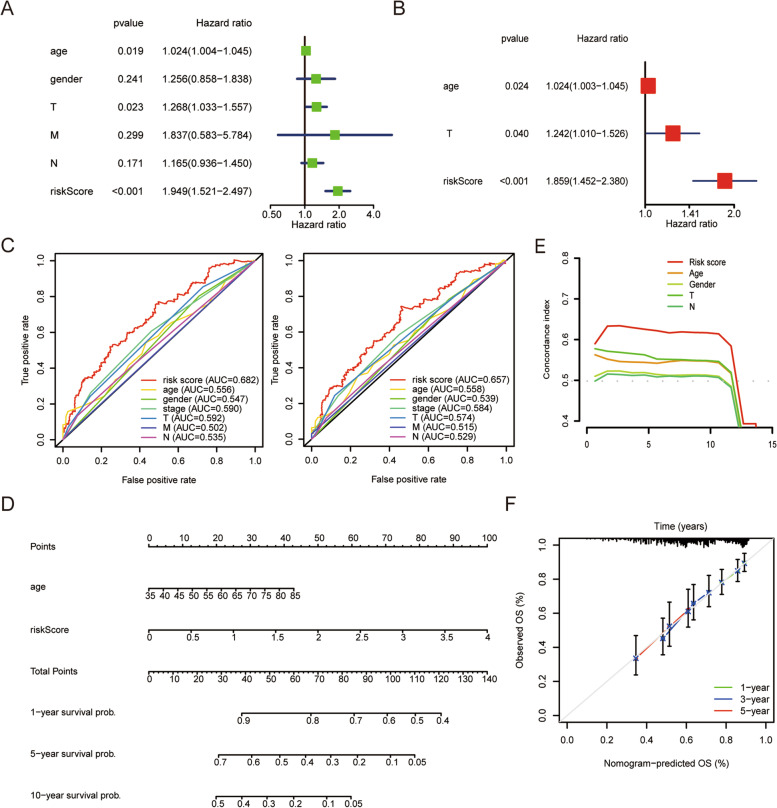
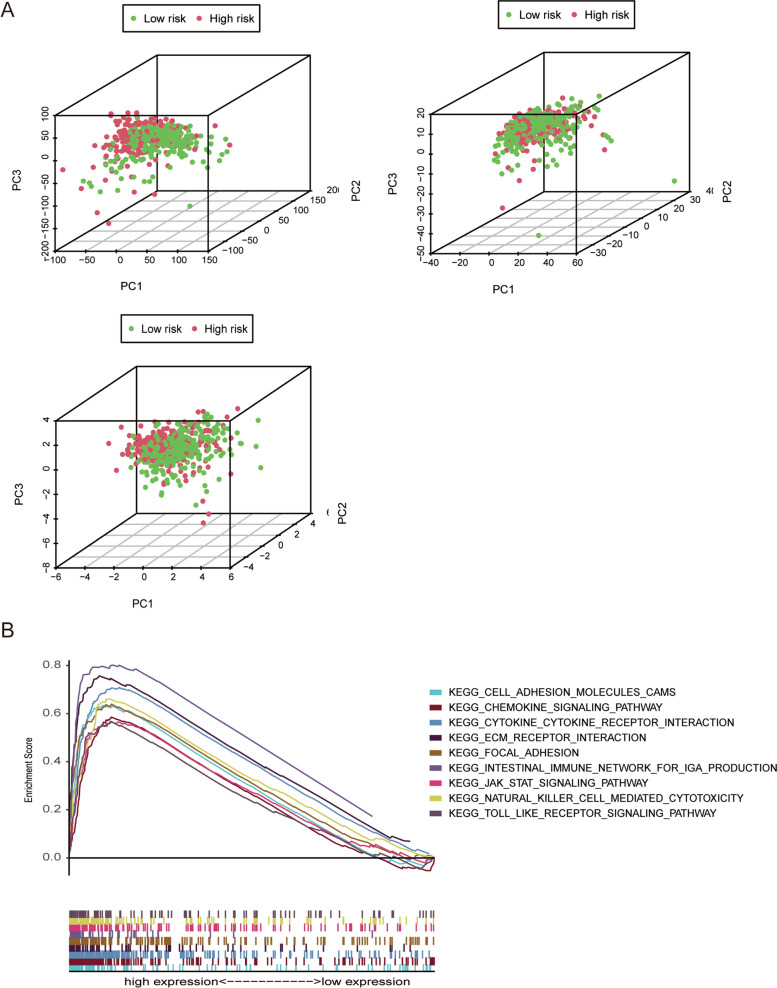
A total of 293 m7G-related lncRNAs were identifed, 27 candidate m7G-related lncRNAs were signifcantly associated with overall survival (OS). Six of these lncRNAs (CYP4F26P, LINC02178, MIR22HG, SRP14-AS1, TMEM99, PTCSC2) were selected for establishment of the risk model. The OS of patients in the low-risk group was higher than that of patients in the high-risk group (p < 0.001). Multivariate cox regression analysis indicated that the model could be an independent prognostic factor for LUSC (HR = 1.859; 95% CI 1.452-2.380, p < 0.001). The ROC curve analysis revealed that the AUCs for OS in the 3-, and 5-year were 0.682, 0.657, respectively. GSEA analysis revealed that the risk model was closely related to immune-related pathways. Compared with normal lung epithelial cells, four m7G-related lncRNAs were higher expressed in cancer cells and two were lower expressed, among which knockdown of SRP14-AS1 promoted the proliferation and migration of LUSC cells.
A risk model based on six m7G-related lncRNAs with prognostic value may be a promising prognostic tool in LUSC and guide individualized patient treatment.
N7-甲基鸟苷(m7G)和长非编码 RNA(lncRNA)在癌症中得到了广泛研究,被发现可用于评估肿瘤进展。然而,m7G 相关 lncRNA 在肺鳞状细胞癌(LUSC)中的作用仍不清楚。因此,确定具有明确预后价值的 m7G 相关 lncRNA 至关重要。本研究旨在探讨 m7G 相关 lncRNA 在 LUSC 中的预后价值、与肿瘤突变负担的相关性以及对肿瘤免疫微环境的影响。
从癌症基因组图谱中下载 LUSC 转录组数据和临床数据,并使用 Pearson 相关分析构建 m7G 相关 lncRNA-mRNA 共表达网络。使用 Cox 回归分析确定具有预后价值的 m7G 相关 lncRNA 风险模型。使用 Kaplan-Meier 方法、接受者操作特征曲线分析和主成分分析验证风险签名。然后基于风险评分和临床特征开发了一个列线图。基因集富集分析用于功能注释,以分析风险签名。分析风险签名与肿瘤突变负担和肿瘤浸润免疫细胞之间的关联。使用 RT-qPCR 检测 LUSC 细胞中 6 个 m7G 相关 lncRNA 的表达。通过划痕愈合试验和 Transwell 试验验证 SRP14-AS1 的细胞学功能。
共鉴定出 293 个 m7G 相关 lncRNA,27 个候选 m7G 相关 lncRNA 与总生存期(OS)显著相关。其中 6 个 lncRNA(CYP4F26P、LINC02178、MIR22HG、SRP14-AS1、TMEM99、PTCSC2)被选为建立风险模型的候选者。低风险组患者的 OS 高于高风险组患者(p<0.001)。多因素 Cox 回归分析表明,该模型可作为 LUSC 的独立预后因素(HR=1.859;95%CI 1.452-2.380,p<0.001)。ROC 曲线分析显示,OS 的 3 年和 5 年 AUC 分别为 0.682、0.657。GSEA 分析表明,风险模型与免疫相关途径密切相关。与正常肺上皮细胞相比,四种 m7G 相关 lncRNA 在癌细胞中表达较高,两种表达较低,其中敲低 SRP14-AS1 促进了 LUSC 细胞的增殖和迁移。
基于具有预后价值的六个 m7G 相关 lncRNA 的风险模型可能是 LUSC 有前途的预后工具,并指导个体化患者治疗。