Zhuang Haiming, Fan Xiaohua, Ji Dong, Wang Yuanhao, Fan Jigang, Li Mingyu, Ni Duan, Lu Shaoyong, Li Xiaolong, Chai Zongtao
Department of Pathophysiology, Cell Differentiation and Apoptosis of Chinese Ministry of Education, Shanghai Jiao Tong University, School of Medicine, Shanghai 200025, China.
Department of Anesthesiology, Changhai Hospital, Naval Medical University, Shanghai 200433, China.
Comput Struct Biotechnol J. 2022 Mar 7;20:1352-1365. doi: 10.1016/j.csbj.2022.03.001. eCollection 2022.
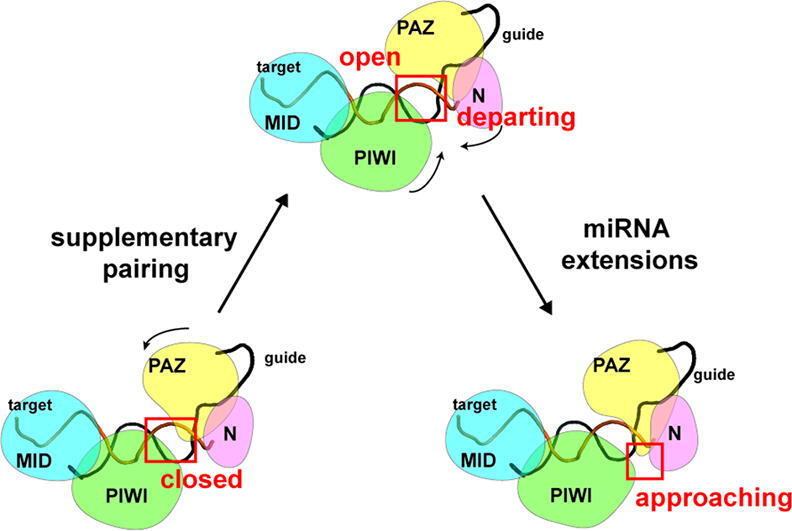
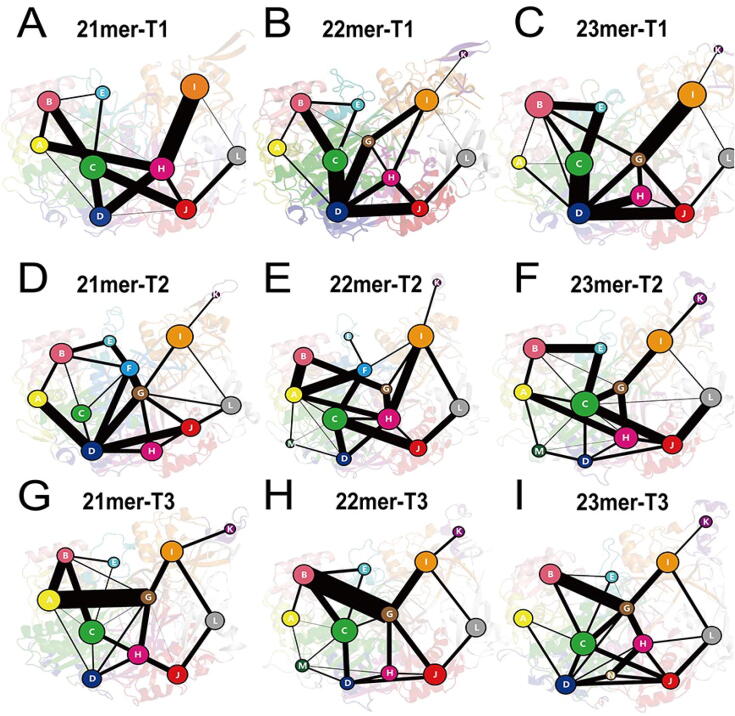
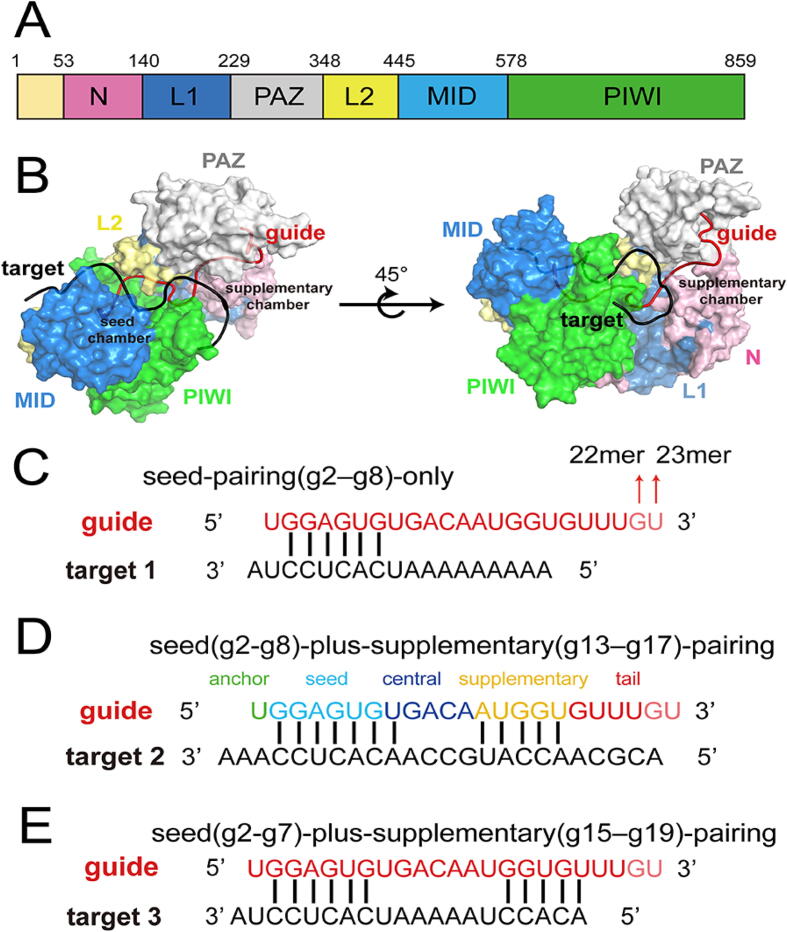
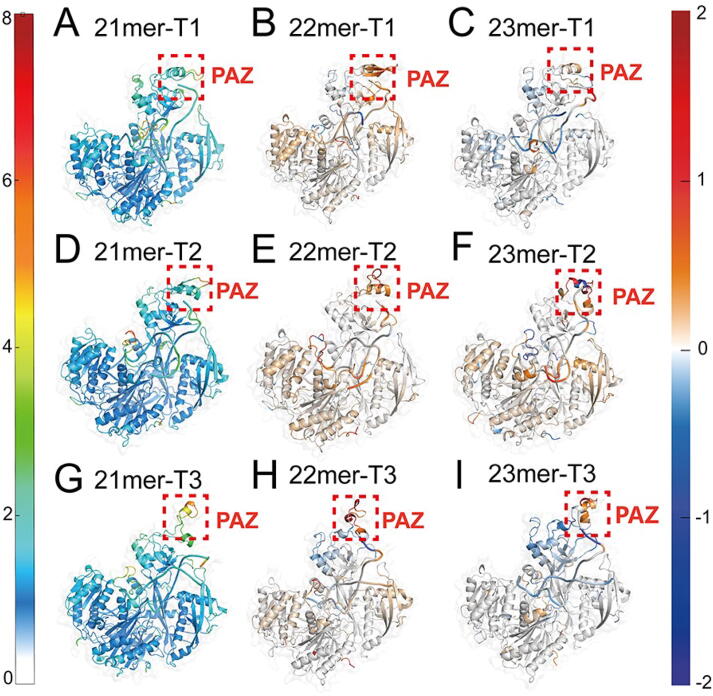
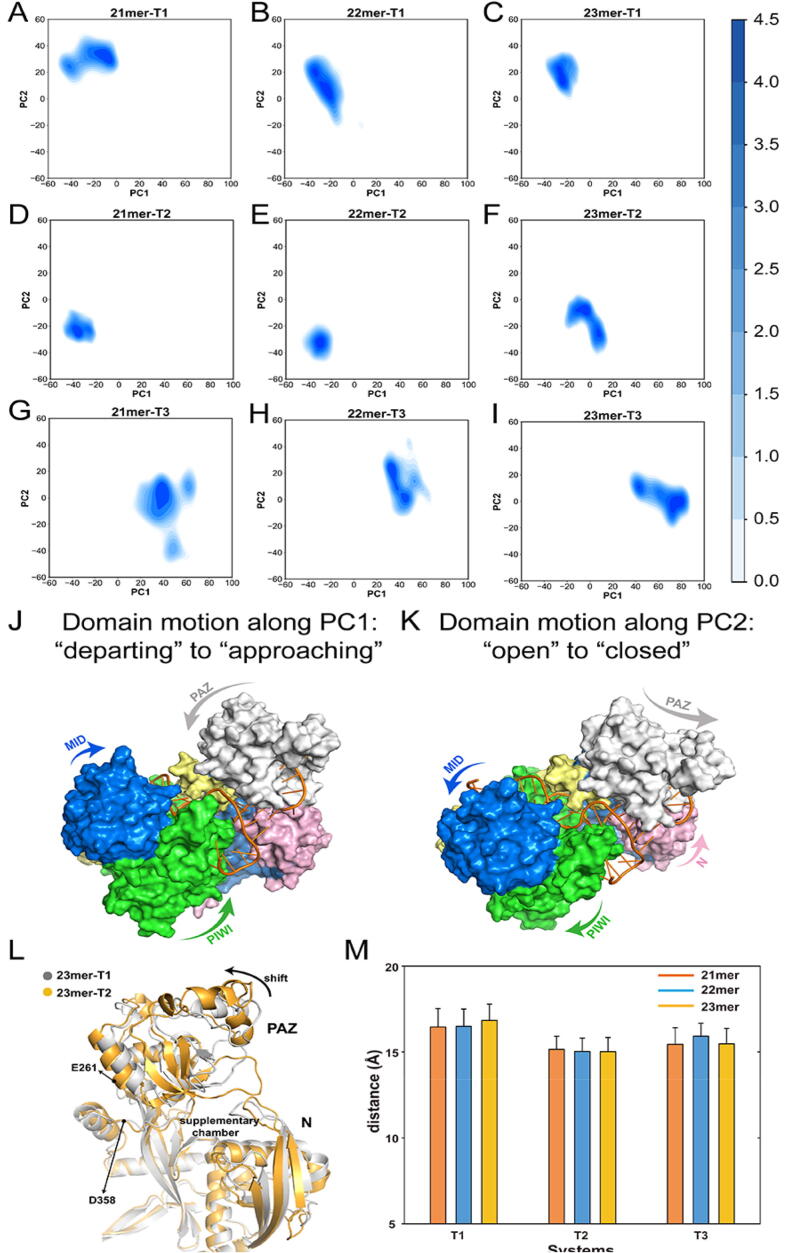
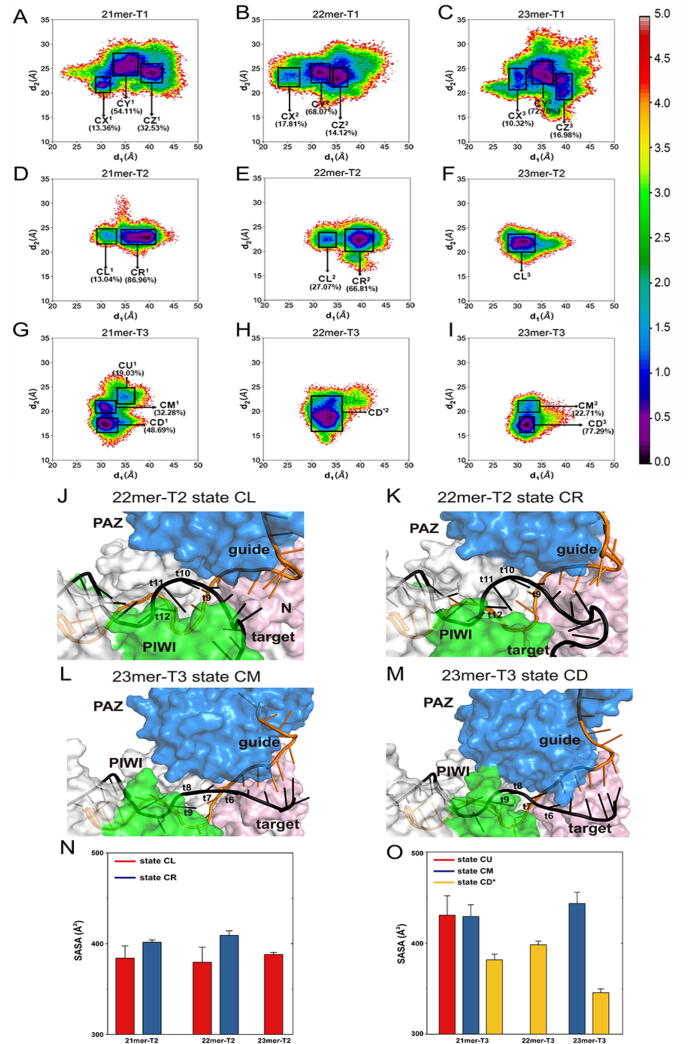
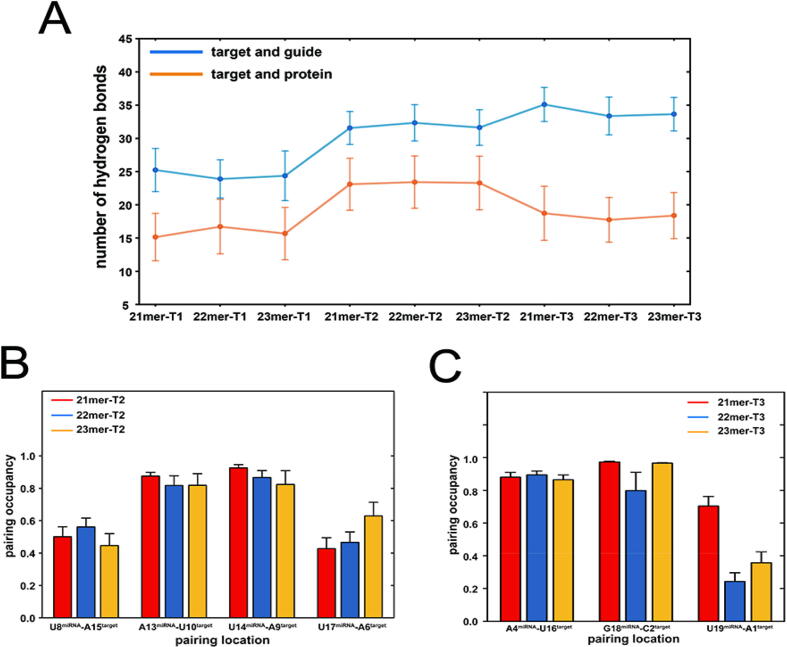
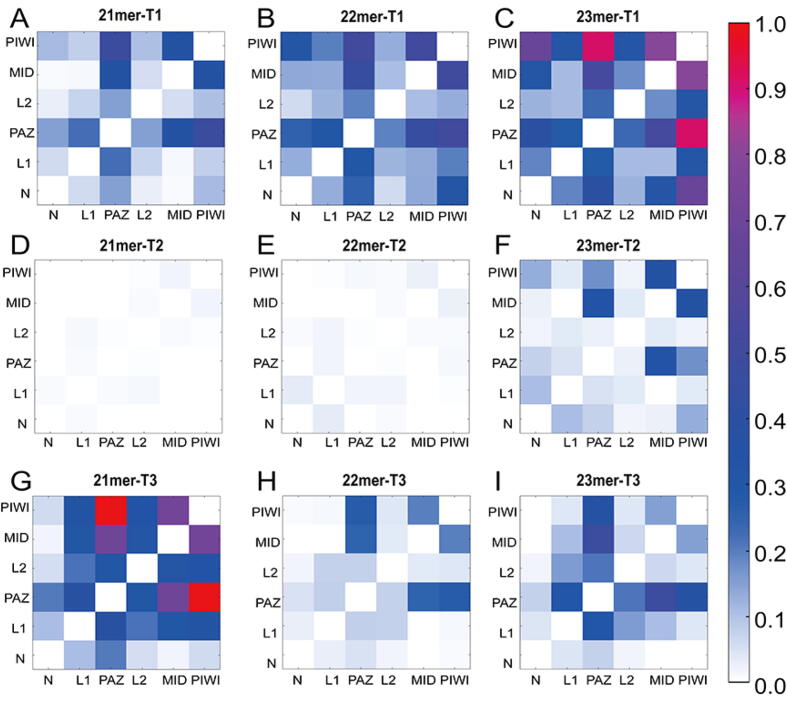
Argonaute (AGO) proteins, the core of RNA-induced silencing complex, are guided by microRNAs (miRNAs) to recognize target RNA for repression. The miRNA-target RNA recognition forms initially through pairing at the seed region while the additional supplementary pairing can enhance target recognition and compensate for seed mismatch. The extension of miRNA lengths can strengthen the target affinity when pairing both in the seed and supplementary regions. However, the mechanism underlying the effect of the supplementary pairing on the conformational dynamics and the assembly of AGO-RNA complex remains poorly understood. To address this, we performed large-scale molecular dynamics simulations of AGO-RNA complexes with different pairing patterns and miRNA lengths. The results reveal that the additional supplementary pairing can not only strengthen the interaction between miRNA and target RNA, but also induce the increased plasticity of the PAZ domain and enhance the domain connectivity among the PAZ, PIWI, N domains of the AGO protein. The strong community network between these domains tightens the mouth of the supplementary chamber of AGO protein, which prevents the escape of target RNA from the complex and shields it from solvent water attack. Importantly, the inner stronger matching pairs between the miRNA and target RNA can compensate for weaker mismatches at the edge of supplementary region. These findings provide guidance for the design of miRNA mimics and anti-miRNAs for both clinical and experimental use and open the way for further engineering of AGO proteins as a new tool in the field of gene regulation.
AGO蛋白是RNA诱导沉默复合体的核心,在微小RNA(miRNA)的引导下识别靶RNA以进行抑制。miRNA与靶RNA的识别最初通过种子区域的配对形成,而额外的互补配对可以增强靶标识别并补偿种子区域的错配。当在种子区域和互补区域都进行配对时,miRNA长度的延长可以增强靶标亲和力。然而,互补配对对AGO-RNA复合体的构象动力学和组装的影响机制仍知之甚少。为了解决这个问题,我们对具有不同配对模式和miRNA长度的AGO-RNA复合体进行了大规模分子动力学模拟。结果表明,额外的互补配对不仅可以增强miRNA与靶RNA之间的相互作用,还可以诱导PAZ结构域的可塑性增加,并增强AGO蛋白的PAZ、PIWI、N结构域之间的结构域连通性。这些结构域之间强大的群落网络收紧了AGO蛋白互补腔的口部,这阻止了靶RNA从复合体中逃逸,并使其免受溶剂水的攻击。重要的是,miRNA与靶RNA之间内部更强的匹配对可以补偿互补区域边缘较弱的错配。这些发现为临床和实验用miRNA模拟物和抗miRNA的设计提供了指导,并为将AGO蛋白进一步工程化为基因调控领域的新工具开辟了道路。