MMWR Suppl. 2022 Apr 1;71(3):16-21. doi: 10.15585/mmwr.su7103a3.
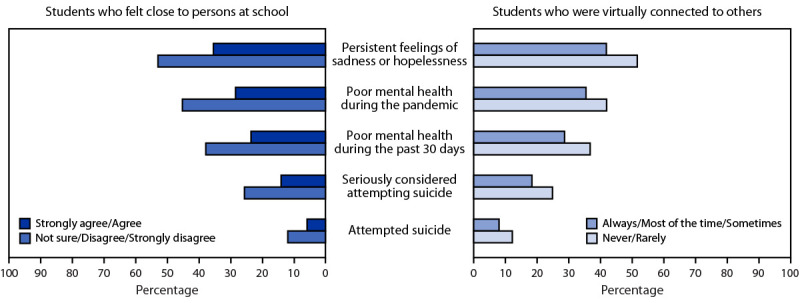
Disruptions and consequences related to the COVID-19 pandemic, including school closures, social isolation, family economic hardship, family loss or illness, and reduced access to health care, raise concerns about their effects on the mental health and well-being of youths. This report uses data from the 2021 Adolescent Behaviors and Experiences Survey, an online survey of a probability-based, nationally representative sample of U.S. public- and private-school students in grades 9-12 (N = 7,705), to assess U.S. high school students' mental health and suicidality during the COVID-19 pandemic. The study also examines whether mental health and suicidality are associated with feeling close to persons at school and being virtually connected to others during the pandemic. Overall, 37.1% of students experienced poor mental health during the pandemic, and 31.1% experienced poor mental health during the preceding 30 days. In addition, during the 12 months before the survey, 44.2% experienced persistent feelings of sadness or hopelessness, 19.9% had seriously considered attempting suicide, and 9.0% had attempted suicide. Compared with those who did not feel close to persons at school, students who felt close to persons at school had a significantly lower prevalence of poor mental health during the pandemic (28.4% versus 45.2%) and during the past 30 days (23.5% versus 37.8%), persistent feelings of sadness or hopelessness (35.4% versus 52.9%), having seriously considered attempting suicide (14.0% versus 25.6%), and having attempted suicide (5.8% versus 11.9%). The same pattern was observed among students who were virtually connected to others during the pandemic (i.e., with family, friends, or other groups by using a computer, telephone, or other device) versus those who were not. Comprehensive strategies that improve feelings of connectedness with others in the family, in the community, and at school might foster improved mental health among youths during and after the COVID-19 pandemic.
与 COVID-19 大流行相关的干扰和后果,包括学校关闭、社交隔离、家庭经济困难、家庭损失或患病以及获得医疗保健的机会减少等,引发了人们对其对青少年心理健康和幸福感影响的关注。本报告使用了 2021 年青少年行为和体验调查的数据,这是一项针对美国公立和私立学校 9-12 年级学生(N=7705)的基于概率的全国代表性在线调查,以评估美国高中生在 COVID-19 大流行期间的心理健康和自杀倾向。该研究还考察了心理健康和自杀倾向是否与在大流行期间与学校的人亲近和与他人保持虚拟联系有关。总体而言,37.1%的学生在大流行期间经历了心理健康不良,31.1%的学生在过去 30 天内经历了心理健康不良。此外,在调查前的 12 个月中,44.2%的学生持续感到悲伤或绝望,19.9%的学生认真考虑过自杀,9.0%的学生尝试过自杀。与那些与学校的人不亲近的学生相比,与学校的人亲近的学生在大流行期间(28.4%对 45.2%)和过去 30 天内(23.5%对 37.8%)、持续感到悲伤或绝望(35.4%对 52.9%)、认真考虑过自杀(14.0%对 25.6%)和尝试过自杀(5.8%对 11.9%)的心理健康不良患病率显著较低。在大流行期间与他人保持虚拟联系(即通过计算机、电话或其他设备与家人、朋友或其他群体联系)的学生也表现出了同样的模式。在家庭、社区和学校中增强与他人的联系的综合策略可能会在 COVID-19 大流行期间和之后促进青少年的心理健康。