MMWR Morb Mortal Wkly Rep. 2022 Oct 14;71(41):1301-1305. doi: 10.15585/mmwr.mm7141a2.
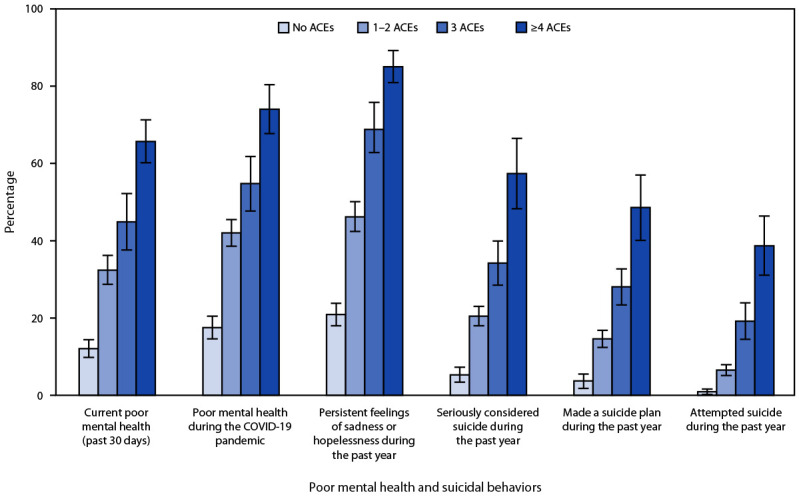
Social and educational disruptions during the COVID-19 pandemic have exacerbated concerns about adolescents' mental health and suicidal behavior. Data from the 2021 Adolescent Behaviors and Experiences Survey (ABES) indicate that 37.1% of U.S. high school students reported poor mental health during the COVID-19 pandemic, with 19.9% considering and 9.0% attempting suicide in the preceding year (1). Adverse childhood experiences (ACEs)* are associated with poor mental health and suicidal behaviors (2,3), and high prevalence of some ACEs have been documented during the pandemic (4). ACEs are preventable, potentially traumatic events that occur in childhood (ages 0-17 years) such as neglect, experiencing or witnessing violence, or having a family member attempt or die by suicide. Also included are aspects of a child's environment that can undermine their sense of safety, stability, and bonding. Associations between ACEs occurring during the pandemic and mental health or suicidal behaviors among U.S. high school students were examined using ABES data. Experience of one to two ACEs was associated with poorer mental health and increased suicidal behaviors, and these deleterious outcomes increased with additional ACE exposure. After adjusting for demographic characteristics, adolescents who reported four or more ACEs during the pandemic had a prevalence of poor current mental health four times as high as, and a prevalence of past-year suicide attempts 25 times as high as, those without ACEs during the pandemic. Experience of specific ACE types (e.g., emotional abuse) was associated with higher prevalences of poor mental health and suicidal behaviors. Prevention and intervention strategies (5), including early identification and trauma-informed mental health service and support provision, for ACEs and their acute and long-term impacts could help address the U.S. child and adolescent mental health and suicide crisis..
在 COVID-19 大流行期间,社会和教育的中断加剧了人们对青少年心理健康和自杀行为的担忧。2021 年青少年行为和体验调查(ABES)的数据显示,37.1%的美国高中生在 COVID-19 大流行期间报告心理健康状况不佳,其中 19.9%在过去一年中考虑过自杀,9.0%尝试过自杀(1)。不良的儿童经历(ACEs)*与心理健康不良和自杀行为有关(2,3),并且在大流行期间已经记录到一些 ACEs 的高患病率(4)。ACEs 是可以预防的、潜在的创伤性事件,发生在儿童时期(0-17 岁),例如忽视、经历或目睹暴力,或有家庭成员试图或自杀身亡。还包括可能破坏儿童安全感、稳定性和联系感的儿童环境方面。使用 ABES 数据检查了大流行期间 ACEs 的发生与美国高中生心理健康或自杀行为之间的关联。经历一到两种 ACEs 与较差的心理健康和增加的自杀行为相关,并且这些有害结果随着 ACE 暴露的增加而增加。在调整人口统计学特征后,报告在大流行期间经历过四种或更多 ACEs 的青少年当前心理健康状况不佳的患病率是没有 ACEs 的青少年的四倍,过去一年自杀未遂的患病率是没有 ACEs 的青少年的 25 倍。特定 ACE 类型(例如,情绪虐待)的经历与较差的心理健康和自杀行为的更高患病率相关。预防和干预策略(5),包括 ACEs 的早期识别以及创伤知情的心理健康服务和支持提供,及其急性和长期影响,可以帮助解决美国儿童和青少年的心理健康和自杀危机。