MMWR Suppl. 2022 Apr 1;71(3):28-34. doi: 10.15585/mmwr.su7103a5.
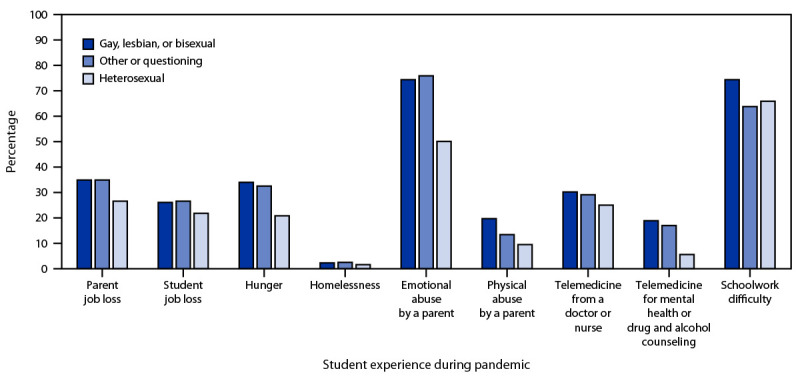
Youths have experienced disruptions to school and home life since the COVID-19 pandemic began in March 2020. During January-June 2021, CDC conducted the Adolescent Behaviors and Experiences Survey (ABES), an online survey of a probability-based, nationally representative sample of U.S. public- and private-school students in grades 9-12 (N = 7,705). ABES data were used to estimate the prevalence of disruptions and adverse experiences during the pandemic, including parental and personal job loss, homelessness, hunger, emotional or physical abuse by a parent or other adult at home, receipt of telemedicine, and difficulty completing schoolwork. Prevalence estimates are presented for all students and by sex, race and ethnicity, grade, sexual identity, and difficulty completing schoolwork. Since the beginning of the pandemic, more than half of students found it more difficult to complete their schoolwork (66%) and experienced emotional abuse by a parent or other adult in their home (55%). Prevalence of emotional and physical abuse by a parent or other adult in the home was highest among students who identified as gay, lesbian, or bisexual (74% emotional abuse and 20% physical abuse) and those who identified as other or questioning (76% and 13%) compared with students who identified as heterosexual (50% and 10%). Overall, students experienced insecurity via parental job loss (29%), personal job loss (22%), and hunger (24%). Disparities by sex and by race and ethnicity also were noted. Understanding health disparities and student disruptions and adverse experiences as interconnected problems can inform school and community initiatives that promote adolescent health and well-being. With community support to provide coordinated, cross-sector programming, schools can facilitate linkages to services that help students address the adverse experiences that they faced during the ongoing COVID-19 pandemic. Public health and health care professionals, communities, schools, families, and adolescents can use these findings to better understand how students' lives have been affected during the pandemic and what challenges need to be addressed to promote adolescent health and well-being during and after the pandemic.
自 2020 年 3 月 COVID-19 大流行开始以来,年轻人的学校和家庭生活受到了干扰。在 2021 年 1 月至 6 月期间,疾病预防控制中心进行了青少年行为和经验调查(ABES),这是一项针对美国公立和私立学校 9-12 年级(N = 7705)学生的基于概率的全国代表性在线调查。ABES 数据用于估计大流行期间的干扰和不良经历的流行率,包括父母和个人失业、无家可归、饥饿、父母或其他成年人在家中情感或身体虐待、接受远程医疗以及难以完成学业。按性别、种族和民族、年级、性认同和难以完成学业呈现所有学生和不同群体的流行率估计值。自大流行开始以来,超过一半的学生发现完成学业更加困难(66%),并且在家中遭受父母或其他成年人的情感虐待(55%)。在自认为是同性恋、双性恋或无性恋的学生(情感虐待 74%,身体虐待 20%)和自认为是其他或质疑的学生(情感虐待 76%,身体虐待 13%)中,父母或其他成年人在家中进行情感和身体虐待的发生率最高与异性恋学生(50%和 10%)相比。总体而言,学生经历了父母失业(29%)、个人失业(22%)和饥饿(24%)带来的不安全感。还注意到了性别和种族和民族之间的差异。了解健康差异和学生干扰以及不良经历作为相互关联的问题,可以为促进青少年健康和福祉的学校和社区举措提供信息。在社区的支持下,提供协调的跨部门计划,学校可以促进与服务的联系,帮助学生解决他们在持续的 COVID-19 大流行期间所面临的不良经历。公共卫生和医疗保健专业人员、社区、学校、家庭和青少年可以利用这些发现,更好地了解学生在大流行期间的生活受到了怎样的影响,以及在大流行期间和之后需要解决哪些挑战来促进青少年的健康和福祉。