Kimmel Center for Biology and Medicine at the Skirball Institute, New York University Grossman School of Medicine, New York, New York, United States of America.
Department of Microbiology, New York University Grossman School of Medicine, New York, New York, United States of America.
PLoS Biol. 2022 Mar 31;20(3):e3001592. doi: 10.1371/journal.pbio.3001592. eCollection 2022 Mar.
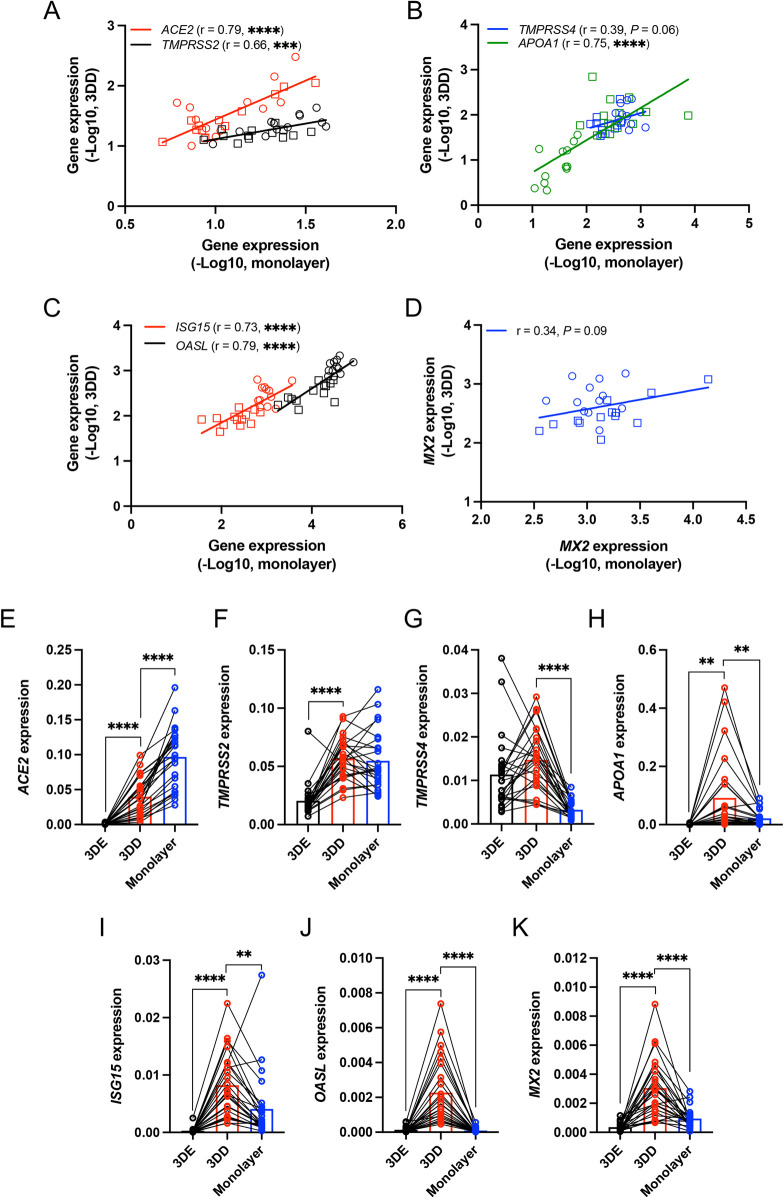
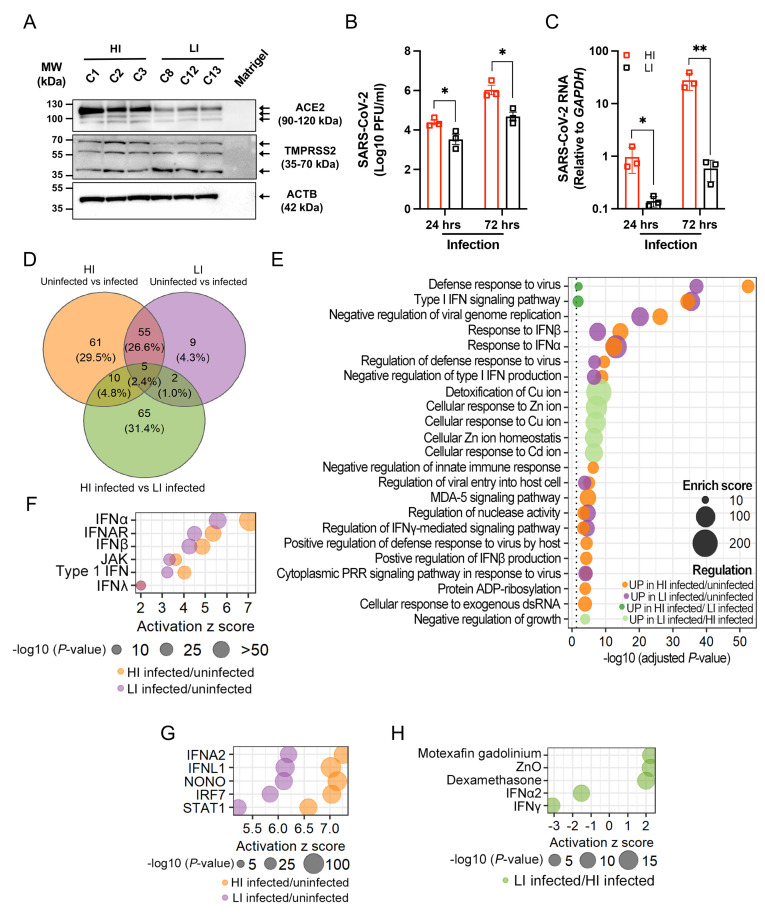
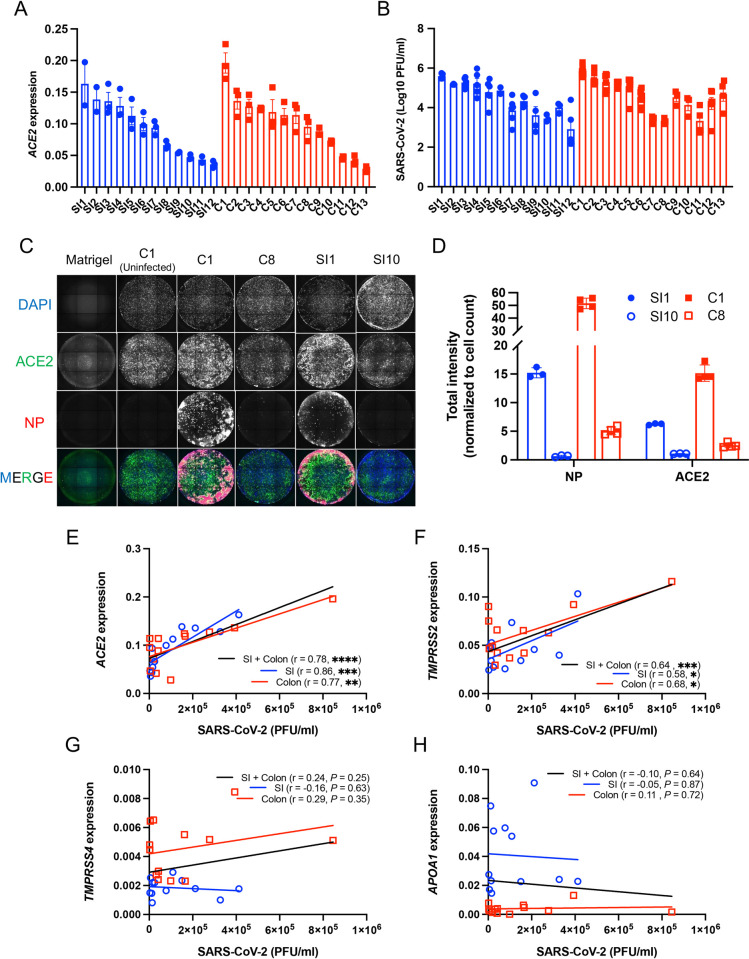
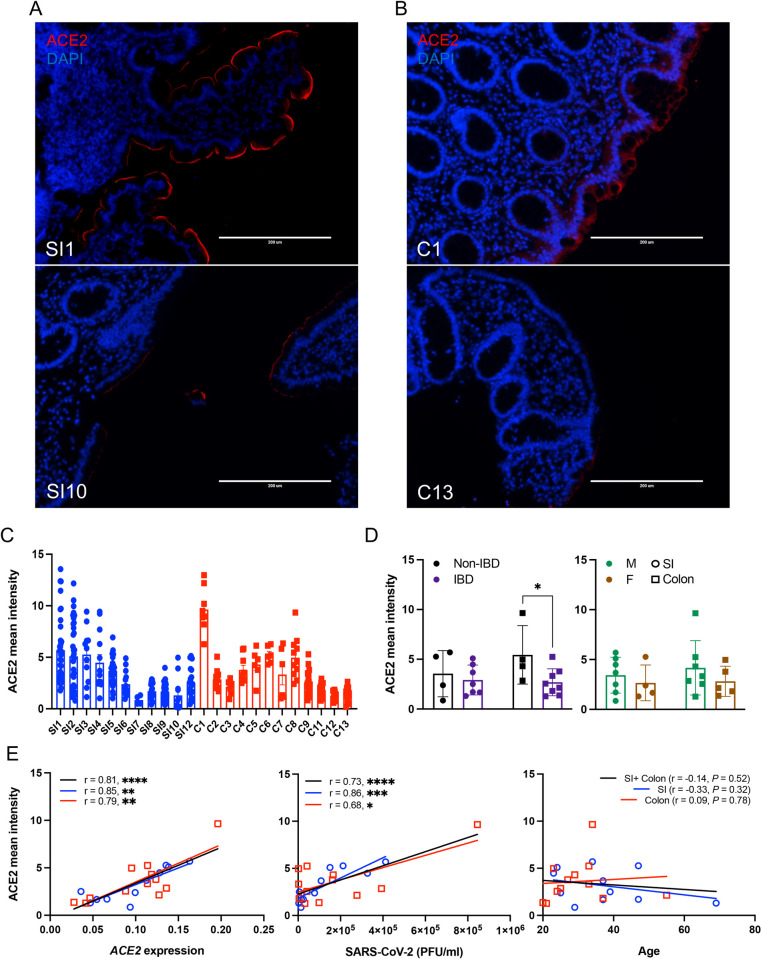
Gastrointestinal effects associated with Coronavirus Disease 2019 (COVID-19) are highly variable for reasons that are not understood. In this study, we used intestinal organoid-derived cultures differentiated from primary human specimens as a model to examine interindividual variability. Infection of intestinal organoids derived from different donors with Severe Acute Respiratory Syndrome Coronavirus 2 (SARS-CoV-2) resulted in orders of magnitude differences in virus replication in small intestinal and colonic organoid-derived monolayers. Susceptibility to infection correlated with angiotensin I converting enzyme 2 (ACE2) expression level and was independent of donor demographic or clinical features. ACE2 transcript levels in cell culture matched the amount of ACE2 in primary tissue, indicating that this feature of the intestinal epithelium is retained in the organoids. Longitudinal transcriptomics of organoid-derived monolayers identified a delayed yet robust interferon signature, the magnitude of which corresponded to the degree of SARS-CoV-2 infection. Interestingly, virus with the Omicron variant spike (S) protein infected the organoids with the highest infectivity, suggesting increased tropism of the virus for intestinal tissue. These results suggest that heterogeneity in SARS-CoV-2 replication in intestinal tissues results from differences in ACE2 levels, which may underlie variable patient outcomes.
新型冠状病毒病 2019(COVID-19)相关的胃肠道影响存在很大差异,但原因尚不清楚。在这项研究中,我们使用源自原发性人类标本的肠道类器官衍生培养物作为模型来检查个体间的变异性。来自不同供体的肠道类器官感染严重急性呼吸综合征冠状病毒 2(SARS-CoV-2)后,在小肠和结肠类器官衍生的单层中,病毒复制的数量级存在差异。感染的易感性与血管紧张素 I 转换酶 2(ACE2)表达水平相关,与供体人口统计学或临床特征无关。细胞培养中的 ACE2 转录本水平与原发性组织中的 ACE2 量相匹配,表明肠上皮的这一特征在类器官中得以保留。类器官衍生的单层的纵向转录组学鉴定出延迟但强烈的干扰素特征,其幅度与 SARS-CoV-2 感染的程度相对应。有趣的是,带有奥密克戎变异刺突(S)蛋白的病毒感染了最具传染性的类器官,表明该病毒对肠道组织的嗜性增加。这些结果表明,肠道组织中 SARS-CoV-2 复制的异质性源于 ACE2 水平的差异,这可能是导致患者结局不同的原因。