Jiang Jingwen, Li Jiayu, Zhou Xiumei, Zhao Xueqin, Huang Biao, Qin Yuan
College of Life Sciences and Medicine, Zhejiang Sci-Tech University, Hangzhou, China.
Front Oncol. 2022 Mar 14;12:864980. doi: 10.3389/fonc.2022.864980. eCollection 2022.
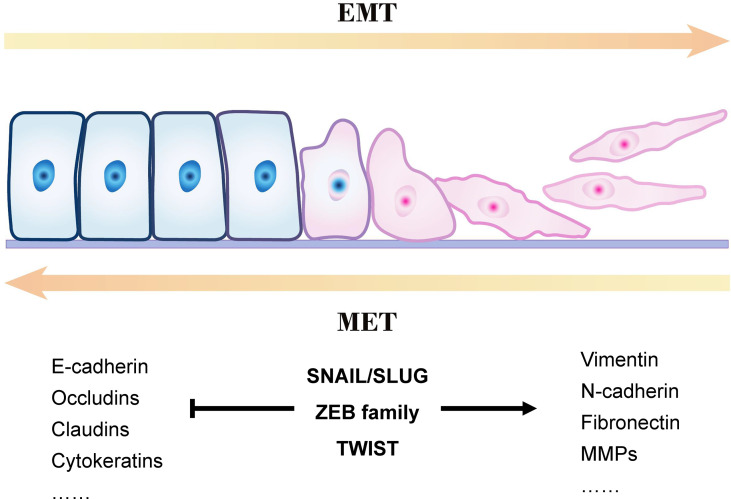
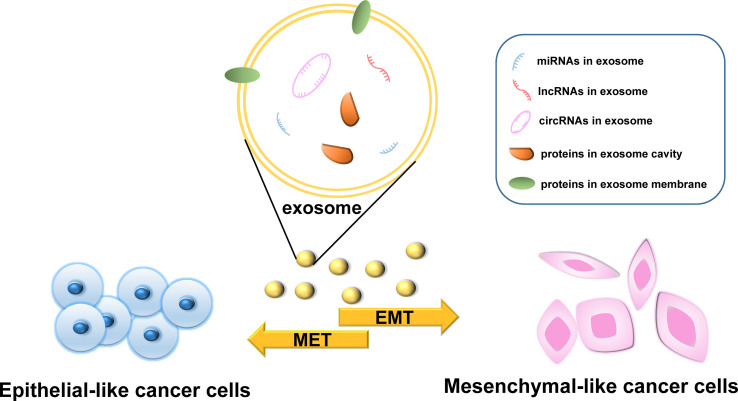
Exosomes are important mediators of intercellular communication and participate in complex biological processes by transferring a variety of bioactive molecules between cells. Epithelial-mesenchymal transition (EMT) is a process in which the cell phenotype changes from epithelioid to mesenchymal-like. EMT is also an important process for cancer cells by which they acquire invasive and metastatic capabilities, which aggravates the degree of tumor malignancy. Numerous studies have demonstrated that exosomes encapsulate various components, such as microRNAs and proteins, and transfer information between tumor cells or between tumor cells and the tumor microenvironment, thereby regulating the EMT process. Exosomes can also be used for cancer diagnosis and treatment or as a drug delivery platform. Thus, they can be used as a therapeutic tool to control the occurrence of EMT and affect cancer progression. In this review, we summarize the latest research advancements in the regulation of the EMT process in tumor cells by the contents of exosomes. Furthermore, we discuss the potential and challenges of using exosomes as a tool for cancer treatment.
外泌体是细胞间通讯的重要介质,通过在细胞间传递多种生物活性分子参与复杂的生物学过程。上皮-间质转化(EMT)是细胞表型从上皮样转变为间质样的过程。EMT也是癌细胞获得侵袭和转移能力的重要过程,这会加剧肿瘤的恶性程度。大量研究表明,外泌体包裹着各种成分,如微小RNA和蛋白质,并在肿瘤细胞之间或肿瘤细胞与肿瘤微环境之间传递信息,从而调节EMT过程。外泌体还可用于癌症诊断和治疗,或作为药物递送平台。因此,它们可作为一种治疗工具来控制EMT的发生并影响癌症进展。在本综述中,我们总结了外泌体内容物对肿瘤细胞EMT过程调控的最新研究进展。此外,我们还讨论了将外泌体用作癌症治疗工具的潜力和挑战。