Liu Gang, Cheng Jiayin, Zhang Tianhao, Shao Yingxin, Chen Xiangxu, Han Lihong, Zhou Ru, Wu Bin
Department of Anesthesiology, The First Hospital of China Medical University, Shenyang, China.
Department of General Practice, The First Hospital of China Medical University, Shenyang, China.
Front Pharmacol. 2022 Mar 10;13:856914. doi: 10.3389/fphar.2022.856914. eCollection 2022.
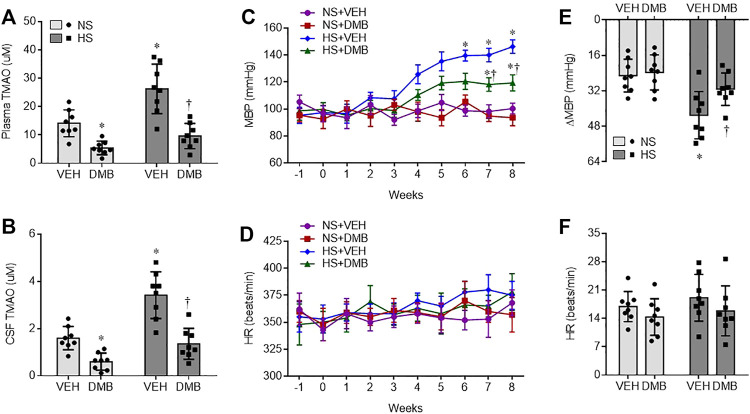
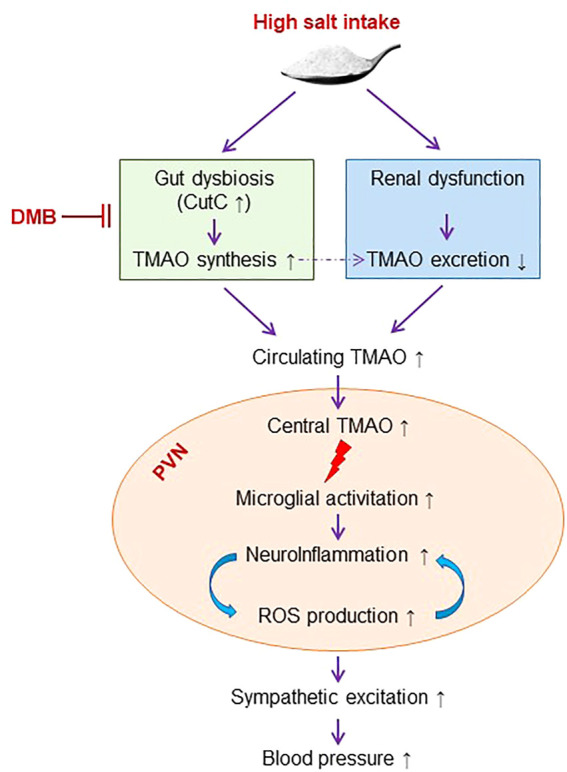
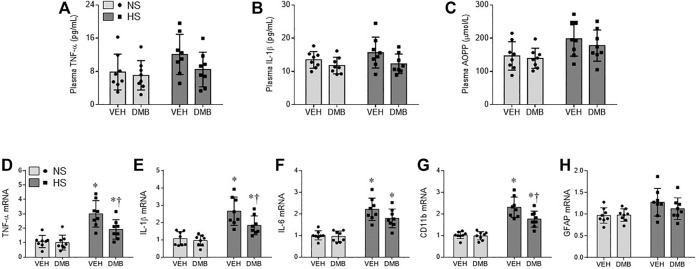
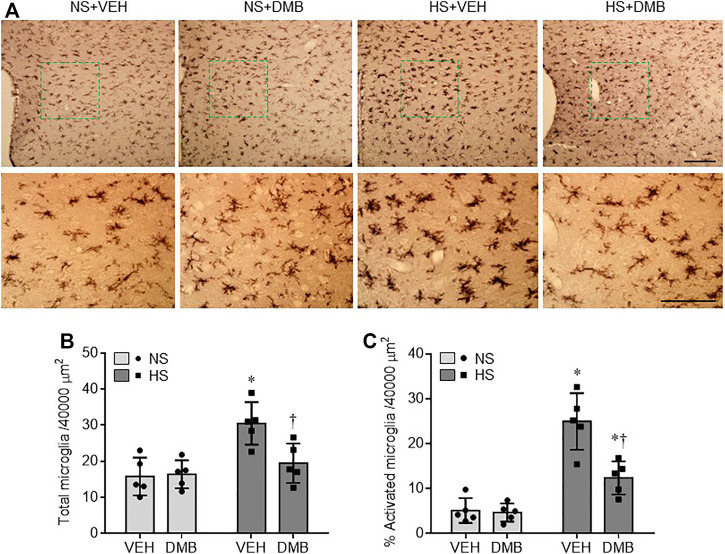
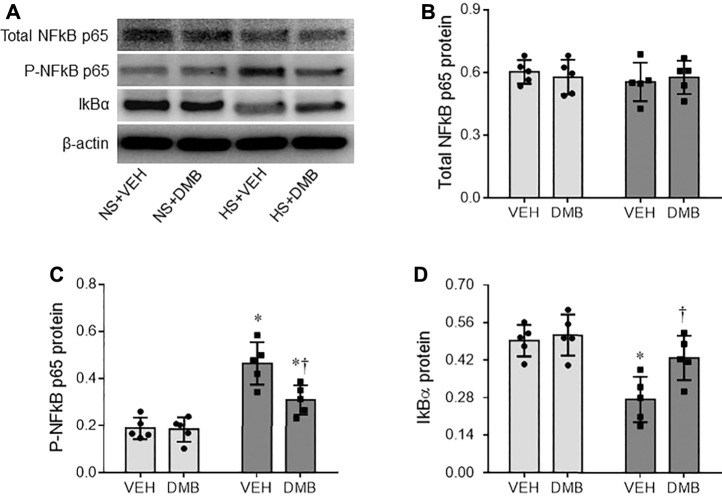
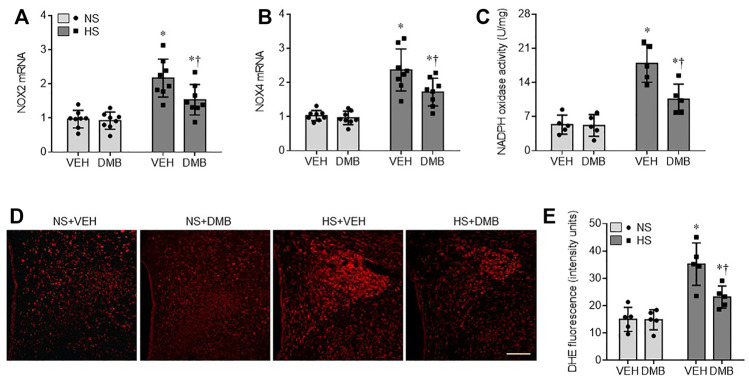
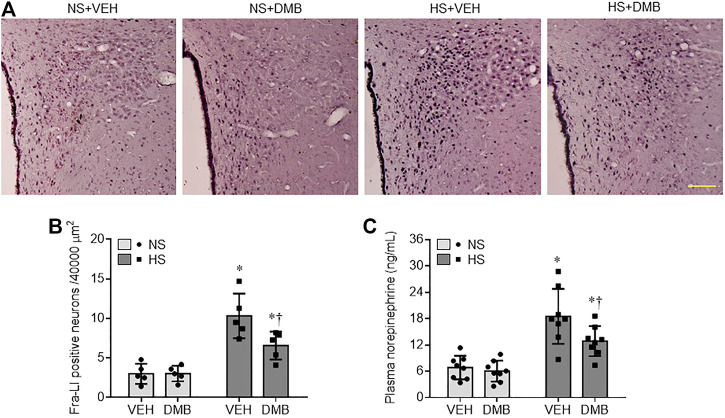
Excessive dietary salt intake induces neuroinflammation and oxidative stress in the brain, which lead to sympathetic excitation, contributing to hypertension. However, the underlying mechanisms remain elusive. Accumulating evidence reveals that trimethylamine-N-oxide (TMAO), a gut microbiota-derived metabolite, is implicated in the pathogenesis of multiple cardiovascular diseases. The present study sought to determine whether central TMAO is elevated and associated with neuroinflammation and oxidative stress in the brain after long-term high salt (HS) diet intake and, if so, whether inhibition of TMAO generation ameliorates HS-induced sympathetic excitation and hypertension. Sprague-Dawley rats were fed either a HS diet or a normal salt (NS) diet and simultaneously treated with vehicle (VEH) or 1.0% 3,3-Dimethyl-1-butanol (DMB, an inhibitor of trimethylamine formation) for 8 weeks. HS + VEH rats, compared with NS + VEH rats, had elevated TMAO in plasma and cerebrospinal fluid (CSF), increased blood pressure (BP), and increased sympathetic drive as indicated by the BP response to ganglionic blockade and plasma norepinephrine levels. HS-induced these changes were attenuated by DMB, which significantly reduced TMAO in plasma and CSF. Neuroinflammation as assessed by proinflammatory cytokine expression and NF-κB activity and microglial activity, and oxidative stress as measured by NAD(P)H oxidase subunit expression and NAD(P)H activity and reactive oxygen species (ROS) production in the hypothalamic paraventricular nucleus (PVN) were increased in HS + VEH rats but were decreased by DMB. DMB had no effects on above measured parameters in NS rats. The results suggest that long-term HS diet intake causes elevation in TMAO in the circulation and brain, which is associated with increased neuroinflammation and oxidative stress in the PVN, an important cardiovascular regulatory center. Inhibition of TMAO generation ameliorates HS-induced sympathetic excitation and hypertension by reducing neuroinflammation and oxidative stress in the PVN.
过量的膳食盐摄入会诱发大脑中的神经炎症和氧化应激,进而导致交感神经兴奋,引发高血压。然而,其潜在机制仍不清楚。越来越多的证据表明,三甲胺-N-氧化物(TMAO),一种由肠道微生物群产生的代谢产物,与多种心血管疾病的发病机制有关。本研究旨在确定长期高盐(HS)饮食摄入后,中枢TMAO是否升高并与大脑中的神经炎症和氧化应激相关,如果是,抑制TMAO生成是否能改善HS诱导的交感神经兴奋和高血压。将Sprague-Dawley大鼠分为HS饮食组或正常盐(NS)饮食组,并同时给予载体(VEH)或1.0% 3,3-二甲基-1-丁醇(DMB,一种三甲胺形成抑制剂)处理8周。与NS + VEH大鼠相比,HS + VEH大鼠血浆和脑脊液(CSF)中的TMAO升高,血压(BP)升高,并且如对神经节阻滞的BP反应和血浆去甲肾上腺素水平所示,交感神经驱动力增加。DMB减弱了HS诱导的这些变化,显著降低了血浆和CSF中的TMAO。通过促炎细胞因子表达、NF-κB活性和小胶质细胞活性评估的神经炎症,以及通过下丘脑室旁核(PVN)中NAD(P)H氧化酶亚基表达、NAD(P)H活性和活性氧(ROS)产生测量的氧化应激,在HS + VEH大鼠中增加,但被DMB降低。DMB对NS大鼠的上述测量参数没有影响。结果表明,长期HS饮食摄入会导致循环和大脑中TMAO升高,这与重要的心血管调节中心PVN中神经炎症和氧化应激增加有关。抑制TMAO生成通过减少PVN中的神经炎症和氧化应激来改善HS诱导的交感神经兴奋和高血压。