Peng Yinghu, Wang Yan, Wong Duo Wai-Chi, Chen Tony Lin-Wei, Chen Shane Fei, Zhang Guoxin, Tan Qitao, Zhang Ming
Department of Biomedical Engineering, Faculty of Engineering, Hong Kong Polytechnic University, Kowloon, Hong Kong SAR, China.
Hong Kong Polytechnic University Shenzhen Research Institute, Shenzhen, China.
Front Bioeng Biotechnol. 2022 Mar 10;10:853085. doi: 10.3389/fbioe.2022.853085. eCollection 2022.
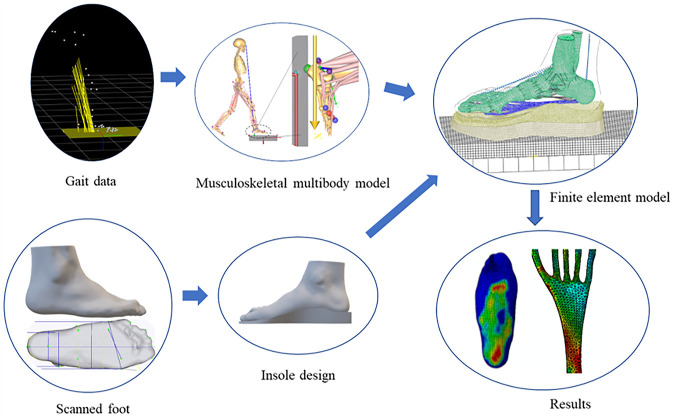
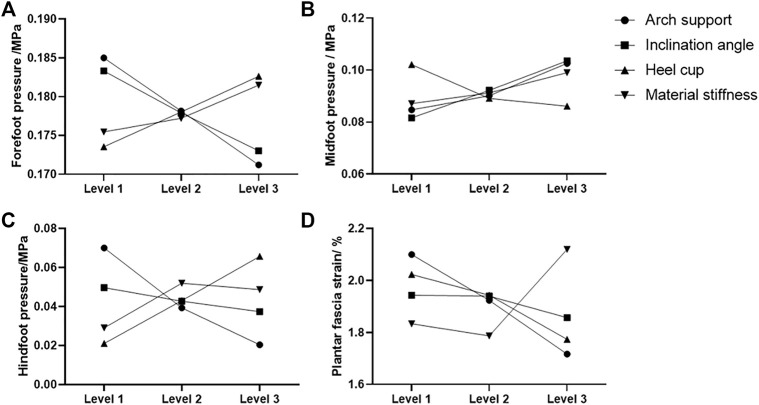
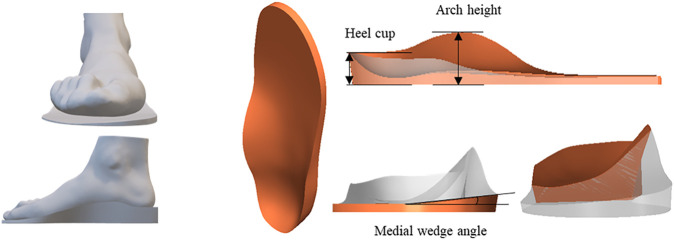
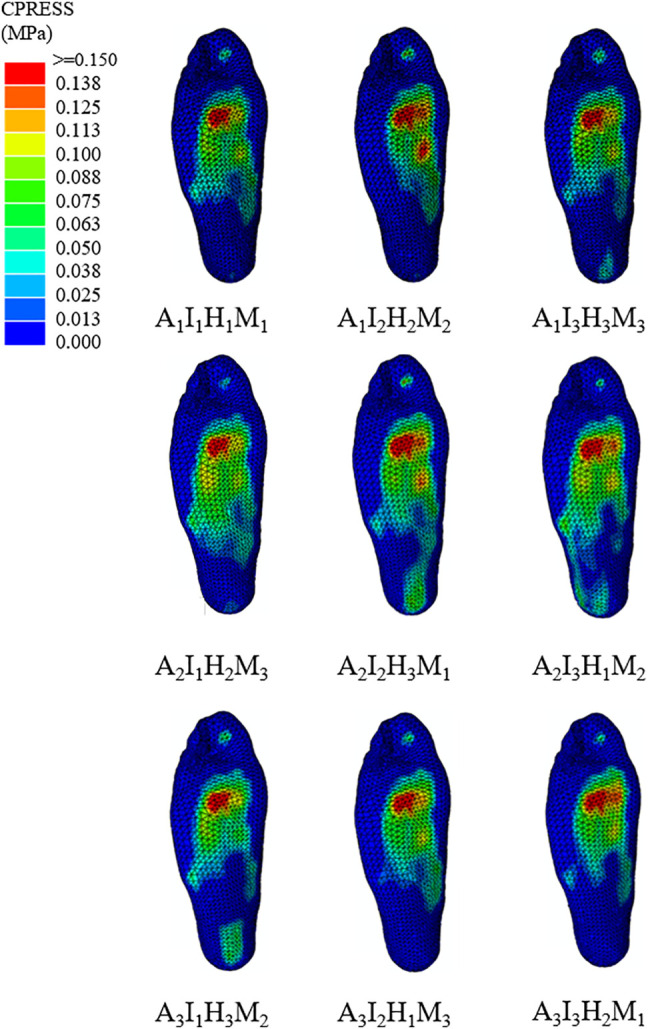
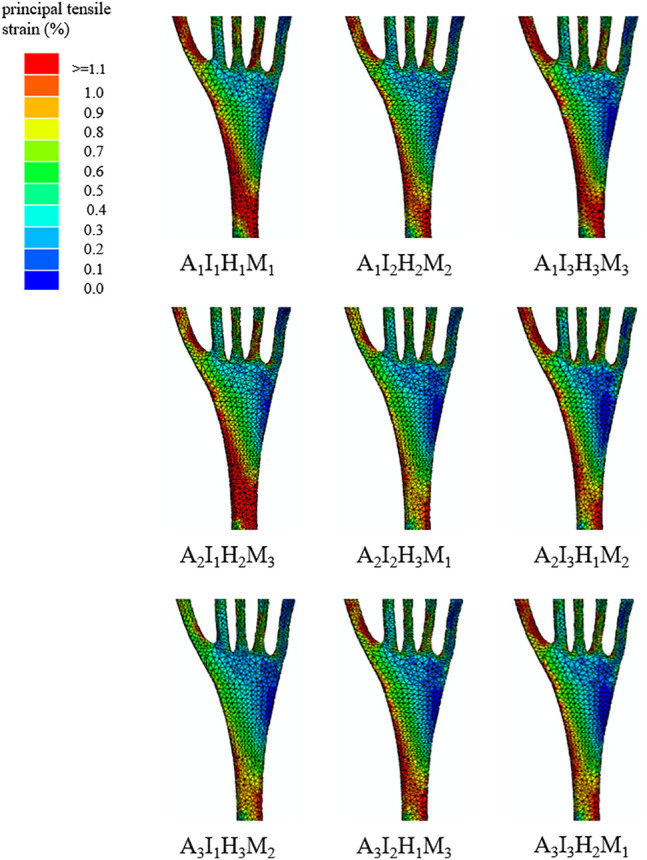
Customized foot orthosis is commonly used to modify foot posture and relieve foot pain for adult acquired flexible flatfoot. However, systematic investigation of the influence of foot orthotic design parameter combination on the internal foot mechanics remains scarce. This study aimed to investigate the biomechanical effects of different combinations of foot orthoses design features through a muscle-driven flatfoot finite element model. A flatfoot-orthosis finite element model was constructed by considering the three-dimensional geometry of plantar fascia. The plantar fascia model accounted for the interaction with the bulk soft tissue. The Taguchi approach was adopted to analyze the significance of four design factors combination (arch support height, medial posting inclination, heel cup height, and material stiffness). Predicted plantar pressure and plantar fascia strains in different design combinations at the midstance instant were reported. The results indicated that the foot orthosis with higher arch support (45.7%) and medial inclination angle (25.5%) effectively reduced peak plantar pressure. For the proximal plantar fascia strain, arch support (41.8%) and material stiffness (37%) were strong influencing factors. Specifically, higher arch support and softer material decreased the peak plantar fascia strain. The plantar pressure and plantar fascia loading were sensitive to the arch support feature. The proposed statistics-based finite element flatfoot model could assist the insole optimization and evaluation for individuals with flatfoot.
定制足部矫形器常用于改善成人后天性柔韧性扁平足的足部姿势并缓解足部疼痛。然而,关于足部矫形器设计参数组合对足部内部力学影响的系统研究仍然匮乏。本研究旨在通过肌肉驱动的扁平足有限元模型,研究不同足部矫形器设计特征组合的生物力学效应。通过考虑足底筋膜的三维几何形状构建了扁平足-矫形器有限元模型。足底筋膜模型考虑了与大块软组织的相互作用。采用田口方法分析了四个设计因素组合(足弓支撑高度、内侧支撑倾斜度、足跟杯高度和材料刚度)的显著性。报告了不同设计组合在站立中期瞬间的预测足底压力和足底筋膜应变。结果表明,具有较高足弓支撑(45.7%)和内侧倾斜角度(25.5%)的足部矫形器能有效降低足底压力峰值。对于足底筋膜近端应变,足弓支撑(41.8%)和材料刚度(37%)是重要影响因素。具体而言,较高的足弓支撑和较软的材料可降低足底筋膜应变峰值。足底压力和足底筋膜负荷对足弓支撑特征敏感。所提出的基于统计的有限元扁平足模型可为扁平足个体的鞋垫优化和评估提供帮助。