The Ohio State University, Columbus, OH, USA.
Dana-Farber Cancer Institute, ECOG-ACRIN Biostatistics Center, Boston, MA, USA.
Blood Cancer J. 2022 Apr 1;12(4):53. doi: 10.1038/s41408-022-00648-y.
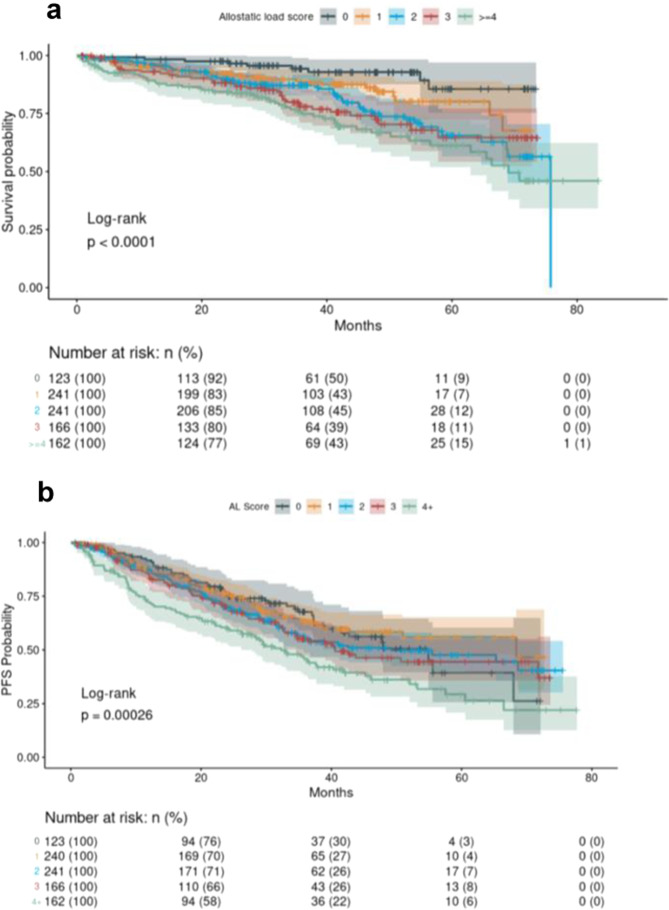
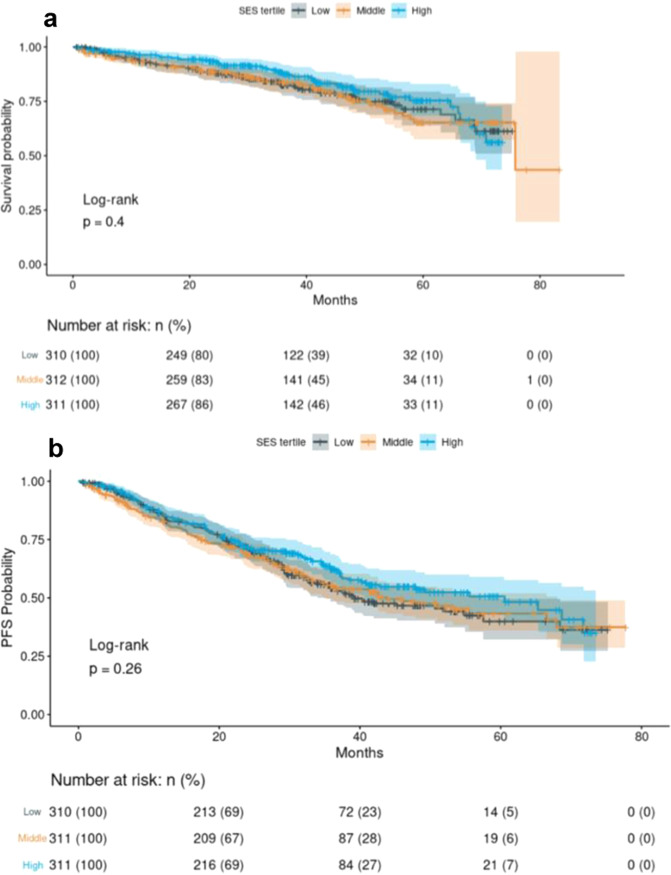
The objective of this study is to examine the association between neighborhood socioeconomic status (nSES) and baseline allostatic load (AL) and clinical trial endpoints in patients enrolled in the E1A11 therapeutic trial in multiple myeloma (MM). Study endpoints were symptom burden (pain, fatigue, and bother) at baseline and 5.5 months, non-completion of induction therapy, overall survival (OS) and progression-free survival (PFS). Multivariable logistic and Cox regression examined associations between nSES, AL and patient outcomes. A 1-unit increase in baseline AL was associated with greater odds of high fatigue at baseline (adjusted OR [95% CI] = 1.21 [1.08-1.36]) and a worse OS (adjusted hazard ratio, [95% CI] = 1.21 [1.06-1.37]). High nSES was associated with worse baseline bother (middle OR = 4.22 [1.11-16.09] and high 4.49 [1.16-17.43]) compared to low nSES. There was no association between AL or nSES and symptom burden at 5.5 months, non-completion of induction therapy or PFS. Additionally, there was no association between nSES and OS. AL may have utility as a predictive marker for OS among patients with MM and may allow individualization of treatment. Future studies should standardize and validate AL patients with MM.
本研究旨在探讨社区社会经济地位(nSES)与多发性骨髓瘤(MM)患者 E1A11 治疗试验基线时的总体负担(疼痛、疲劳和困扰)以及 5.5 个月时的临床终点之间的关联。研究终点为基线和 5.5 个月时的症状负担(疼痛、疲劳和困扰)、未完成诱导治疗、总生存(OS)和无进展生存(PFS)。多变量逻辑回归和 Cox 回归分析了 nSES、AL 与患者结局之间的关系。基线 AL 增加 1 个单位与基线时疲劳程度较高的可能性增加相关(调整后的 OR [95%CI] = 1.21 [1.08-1.36]),OS 较差(调整后的风险比,[95%CI] = 1.21 [1.06-1.37])。与低 nSES 相比,高 nSES 与基线时的困扰程度更差相关(中间 OR = 4.22 [1.11-16.09]和高 4.49 [1.16-17.43])。AL 或 nSES 与 5.5 个月时的症状负担、诱导治疗的未完成或 PFS 之间无关联。此外,nSES 与 OS 之间也没有关联。AL 可能是预测 MM 患者 OS 的有用指标,并可能允许个体化治疗。未来的研究应该标准化和验证 MM 患者的 AL。