Xue Yuxiang, Liu Chenchen, Andrews Gavin, Wang Jinyan, Ge Yi
Institute for Bioengineering, School of Engineering, University of Edinburgh, Edinburgh, EH9 3HL, UK.
Department of Metabolism, Digestion and Reproductive, Faculty of Medicine, Imperial College London, London, SW7 2AZ, UK.
Nano Converg. 2022 Apr 2;9(1):15. doi: 10.1186/s40580-022-00307-9.
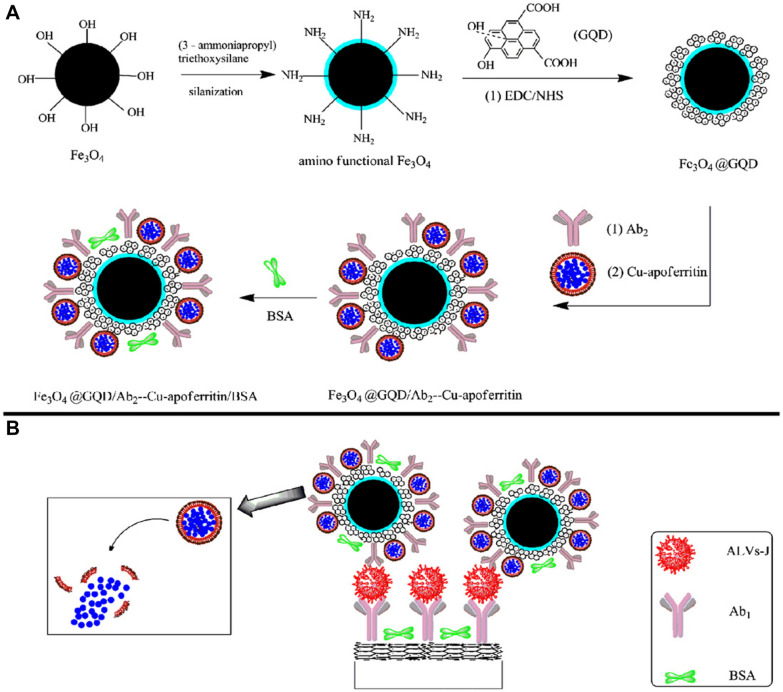
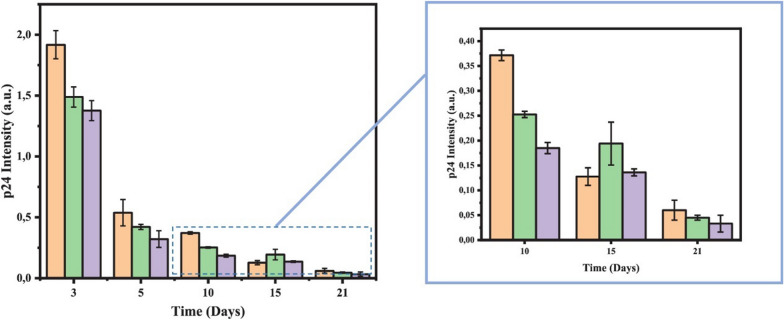
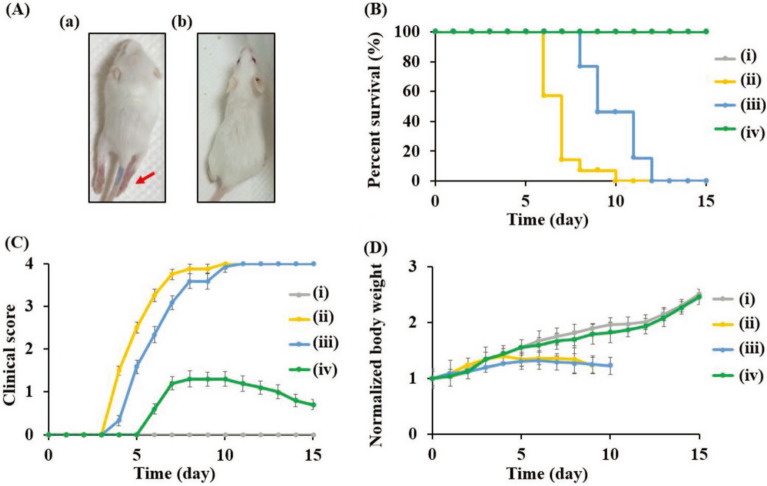
In the last decade, carbon quantum dots (CQDs), as a novel class of carbon-based nanomaterials, have received increasing attention due to their distinct properties. CQDs are ultimately small nanoparticles with an average size below 10 nm, possessing high water solubility, alluring photoluminescence, photostability, excellent biocompatibility, low/none toxicity, environmental friendliness, and high sustainability, etc. In history, there are intermittent threats from viruses to humans, animals and plants worldwide, resulting in enormous crises and impacts on our life, environment, economy and society. Some recent studies have unveiled that certain types of CQDs exhibited high and potent antiviral activities against various viruses such as human coronavirus, arterivirus, norovirus and herpesvirus. Moreover, they have been successfully explored and developed for different virus detections including severe acute respiratory syndrome coronavirus 2 (SARS-CoV-2). This article exclusively overviews and discusses the recent progress of designing, synthesizing, modifying/functionalizing and developing CQDs towards effective virus detection as well as the inhibition and treatment of viral infection. Their mechanisms and applications against various pathogenic viruses are addressed. The latest outcomes for combating the coronavirus disease 2019 (COVID-19) utilizing CQDs are also highlighted. It can be envisaged that CQDs could further benefit the development of virus detectors and antiviral agents with added broad-spectrum activity and cost-effective production.
在过去十年中,碳量子点(CQDs)作为一类新型碳基纳米材料,因其独特的性质而受到越来越多的关注。碳量子点是平均尺寸低于10纳米的极小纳米颗粒,具有高水溶性、诱人的光致发光性、光稳定性、优异的生物相容性、低/无毒性、环境友好性和高可持续性等特点。历史上,病毒在全球范围内对人类、动物和植物构成了间歇性威胁,给我们的生活、环境、经济和社会带来了巨大危机和影响。最近的一些研究表明,某些类型的碳量子点对多种病毒,如人类冠状病毒、动脉炎病毒、诺如病毒和疱疹病毒,表现出高效且强大的抗病毒活性。此外,它们已成功用于包括严重急性呼吸综合征冠状病毒2(SARS-CoV-2)在内的不同病毒检测的探索和开发。本文专门综述并讨论了在设计、合成、修饰/功能化和开发碳量子点以实现有效病毒检测以及抑制和治疗病毒感染方面的最新进展。阐述了它们针对各种致病病毒的作用机制和应用。还重点介绍了利用碳量子点对抗2019冠状病毒病(COVID-19)的最新成果。可以预见,碳量子点能够进一步推动具有更广泛光谱活性和成本效益的病毒探测器和抗病毒药物的开发。