Genome and Systems Biology Degree Program, National Taiwan University and Academia Sinica, Taipei, Taiwan.
Faculty of Pharmacy, University of Gezira, Wad Medani, Sudan.
J Parkinsons Dis. 2022;12(s1):S13-S27. doi: 10.3233/JPD-223176.
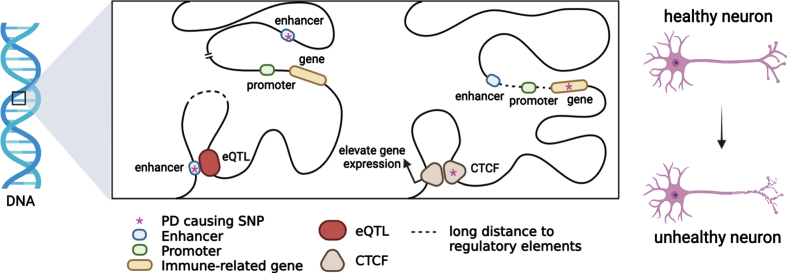
Parkinson's disease (PD) is increasingly recognised as a systemic disorder in which inflammation might play a causative role rather than being a consequence or an epiphenomenon of the neurodegenerative process. Although growing genetic evidence links the central and peripheral immune system with both monogenic and sporadic PD, our understanding on how the immune system contributes to PD pathogenesis remains a daunting challenge. In this review, we discuss recent literature aimed at exploring the role of known genes and susceptibility loci to PD pathogenesis through immune system related mechanisms. Furthermore, we outline shared genetic etiologies and interrelations between PD and autoimmune diseases and underlining challenges and limitations faced in the translation of relevant allelic and regulatory risk loci to immune-pathological mechanisms. Lastly, with the field of immunogenetics expanding rapidly, we place these insights into a future context highlighting the prospect of immune modulation as a promising disease-modifying strategy.
帕金森病(PD)越来越被认为是一种全身性疾病,其中炎症可能起致病作用,而不是神经退行性过程的结果或伴随现象。尽管越来越多的遗传证据将中枢和外周免疫系统与单基因和散发性 PD 联系起来,但我们对免疫系统如何导致 PD 发病机制的理解仍然是一个艰巨的挑战。在这篇综述中,我们讨论了最近的文献,旨在通过与免疫系统相关的机制探索已知基因和易感性位点对 PD 发病机制的作用。此外,我们概述了 PD 与自身免疫性疾病之间的共同遗传病因和相互关系,并强调了将相关等位基因和调节风险位点转化为免疫病理机制所面临的挑战和限制。最后,随着免疫遗传学领域的迅速发展,我们将这些见解置于未来的背景下,强调免疫调节作为一种有前途的疾病修饰策略的前景。