School of Nuclear Studies and Application, Jadavpur University, Kolkata 700032, India.
Department of Mechanical Engineering, Indian Institute of Technology, Madras, Tamil Nadu, India.
J Healthc Eng. 2022 Mar 30;2022:6436818. doi: 10.1155/2022/6436818. eCollection 2022.
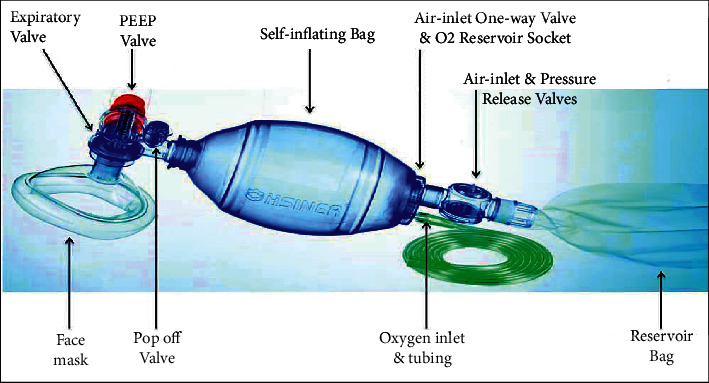
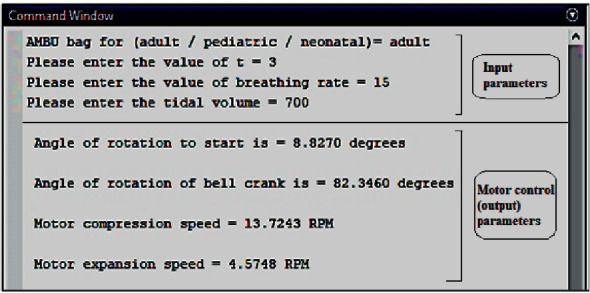
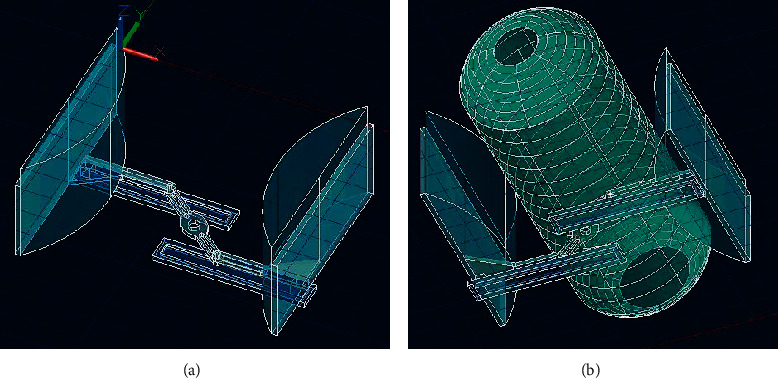
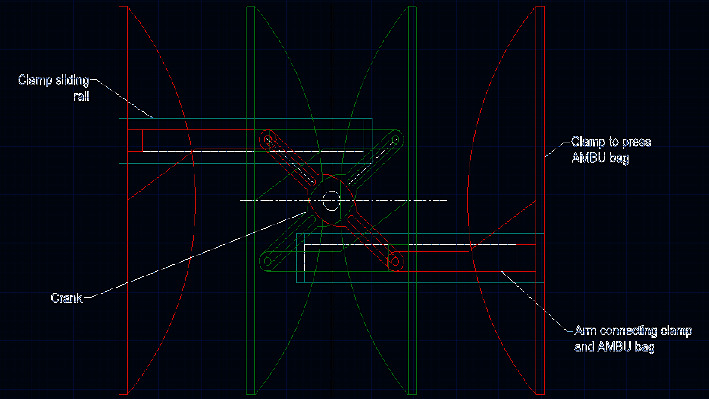
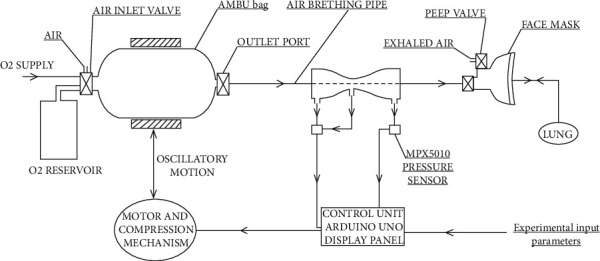
The outbreak of novel COVID-19 has severely and unprecedentedly affected millions of people across the globe. The painful respiratory distress caused during this disease calls for external assistance to the victims in the form of ventilation. The most common types of artificial ventilating units available at the healthcare facilities and hospitals are exorbitantly expensive to manufacture, and their number is fairly inadequate even in the so-called developed countries to cater to the burning needs of an ever-increasing number of ailing human subjects. According to available reports, without the provision of ventilation, the novel COVID-19 patients are succumbing to their ailments in a huge number of cases. This colossal problem of the availability of ventilator units can be addressed to a great extent by readily producible and cost-effective ventilating units that can be used on those suffering patients during an acute emergency and in the absence of conventional expensive ventilators at hospitals and medical care units. This paper has made an attempt to design and simulate a simple, yet effective, mechanized ventilator unit, which can be conveniently assembled without a profuse skillset and operated to resuscitate an ailing human patient. The stepper motor-controlled kinematic linkage is designed to deliver the patient with a necessitated discharge of air at optimum oxygen saturation through the AMBU bag connected in a ventilation circuit. With the associated code on MATLAB, the motor control parameters such as angular displacement and speed are deduced according to the input patient conditions (age group, tidal volume, breathing rate, etc.) and thereafter fed to the controller that drives the stepper motor. With a proposed feedback loop, the real-time static and dynamic compliance, airway resistance values can be approximately determined from the pressure variation cycle and fed to the controller unit to adjust the tidal volume as and when necessary. The simplistic yet robust design not only renders easy manufacturability by conventional and rapid prototyping techniques like 3D printing at different scales but also makes the product easily portable with minimal handling difficulty. Keeping the motto of Health for All as envisioned by the WHO, this low-cost indigenously engineered ventilator will definitely help the poor and afflicted towards their right to health and will help the medical professionals buy some time to manage the patient with acute respiratory distress syndrome (ARDS) towards recovery. Moreover, this instrument mostly includes readily available functional units having standard specifications and can be considered as standard bought-out items.
新型 COVID-19 的爆发严重且前所未有地影响了全球数百万人。这种疾病导致的痛苦呼吸窘迫需要通过通气的方式为患者提供外部帮助。医疗机构和医院中最常见的人工通气设备制造起来非常昂贵,即使在所谓的发达国家,其数量也远远不足,难以满足越来越多患病患者的迫切需求。根据现有报告,如果不给新型 COVID-19 患者通气,大量患者将因疾病而死亡。在这种情况下,呼吸机数量不足的问题可以通过生产简易且经济高效的呼吸机在很大程度上得到解决,这些呼吸机可以在急性紧急情况下,在医院和医疗保健单位缺乏传统昂贵的呼吸机的情况下,用于治疗患病患者。本文试图设计和模拟一种简单而有效的机械化呼吸机单元,该单元可以方便地组装,而无需大量的技能,并可以在患者患病时进行操作以使其复苏。由步进电机控制的运动学连杆机构旨在通过连接在通气回路中的 AMBU 袋向患者输送必要的空气排放,以达到最佳的氧饱和度。通过与 MATLAB 相关联的代码,根据患者的输入条件(年龄组、潮气量、呼吸频率等)推导出电机控制参数,如角位移和速度,然后将其输入到驱动步进电机的控制器中。通过提出的反馈回路,可以根据压力变化周期大致确定实时静态和动态顺应性、气道阻力值,并将其反馈给控制器单元,以根据需要调整潮气量。这种简单而坚固的设计不仅可以通过传统的快速原型制造技术(如 3D 打印)在不同的规模上实现易于制造,而且还可以通过最小的处理难度使其产品易于携带。为了实现世界卫生组织所倡导的全民健康的宗旨,这种低成本的本土设计的呼吸机将肯定会帮助贫困和患病的人们实现他们的健康权利,并帮助医疗专业人员争取一些时间来管理患有急性呼吸窘迫综合征(ARDS)的患者,帮助他们恢复健康。此外,该仪器主要包括具有标准规格的现成功能单元,可以将其视为标准采购项目。