Cole Jacob H, Hughey Scott B, Rector Christopher H, Booth Gregory J
Department of Anesthesiology, Naval Medical Center Portsmouth, Portsmouth, VA.
Explosive Ordnance Disposal Expeditionary Support Unit 2, Virginia Beach, VA.
Crit Care Explor. 2020 Dec 2;2(12):e0292. doi: 10.1097/CCE.0000000000000292. eCollection 2020 Dec.
The ongoing severe acute respiratory syndrome coronavirus 2 or coronavirus disease 2019 pandemic has demonstrated the potential need for a low-cost, rapidly deployable ventilator. Based on this premise, we sought to design a ventilator with the following criteria: 1) standard components that are accessible to the public, 2) "open-source" compatibility to allow anyone to easily recreate the system, 3) ability to ventilate in acute respiratory distress syndrome, and 4) lowest possible cost to provide adequate oxygenation and ventilation.
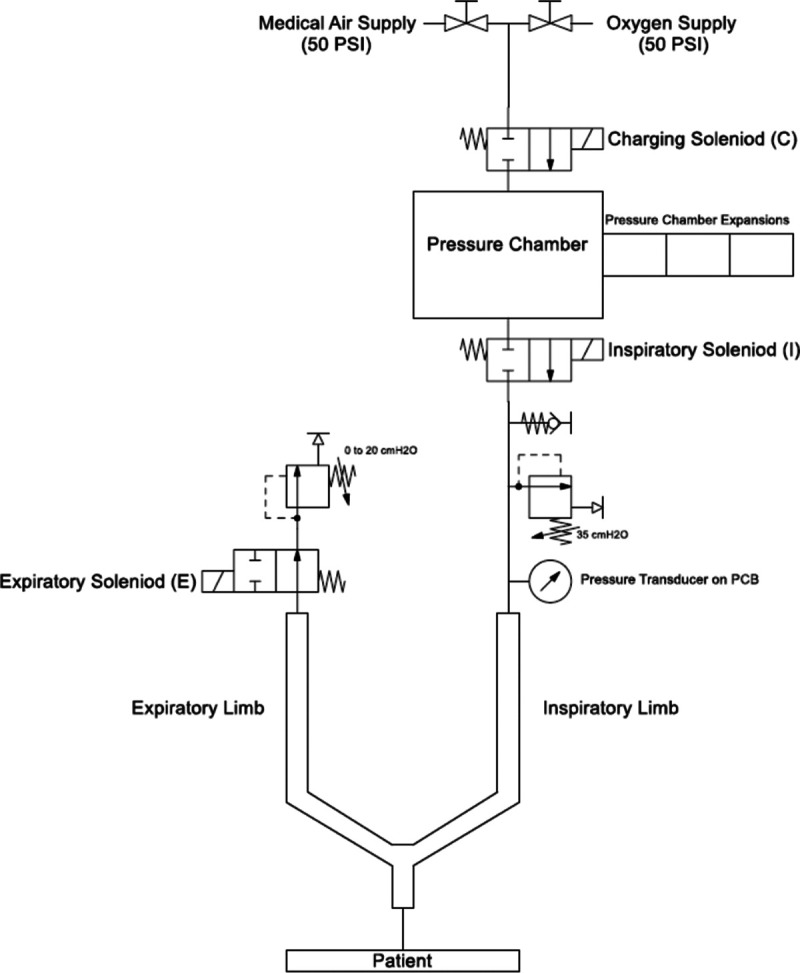
We pursued development of a pneumatic-type ventilator. The basic design involves three electrically controlled solenoid valves, a pressure chamber, the patient breathing circuit, a positive end-expiratory pressure valve, and an electronics control system. Multiple safety elements were built into the design. The user-friendly interface allows simple control of ventilator settings. The ventilator delivers a hybrid form of pneumatic, assist-control ventilation, with predicted tidal volumes of 300-800 mL, positive end-expiratory pressure 0-20 cm HO, and Fio 21-100%.
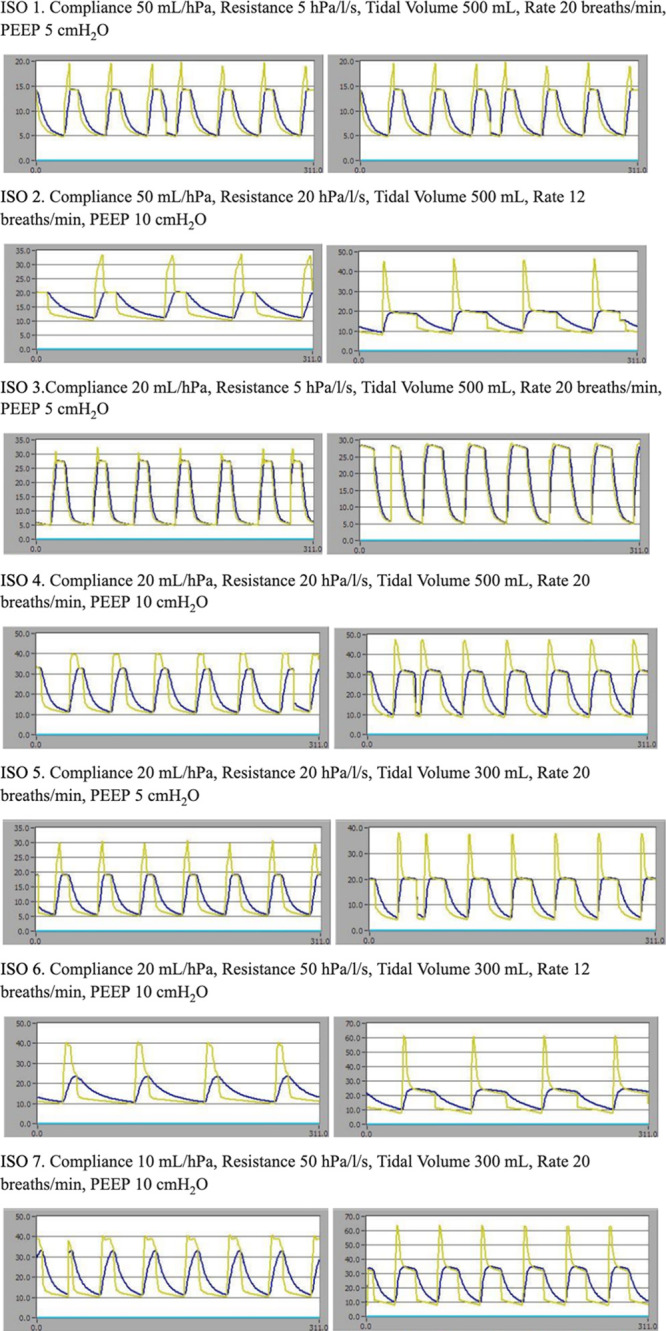
The ventilator was extensively tested with two separate high-fidelity lung simulators and a porcine in vivo model. Both lung simulators were able to simulate a variety of pathologic states, including obstructive lung disease and acute respiratory distress syndrome. The ventilator performed well across all simulated scenarios. Similarly, a porcine in vivo model was used to assess performance in live tissue, with a specific emphasis on gas exchange. The ventilator performed well in vivo and demonstrated noninferior ventilation and oxygenation when compared with the standard ventilator.
The Portsmouth Ventilator was able to perform well across all simulated pathologies and in vivo. All components may be acquired by the public for a cost of approximately $250 U.S.D. Although this ventilator has limited functionality compared with modern ventilators, the simple design appears to be safe and would allow for rapid mass production if ventilator surge demand exceeded supply.
持续的严重急性呼吸综合征冠状病毒2(SARS-CoV-2)或2019冠状病毒病(COVID-19)大流行表明,可能需要一种低成本、可快速部署的呼吸机。基于这一前提,我们试图设计一种符合以下标准的呼吸机:1)公众可获取的标准组件;2)“开源”兼容性,使任何人都能轻松重建该系统;3)能够用于急性呼吸窘迫综合征的通气;4)以尽可能低的成本提供足够的氧合和通气。
我们致力于开发一种气动式呼吸机。基本设计包括三个电控电磁阀、一个压力室、患者呼吸回路、呼气末正压阀和一个电子控制系统。设计中内置了多个安全元件。用户友好的界面允许简单控制呼吸机设置。该呼吸机提供一种混合形式的气动辅助控制通气,预计潮气量为300 - 800毫升,呼气末正压为0 - 20厘米水柱,吸入氧浓度为21% - 100%。
该呼吸机在两个独立的高保真肺模拟器和一个猪体内模型上进行了广泛测试。两个肺模拟器都能够模拟多种病理状态,包括阻塞性肺病和急性呼吸窘迫综合征。该呼吸机在所有模拟场景中表现良好。同样,使用猪体内模型评估其在活体组织中的性能,特别关注气体交换。该呼吸机在体内表现良好,与标准呼吸机相比,通气和氧合效果不差。
朴茨茅斯呼吸机在所有模拟病理状态和体内均表现良好。所有组件公众均可购买,成本约为250美元。尽管与现代呼吸机相比,该呼吸机功能有限,但简单的设计似乎是安全的,并且如果呼吸机需求激增导致供应不足,能够实现快速大规模生产。