Fraunhofer Institute for Cell Therapy and Immunology (IZI), Department for GMP Process Development & ATMP Design, Leipzig, Germany.
Fraunhofer Institute for Cell Therapy and Immunology (IZI), Leipzig, Germany.
Front Immunol. 2022 Mar 18;13:822298. doi: 10.3389/fimmu.2022.822298. eCollection 2022.
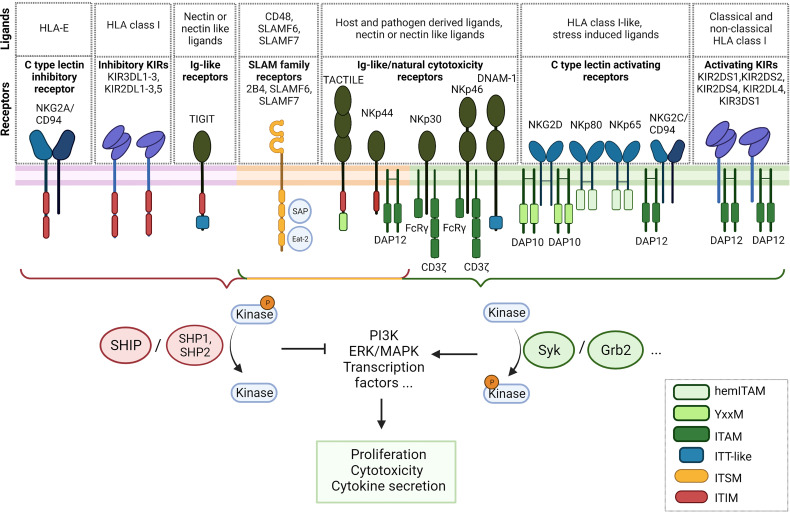
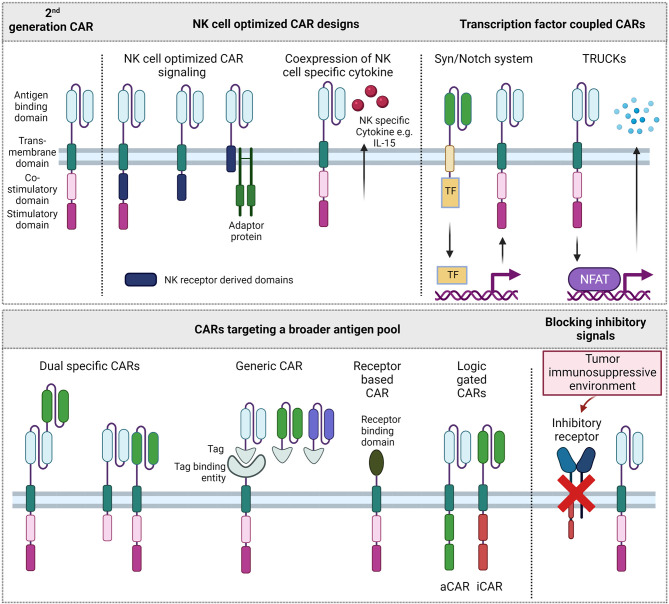
Cancer immunotherapies utilize the capabilities of the immune system to efficiently target malignant cells. In recent years, chimeric antigen receptor (CAR) equipped T cells showed promising results against B cell lymphomas. Autologous CAR-T cells require patient-specific manufacturing and thus extensive production facilities, resulting in high priced therapies. Along with potentially severe side effects, these are the major drawbacks of CAR-T cells therapies. Natural Killer (NK) cells pose an alternative for CAR equipped immune cells. Since NK cells can be safely transferred from healthy donors to cancer patients, they present a suitable platform for an allogeneic "off-the-shelf" immunotherapy. However, administration of activated NK cells in cancer therapy has until now shown poor anti-cancer responses, especially in solid tumors. Genetic modifications such as CARs promise to enhance recognition of tumor cells, thereby increasing anti-tumor effects and improving clinical efficacy. Although the cell biology of T and NK cells deviates in many aspects, the development of CAR-NK cells frequently follows within the footsteps of CAR-T cells, meaning that T cell technologies are simply adopted to NK cells. In this review, we underline the unique properties of NK cells and their potential in CAR therapies. First, we summarize the characteristics of NK cell biology with a focus on signaling, a fine-tuned interaction of activating and inhibitory receptors. We then discuss why tailored NK cell-specific CAR designs promise superior efficacy compared to designs developed for T cells. We summarize current findings and developments in the CAR-NK landscape: different CAR formats and modifications to optimize signaling, to target a broader pool of antigens or to increase persistence. Finally, we address challenges beyond NK cell engineering, including expansion and manufacturing, that need to be addressed to pave the way for CAR-NK therapies from the bench to the clinics.
癌症免疫疗法利用免疫系统的能力,有效地靶向恶性细胞。近年来,嵌合抗原受体 (CAR) 装备的 T 细胞在对抗 B 细胞淋巴瘤方面显示出了有前景的结果。自体 CAR-T 细胞需要患者特异性制造,因此需要广泛的生产设施,导致治疗费用高昂。除了可能产生严重的副作用外,这是 CAR-T 细胞疗法的主要缺点。自然杀伤 (NK) 细胞是 CAR 装备免疫细胞的另一种选择。由于 NK 细胞可以从健康供体安全地转移到癌症患者体内,因此它们为同种异体“现成”免疫疗法提供了合适的平台。然而,在癌症治疗中给予激活的 NK 细胞迄今为止显示出较差的抗癌反应,特别是在实体肿瘤中。遗传修饰,如 CAR,可以增强对肿瘤细胞的识别,从而增强抗肿瘤作用并提高临床疗效。尽管 T 和 NK 细胞的细胞生物学在许多方面存在差异,但 CAR-NK 细胞的发展经常紧随 CAR-T 细胞的脚步,这意味着 T 细胞技术被简单地应用于 NK 细胞。在这篇综述中,我们强调了 NK 细胞的独特特性及其在 CAR 疗法中的潜力。首先,我们总结了 NK 细胞生物学的特征,重点是信号转导,这是一种激活和抑制受体的精细相互作用。然后,我们讨论了为什么针对 NK 细胞的特定 CAR 设计比针对 T 细胞开发的设计更能保证更好的疗效。我们总结了 CAR-NK 领域的当前发现和进展:不同的 CAR 格式和修饰,以优化信号转导,靶向更广泛的抗原池或增加持久性。最后,我们解决了 NK 细胞工程之外的挑战,包括扩展和制造,这些都需要解决,为 CAR-NK 疗法从实验室走向临床铺平道路。