Tytgat Institute for Liver and Intestinal Research, Amsterdam Gastroenterology Endocrinology Metabolism, Amsterdam University Medical Centers, University of Amsterdam, Amsterdam, Netherlands.
Department of Gastroenterology and Hepatology, Amsterdam University Medical Centers, University of Amsterdam, Amsterdam, Netherlands.
Front Immunol. 2022 Mar 16;13:840935. doi: 10.3389/fimmu.2022.840935. eCollection 2022.
Primary sclerosing cholangitis (PSC) is a chronic inflammatory liver disease affecting the intra- and extrahepatic bile ducts, and is strongly associated with ulcerative colitis (UC). In this study, we explored the peripheral blood DNA methylome and its immune cell composition in patients with PSC-UC, UC, and healthy controls (HC) with the aim to develop a predictive assay in distinguishing patients with PSC-UC from those with UC alone.
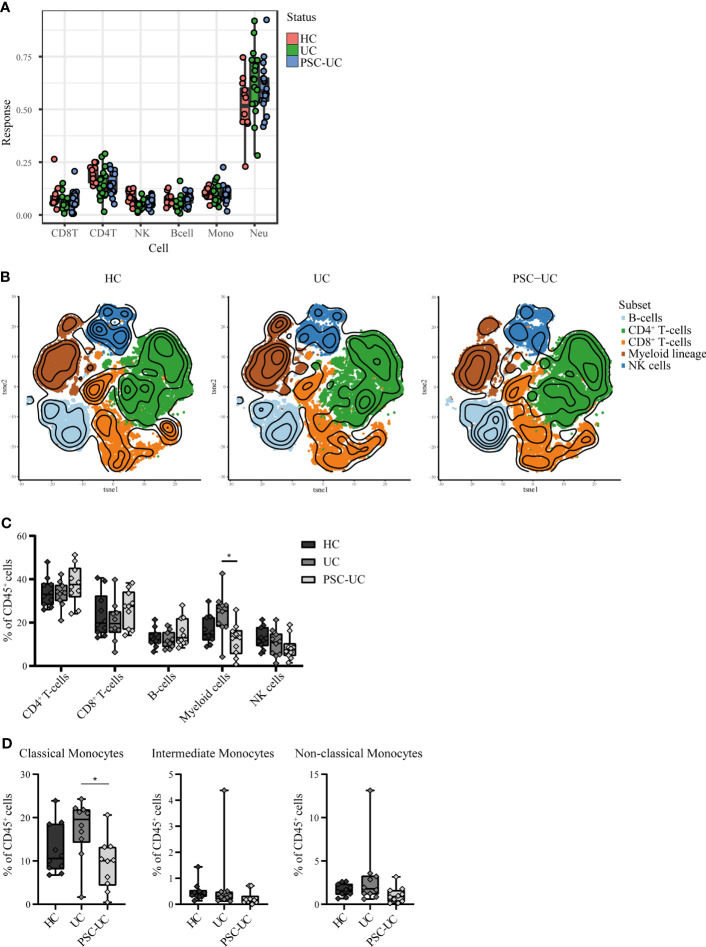
The peripheral blood DNA methylome of male patients with PSC and concomitant UC, UC and HCs was profiled using the Illumina HumanMethylation Infinium EPIC BeadChip (850K) array. Differentially methylated CpG position (DMP) and region (DMR) analyses were performed alongside gradient boosting classification analyses to discern PSC-UC from UC patients. As observed differences in the DNA methylome could be the result of differences in cellular populations, we additionally employed mass cytometry (CyTOF) to characterize the immune cell compositions.
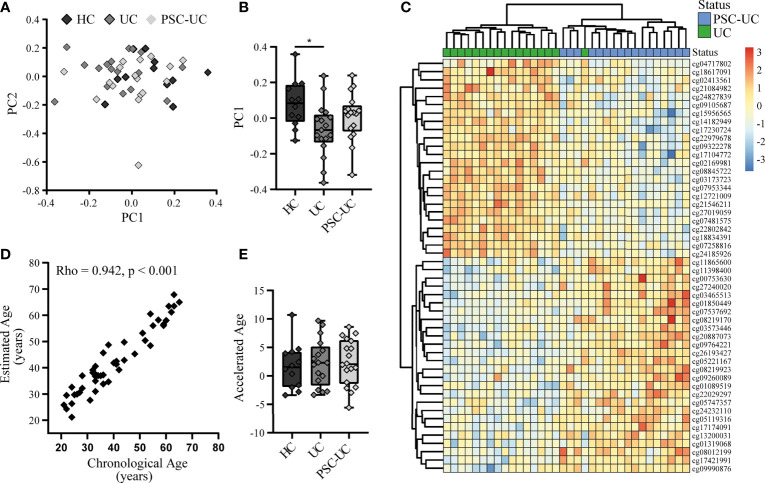
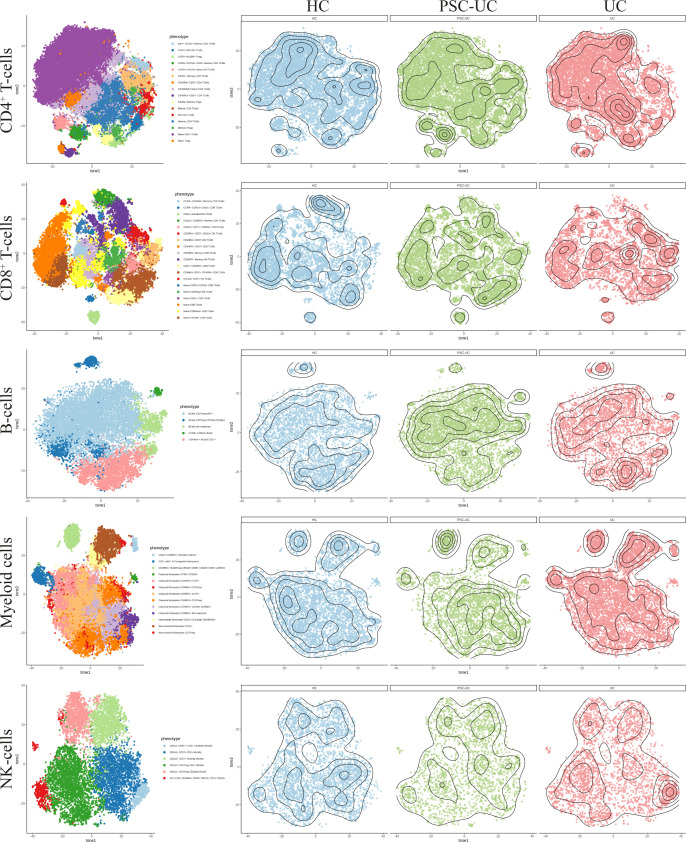
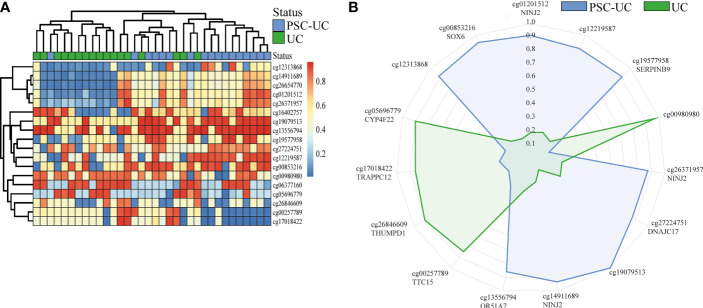
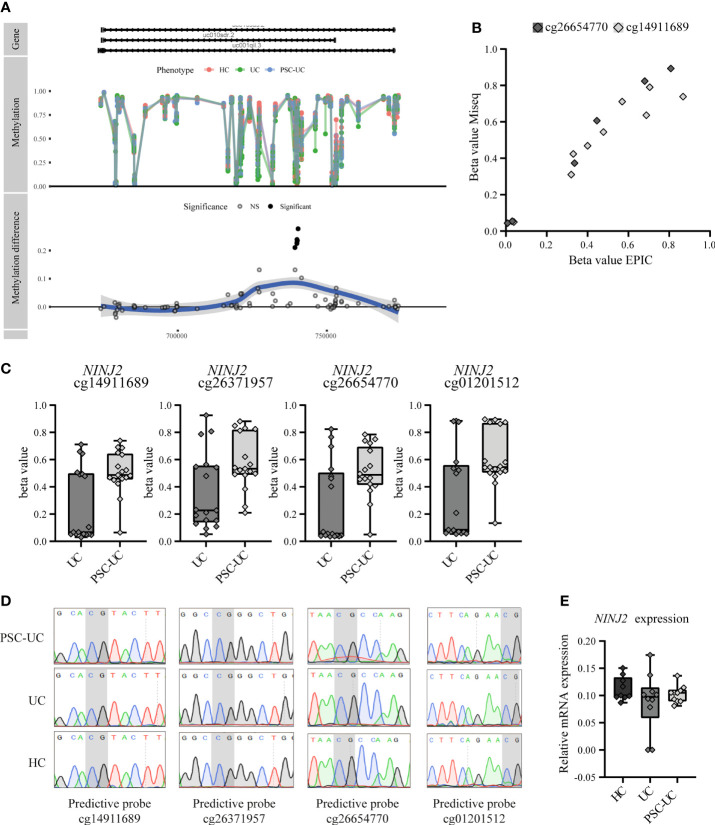
Genome wide methylation analysis did not reveal large differences between PSC-UC and UC patients nor HCs. Nonetheless, using gradient boosting we were capable of discerning PSC-UC from UC with an area under the receiver operator curve (AUROC) of 0.80. Four CpG sites annotated to the gene were found to strongly contribute to the predictive performance. While CyTOF analyses corroborated the largely similar blood cell composition among patients with PSC-UC, UC and HC, a higher abundance of myeloid cells was observed in UC compared to PSC-UC patients.
DNA methylation enables discerning PSC-UC from UC patients, with a potential for biomarker development.
原发性硬化性胆管炎(PSC)是一种影响肝内外胆管的慢性炎症性肝病,与溃疡性结肠炎(UC)密切相关。在这项研究中,我们探索了 PSC-UC、UC 和健康对照(HC)患者的外周血 DNA 甲基组及其免疫细胞组成,旨在开发一种预测性检测方法,以区分 PSC-UC 患者与单纯 UC 患者。
使用 Illumina HumanMethylation Infinium EPIC BeadChip(850K)阵列对男性 PSC 合并 UC、UC 和 HC 患者的外周血 DNA 甲基组进行了分析。进行了差异甲基化 CpG 位置(DMP)和区域(DMR)分析,以及梯度提升分类分析,以区分 PSC-UC 和 UC 患者。由于 DNA 甲基组的观察到的差异可能是细胞群体差异的结果,我们还采用了质谱流式细胞术(CyTOF)来描述免疫细胞组成。
全基因组甲基化分析并未显示 PSC-UC 和 UC 患者以及 HC 之间存在较大差异。尽管如此,我们使用梯度提升能够以 0.80 的接收者操作曲线(AUROC)区分 PSC-UC 和 UC。发现四个注释到 基因的 CpG 位点对预测性能有很强的贡献。虽然 CyTOF 分析证实 PSC-UC、UC 和 HC 患者的血液细胞组成基本相似,但与 PSC-UC 患者相比,UC 患者的髓样细胞丰度更高。
DNA 甲基化能够区分 PSC-UC 和 UC 患者,具有开发生物标志物的潜力。