Wani Mudassir M, Rai Bhavan P, Webb William Richard, Madaan Sanjeev
Royal Glamorgan Hospital, Cardiff, UK.
Freeman Hospital, Newcastle, UK.
Ther Adv Urol. 2022 Mar 29;14:17562872221086999. doi: 10.1177/17562872221086999. eCollection 2022 Jan-Dec.
We carried out systematic review and network meta-analysis to investigate the role of stem cell therapy (SCT) in the management of erectile dysfunction (ED) secondary to cavernous nerve injury in rats and post-radical prostatectomy (RP) in humans.
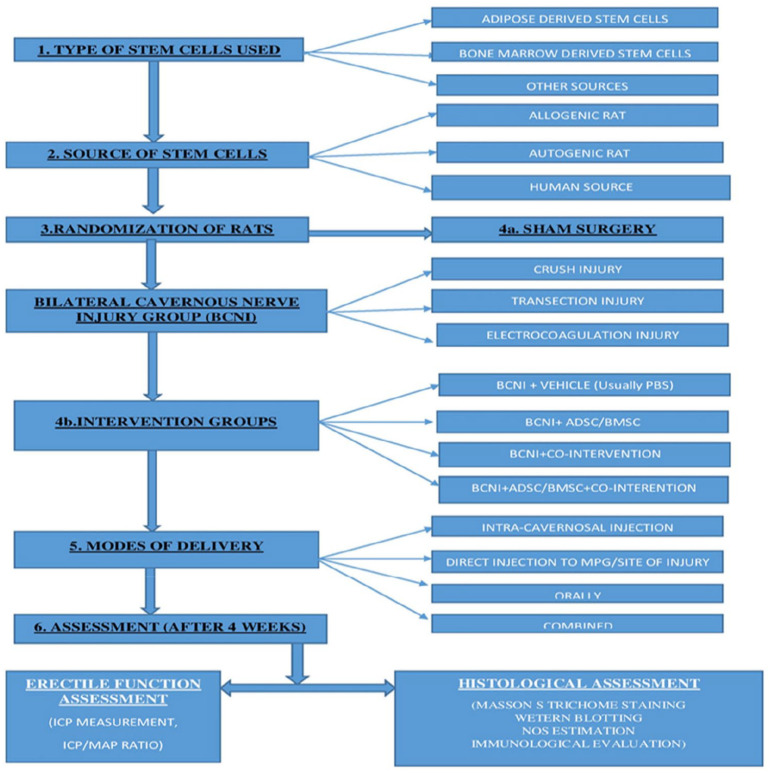
The protocol was registered with PROSPERO database. We searched studies analyzing the efficacy of SCT for ED due to bilateral cavernous nerve injury (BCNI) in rats using Healthcare Databases Advanced Search (HDAS) Export software (MEDLINE, EMBASE, Scopus) from inception to September 2020. The outcome measurements, for 29 animal studies, were intracavernosal pressure (ICP), ICP/MAP (mean arterial pressure) ratio, and histological/molecular changes. All three available human trials evaluating SCT in post-RP ED were assessed for International Index for Erectile Function (IIEF) Score and Erection Hardness Score (EHS).
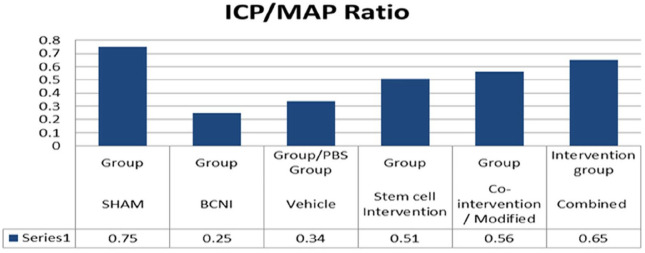
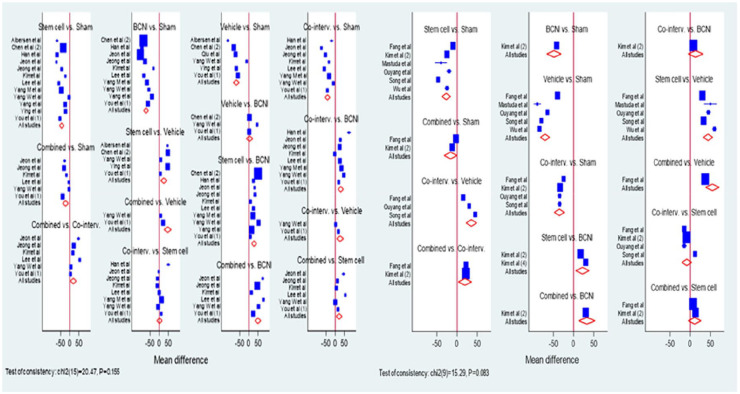
For ICP measurement, animal studies were divided into adipose-derived stem cells (ADSCs) subgroup and bone marrow-derived stem cells (BMSCs) subgroup. Pooled analysis of these studies showed a beneficial effect of SCT in improving erectile function in rats with BCNI using network meta-analysis (95% confidence interval, CI; < 0.001). There was an increase in ICP/MAP ratio in stem cell groups (including co-intervention) compared with control BCNI group. Histological and molecular evaluation of penile tissue revealed an increase in neuronal nitric oxide synthase (nNOS), smooth muscle content, and anti-apoptotic activity. Human trials revealed improved IIEF (70-150% from baseline at 6 months) and EHS (80-200% from baseline).
Our results confirm that SCT does improve the erectile function in rats having cavernous nerve injury. Similarly, early human results have shown promising results.
CRD42020201343.
我们进行了系统评价和网状Meta分析,以研究干细胞疗法(SCT)在治疗大鼠海绵体神经损伤继发勃起功能障碍(ED)及人类前列腺癌根治术(RP)后ED中的作用。
该方案已在PROSPERO数据库注册。我们使用高级医疗数据库搜索(HDAS)导出软件(MEDLINE、EMBASE、Scopus),检索了从开始到2020年9月分析SCT对大鼠双侧海绵体神经损伤(BCNI)所致ED疗效的研究。对于29项动物研究,结局指标为海绵体内压(ICP)、ICP/平均动脉压(MAP)比值以及组织学/分子变化。对所有三项评估SCT治疗RP后ED的人体试验进行了国际勃起功能指数(IIEF)评分和勃起硬度评分(EHS)评估。
对于ICP测量,动物研究分为脂肪来源干细胞(ADSCs)亚组和骨髓来源干细胞(BMSCs)亚组。这些研究的汇总分析显示,使用网状Meta分析,SCT对改善BCNI大鼠的勃起功能有有益作用(95%置信区间,CI;<0.001)。与对照BCNI组相比,干细胞组(包括联合干预)的ICP/MAP比值有所增加。阴茎组织的组织学和分子评估显示神经元型一氧化氮合酶(nNOS)、平滑肌含量和抗凋亡活性增加。人体试验显示IIEF(6个月时较基线提高70 - 150%)和EHS(较基线提高80 - 200%)有所改善。
我们的结果证实SCT确实能改善海绵体神经损伤大鼠的勃起功能。同样,早期人体研究结果也显示出有前景的结果。
PROSPERO注册号:CRD42020201343。