Nie Hui, Wu Yanhao, Ou Chunlin, He Xiaoyun
Department of Pathology, Xiangya Hospital, Central South University, Changsha, China.
Department of Respiratory Medicine, Xiangya Hospital, Central South University, Changsha, China.
Front Med (Lausanne). 2022 Mar 15;9:832312. doi: 10.3389/fmed.2022.832312. eCollection 2022.
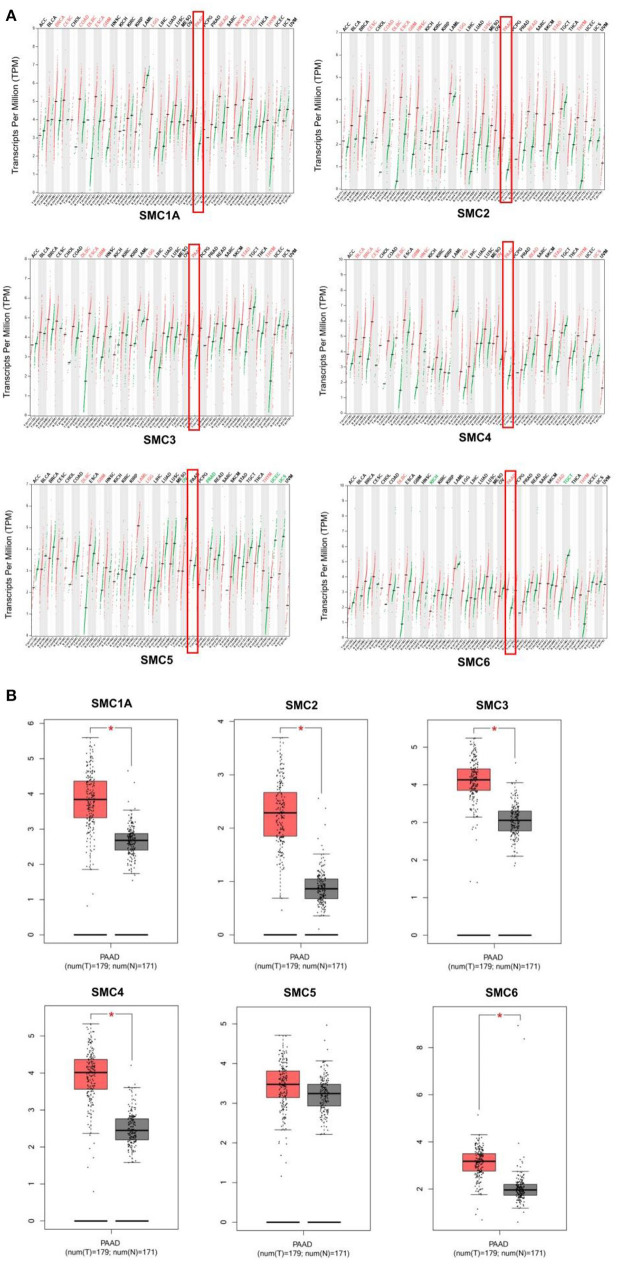
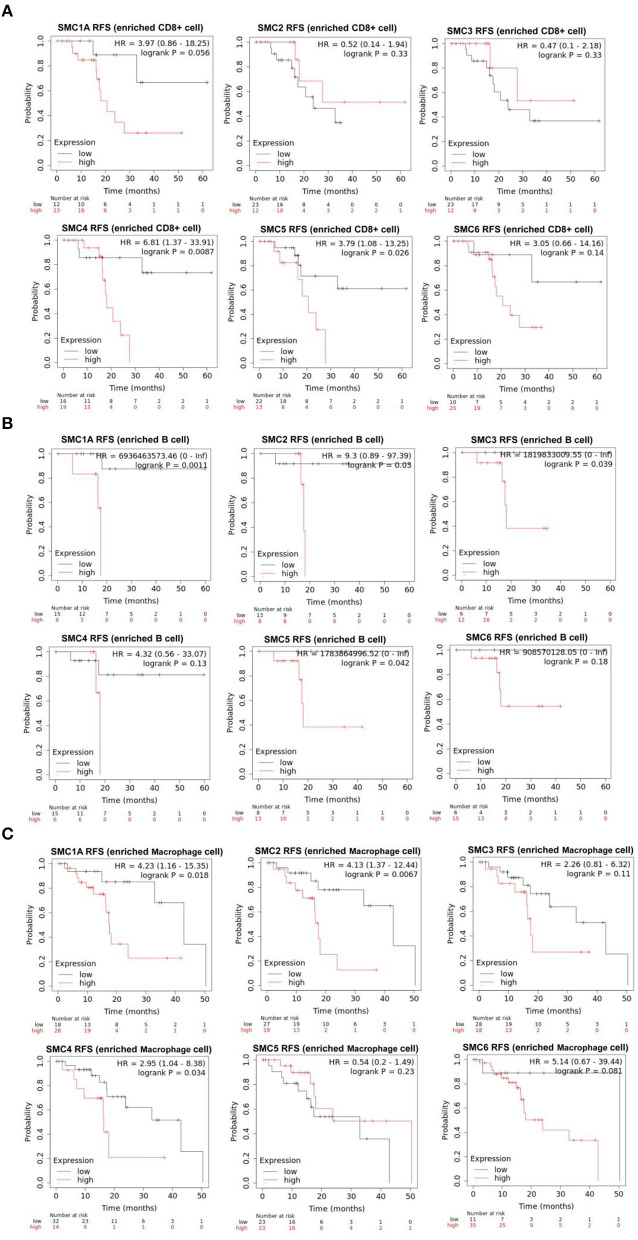
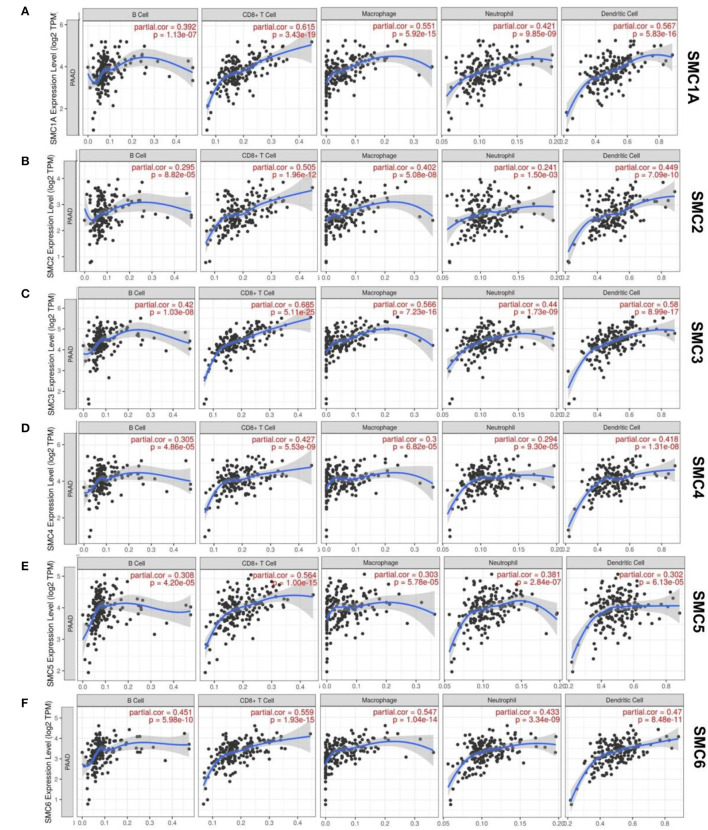
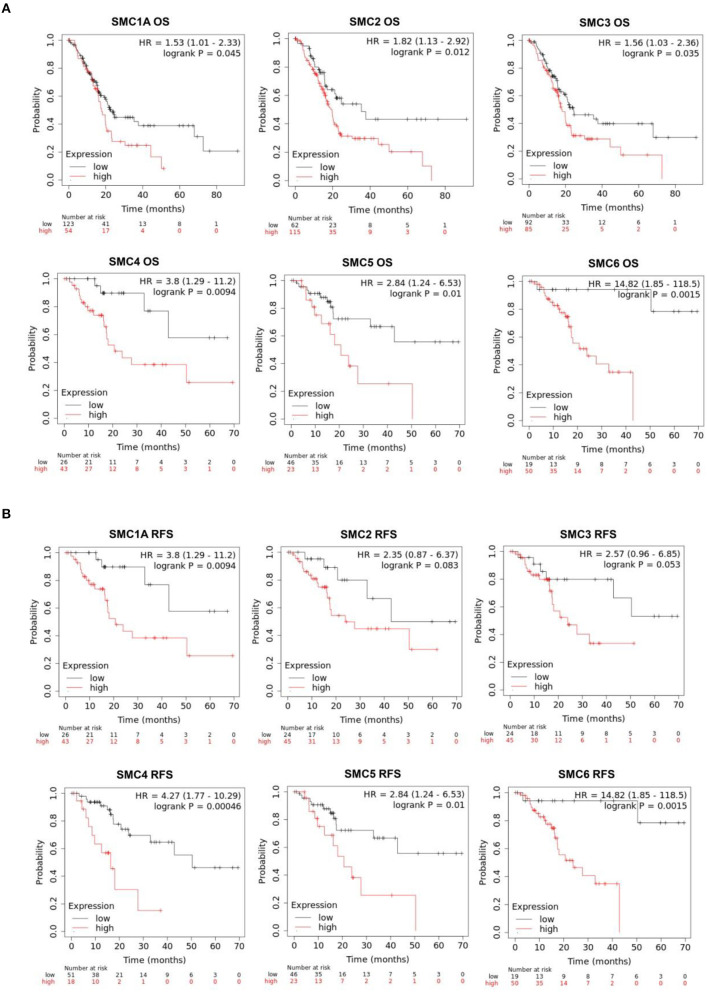
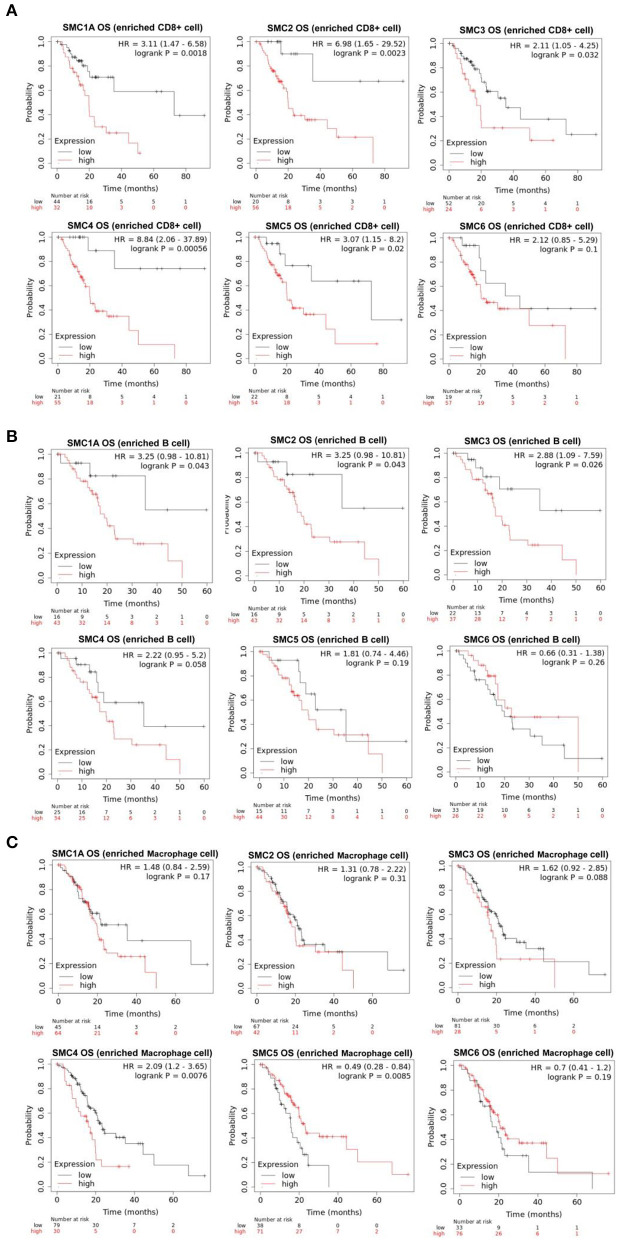
Pancreatic adenocarcinoma (PAAD) is a malignant tumor with high morbidity and mortality worldwide. Members from the structural maintenance of chromosomes (SMC) gene family function as oncogenes in various tumor types, but their roles in PAAD have not been elucidated. In this study, we aimed to explore the role of the SMC family in tumor progression and cancer immune infiltration in PAAD using integrative bioinformatic analyses. The results showed that the SMC 1A, 2, 3, 4, and 6 were overexpressed in PAAD tissues; of these, SMC 1A, 4, 5, and 6 could be potential prognostic biomarkers for PAAD. The expression of SMC genes was found to be strongly associated with immune cell infiltration. According to the infiltrative status of various immune cells, the mRNA expression of genes in PAAD was associated with the overall and recurrence-free survival of patients. In conclusion, the SMC gene family is associated with PAAD and may be involved in tumorigenesis and cancer-immune interactions; thus, members from this gene family may serve as promising prognostic and therapeutic biomarkers of PAAD.
胰腺腺癌(PAAD)是一种在全球范围内发病率和死亡率都很高的恶性肿瘤。染色体结构维持(SMC)基因家族的成员在多种肿瘤类型中作为癌基因发挥作用,但其在PAAD中的作用尚未阐明。在本研究中,我们旨在通过综合生物信息学分析来探讨SMC家族在PAAD肿瘤进展和癌症免疫浸润中的作用。结果显示,SMC 1A、2、3、4和6在PAAD组织中过表达;其中,SMC 1A、4、5和6可能是PAAD的潜在预后生物标志物。发现SMC基因的表达与免疫细胞浸润密切相关。根据各种免疫细胞的浸润状态,PAAD中基因的mRNA表达与患者的总生存期和无复发生存期相关。总之,SMC基因家族与PAAD相关,可能参与肿瘤发生和癌症免疫相互作用;因此,该基因家族的成员可能成为PAAD有前景的预后和治疗生物标志物。