Singh Sonita K, Fenton Ashley, Bumbarger Brian, Beiter Kaylin, Simpson Lindsay, Thornton Matthew, Phillippi Stephen
Louisiana State University Health Sciences Center, School of Public Health, New Orleans, LA 70112 USA.
Science, Systems and Community, Como, CO 80432 USA.
J Technol Behav Sci. 2022;7(3):296-306. doi: 10.1007/s41347-022-00248-4. Epub 2022 Mar 28.
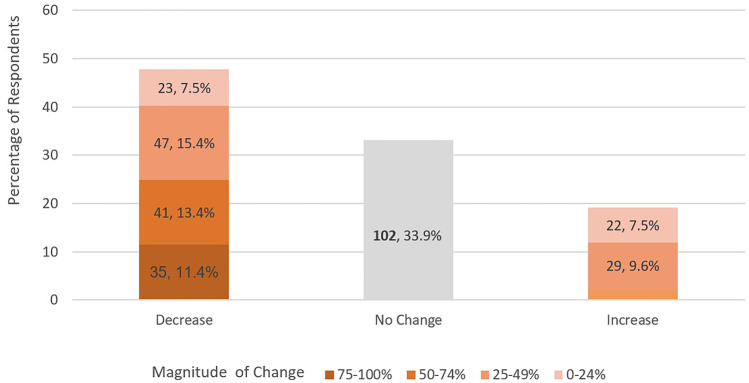
A statewide COVID-19 quarantine order forced an abrupt shift for Louisiana's behavioral health providers who provide mental health and substance abuse treatment services. The Center for Evidence to Practice conducted a study of this unprecedented shift to better understand the disruption and continuation of care during early statewide adoption of telemental health. The Center performed a mixed-method assessment including a series of focus groups and key informant interviews followed by a survey of over 300 responding providers. Over 85% of providers reported sustaining behavioral health services using a variety of telemental health strategies. While traditional referral networks and client volume were significantly disrupted, temporary relaxation of Medicaid regulatory and reimbursement policies appeared to be a key facilitator of telemental health adoption and continued services. Shifting to telemental health relied on provider's quick adaptations, engaging clients with a hybrid of teleconferencing platforms, calls/texts, and socially-distanced in-person visits. Larger multi-clinician providers and evidence-based practice (EBP) providers were better equipped to support the adoption of telemental health. Rural and EBPs providers disproportionately discontinued services. Although many practitioners viewed the original COVID-19 pandemic as a short-lived condition, the recent emergence of Delta and other variants has shown the impact on the BH care system may be lasting. Flexibility across policies and a variety of telemental health platforms are keys to telehealth adaptation. However, the contraction of the client base raises concerns of increasing disparities among vulnerable and hard-to-reach populations if telemental health becomes a sustained approach in response to future COVID-19 variants.
一项全州范围的新冠疫情隔离令迫使路易斯安那州提供心理健康和药物滥用治疗服务的行为健康服务提供者突然做出转变。循证实践中心对这一前所未有的转变进行了一项研究,以更好地了解在全州早期采用远程心理健康服务期间护理的中断和延续情况。该中心进行了一项混合方法评估,包括一系列焦点小组讨论和关键信息提供者访谈,随后对300多名回复的提供者进行了调查。超过85%的提供者报告称,他们使用各种远程心理健康策略维持了行为健康服务。虽然传统的转诊网络和客户数量受到了严重干扰,但医疗补助监管和报销政策的临时放宽似乎是采用远程心理健康服务和持续提供服务的关键促进因素。转向远程心理健康服务依赖于提供者的快速适应,通过电话会议平台、电话/短信以及保持社交距离的面对面探访等多种方式与客户互动。规模较大的多临床医生提供者和循证实践(EBP)提供者更有能力支持远程心理健康服务的采用。农村和循证实践提供者中断服务的比例过高。尽管许多从业者认为最初的新冠疫情是一种短期状况,但最近德尔塔毒株和其他变种的出现表明,对行为健康护理系统的影响可能是持久的。政策的灵活性和各种远程心理健康平台是适应远程医疗的关键。然而,如果远程心理健康服务成为应对未来新冠变种的持续方法,客户群的收缩引发了对弱势群体和难以接触人群之间差距不断扩大的担忧。