
新西兰心理健康求助热线和远程医疗服务提供商在新冠疫情期间的创新举措——从服务提供商的角度梳理解决方案并探讨可持续性。
COVID-19 related innovation in Aotearoa/New Zealand mental health helplines and telehealth providers - mapping solutions and discussing sustainability from the perspective of service providers.
作者信息
Pavlova Alina, Scarth Bonnie, Witt Katrina, Hetrick Sarah, Fortune Sarah
机构信息
Department of Psychological Medicine, Faculty of Medicine and Health Science, University of Auckland, Auckland, New Zealand.
Orygen, Parkville, VIC, Australia.
出版信息
Front Psychiatry. 2022 Aug 30;13:973261. doi: 10.3389/fpsyt.2022.973261. eCollection 2022.
BACKGROUND
The coronavirus disease 2019 (COVID-19) pandemic and associated interventions resulted in changes in both the demand and supply of mental health services and necessitated agile adaptation and innovation from service providers.
AIMS
The aim of this study was to explore what innovative solutions were adopted in response to COVID-19 and the pandemic control measures, what opportunities and challenges were associated with these innovations, as well as to critically reflect on the longer-term sustainability of the innovations in the context of Aotearoa/New Zealand mental healthcare.
MATERIALS AND METHODS
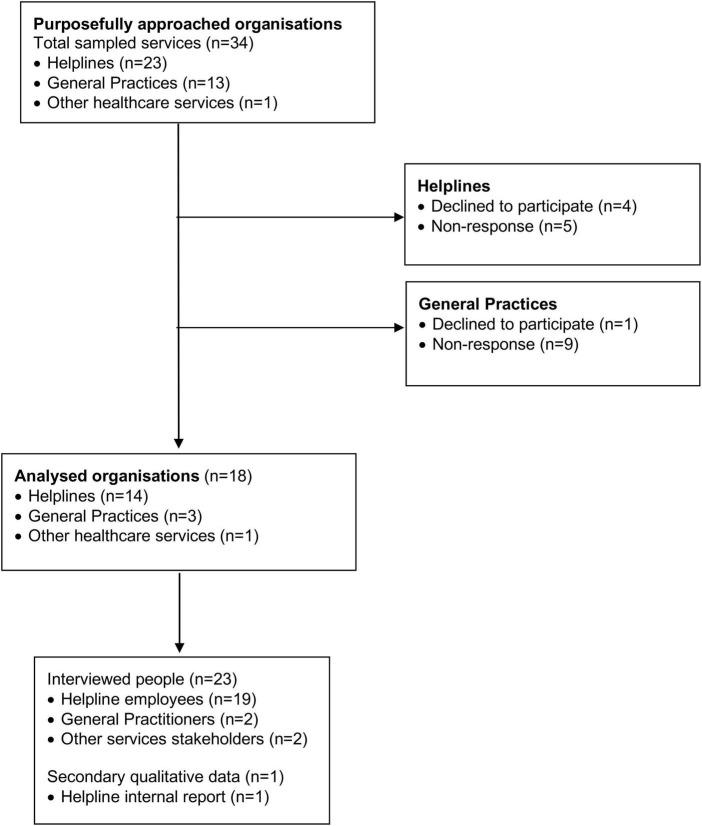
We used thematic analysis to analyse the data from the 23 in-depth interviews with helpline employees and general practitioners from 18 service providers that regularly engage in mental healthcare.
RESULTS
Two key themes related to COVID-19 and the pandemic control measures were identified from respondents' accounts. These were "Technological innovations" and "Process innovations" where providers noted types of innovative solutions, and opportunities and challenges associated with those. The themes culminated in a meta theme "Sustainability of changes to service delivery" that appeared consistently in each theme and asks to consider how sustainable these innovative solutions might be in the long-term. Namely, sustainability of innovation was questioned in respect to the (a) innovative solutions being the emergency solutions with little or no impact analysis, (b) "returning back to normal" due to limited future funding and innovation as a sunk cost, and (c) sporadic and inconsistent innovation between service providers that does not contribute to quality and continuity of care from the systems perspective.
CONCLUSION
COVID-19 and the measures of pandemic control were associated with an increase in innovative solutions from service providers. There were both opportunities and challenges associated with these innovative efforts and the sustainability of innovation was questioned. Future research about COVID-19 related innovation of service provision should focus on service user experiences and empirically measure the innovation safety and efficacy.
背景
2019年冠状病毒病(COVID-19)大流行及相关干预措施导致心理健康服务的需求和供给都发生了变化,服务提供者需要灵活适应并进行创新。
目的
本研究旨在探讨针对COVID-19及疫情防控措施采取了哪些创新解决方案,这些创新带来了哪些机遇和挑战,并批判性地思考在新西兰/奥特亚罗瓦心理健康护理背景下这些创新的长期可持续性。
材料与方法
我们采用主题分析法,对来自18家定期提供心理健康护理服务机构的热线员工和全科医生进行的23次深度访谈数据进行分析。
结果
从受访者的叙述中确定了与COVID-19及疫情防控措施相关的两个关键主题。它们是“技术创新”和“流程创新”,提供者指出了创新解决方案的类型以及与之相关的机遇和挑战。这些主题最终归结为一个元主题“服务提供变化的可持续性”,该主题在每个主题中都持续出现,并要求思考这些创新解决方案从长远来看的可持续性如何。具体而言,创新的可持续性受到质疑的方面包括:(a)创新解决方案是应急方案,几乎没有或根本没有影响分析;(b)由于未来资金有限以及创新成为沉没成本,导致“回归正常”;(c)服务提供者之间的创新零散且不一致,从系统角度来看,这无助于护理质量和连续性。
结论
COVID-19及疫情防控措施促使服务提供者增加了创新解决方案。这些创新努力既有机遇也有挑战,创新的可持续性受到质疑。未来关于COVID-19相关服务提供创新的研究应关注服务使用者的体验,并实证测量创新的安全性和有效性。
 Zotero 插件