Department of Orthopaedic Surgery, Surgical Specialty Center, Hamad Medical Corporation, Doha, Qatar.
Orthopedic Surgery Department, Warren Alpert Medical School of Brown University, Providence, RI, USA.
Eur J Orthop Surg Traumatol. 2023 May;33(4):739-749. doi: 10.1007/s00590-022-03240-z. Epub 2022 Mar 21.
Subtrochanteric and reverse oblique intertrochanteric fractures are challenging and often difficult to reduce. While intramedullary nailing (IMN) is considered the standard treatment, achieving anatomic reduction prior to fixation is essential. This study aimed to assess the impact of cerclage wiring with IMN on the outcomes and complication rate in treating subtrochanteric and reverse oblique intertrochanteric fractures.
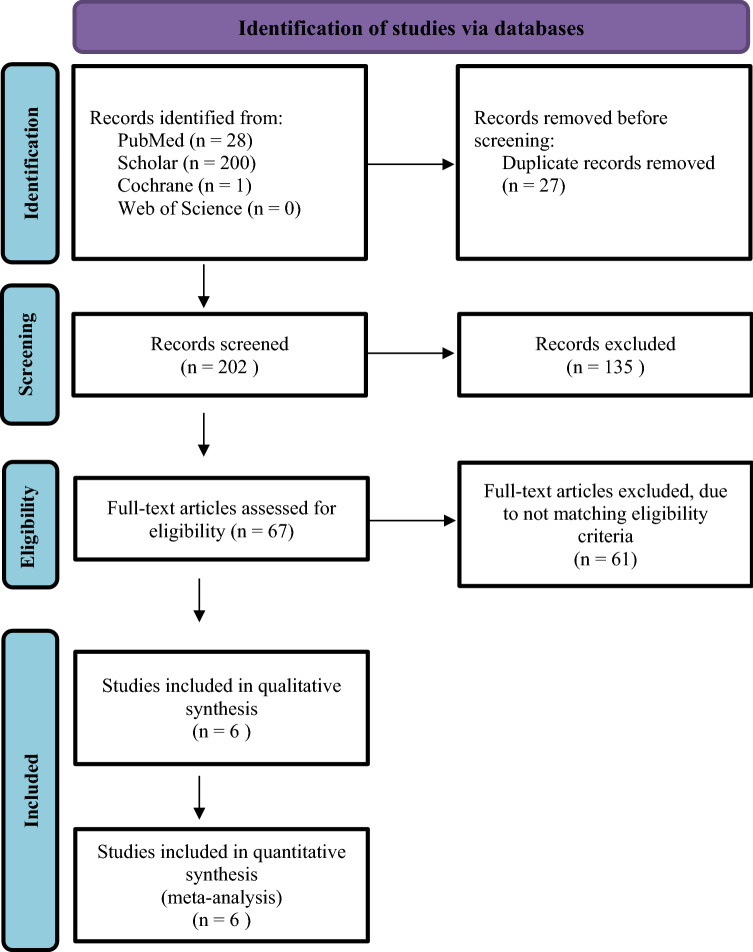
This meta-analysis was conducted in line with PRISMA guidelines. The primary outcome was the time to union. The secondary outcomes were operative time, blood loss, quality of reduction, reduction alignment (if in varus), complications and reoperations. PubMed, Cochrane, Web of Science and Google Scholar were searched till July 2021. Articles that compared intramedullary nailing (IMN) versus intramedullary nailing and cerclage wiring (IMN-C) in the treatment of subtrochanteric and reverse oblique intertrochanteric fractures were included. The risk of bias was assessed using the Newcastle-Ottawa scale.
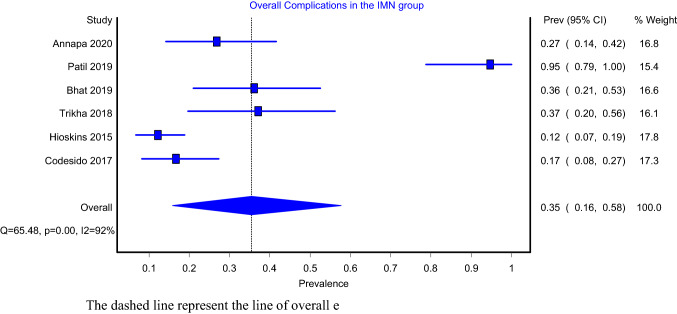
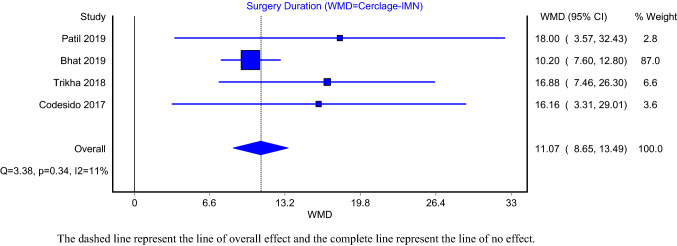
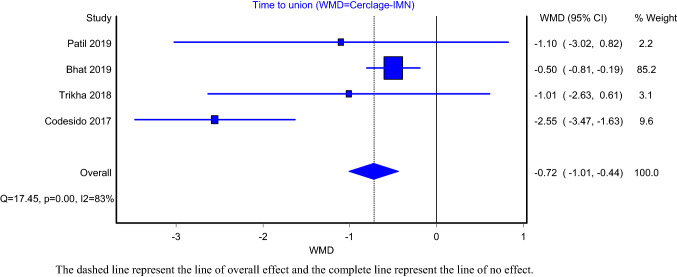
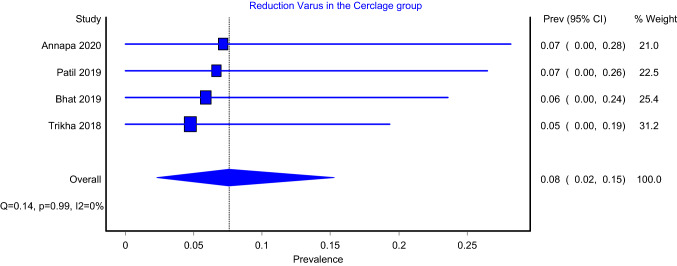
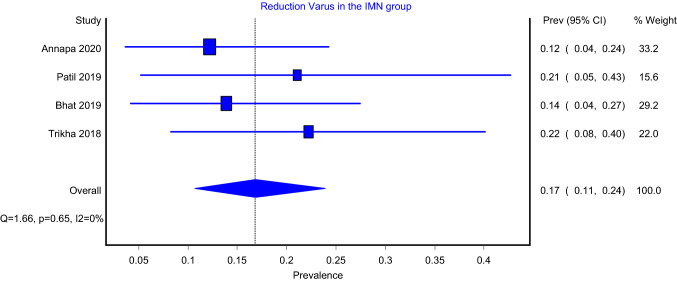
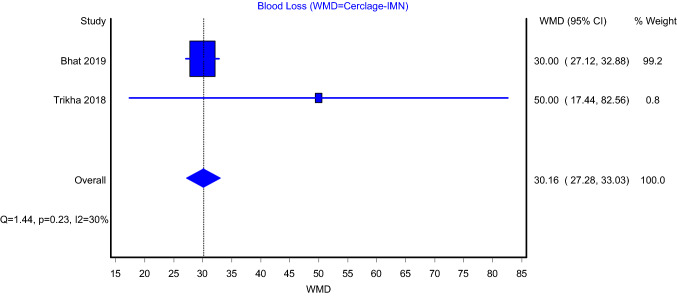
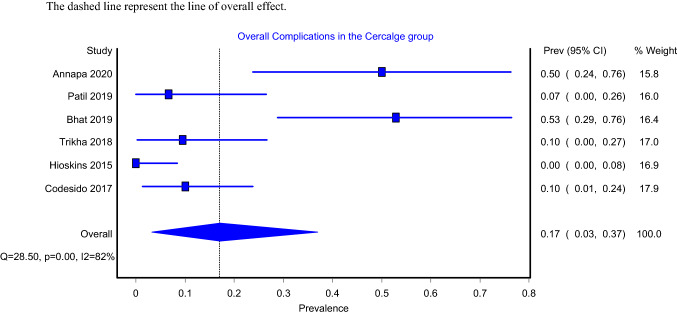
This meta-analysis included 415 patients with subtrochanteric and reverse oblique intertrochanteric fracture from six comparative studies. Our findings showed that IMN-C was significantly associated with higher mean duration of surgery and blood loss. However, IMN-C had significantly lower mean time to union compared to IMN alone. In addition, IMN-C had lower pooled prevalence of varus reduction and overall complications.
This study showed that the use of cerclage wiring is associated with lower time to union, lower prevalence of varus reduction and overall complications. Therefore, cerclage wiring augmentation is a safe technique with low complication rate and may be advised whenever open reduction is needed in the management of subtrochanteric and reverse oblique intertrochanteric fractures.
转子下和反斜型转子间骨折较难处理,往往难以复位。髓内钉(IMN)固定被认为是标准治疗方法,但在固定前实现解剖复位至关重要。本研究旨在评估 IMN 加环扎钢丝固定治疗转子下和反斜型转子间骨折的疗效和并发症发生率。
本荟萃分析符合 PRISMA 指南。主要结局指标为愈合时间。次要结局指标包括手术时间、失血量、复位质量(如果存在内翻)、复位对线(如果存在内翻)、并发症和再次手术。检索 PubMed、Cochrane、Web of Science 和 Google Scholar 直至 2021 年 7 月。纳入比较髓内钉(IMN)与髓内钉加环扎钢丝(IMN-C)治疗转子下和反斜型转子间骨折的研究。使用纽卡斯尔-渥太华量表评估偏倚风险。
本荟萃分析纳入了来自 6 项比较研究的 415 例转子下和反斜型转子间骨折患者。结果显示,IMN-C 手术时间和失血量明显较长。然而,与单纯 IMN 相比,IMN-C 愈合时间明显更短。此外,IMN-C 总的内翻复位发生率和总体并发症发生率更低。
本研究表明,使用环扎钢丝可降低愈合时间、内翻复位发生率和总体并发症发生率。因此,环扎钢丝固定是一种安全技术,并发症发生率低,在管理转子下和反斜型转子间骨折时,如需行切开复位,可建议使用。