Vrije Universiteit Amsterdam, Amsterdam, the Netherlands; University College London, London, United Kingdom.
Vrije Universiteit Amsterdam, Amsterdam, the Netherlands; Amsterdam Public Health Research Institute, Amsterdam, the Netherlands; Child Health Research Centre, University of Queensland, Brisbane, Australia.
J Am Acad Child Adolesc Psychiatry. 2022 Jul;61(7):934-945. doi: 10.1016/j.jaac.2021.11.035. Epub 2022 Apr 1.
To investigate the genetic architecture of internalizing symptoms in childhood and adolescence.
In 22 cohorts, multiple univariate genome-wide association studies (GWASs) were performed using repeated assessments of internalizing symptoms, in a total of 64,561 children and adolescents between 3 and 18 years of age. Results were aggregated in meta-analyses that accounted for sample overlap, first using all available data, and then using subsets of measurements grouped by rater, age, and instrument.
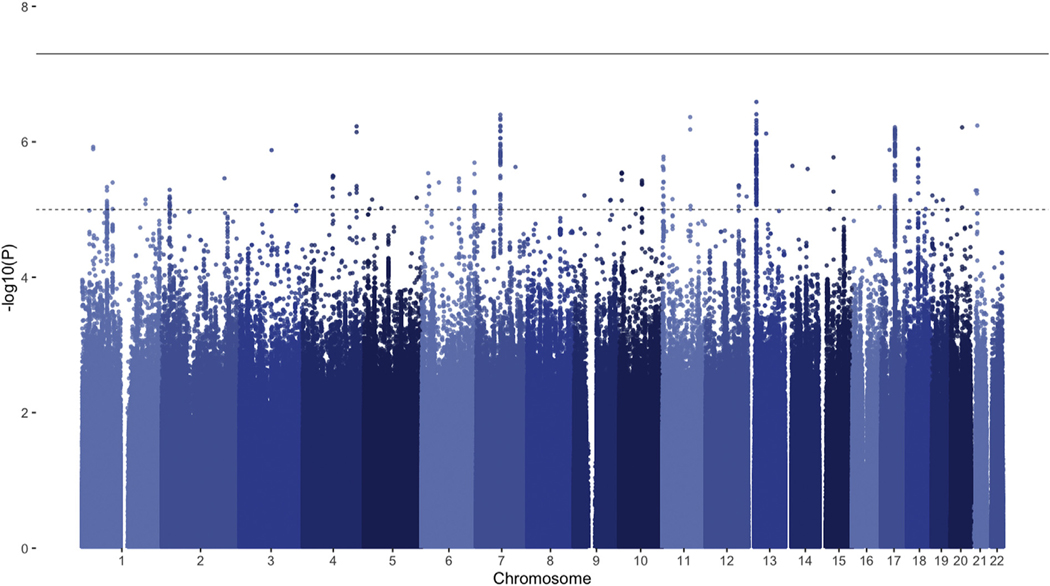
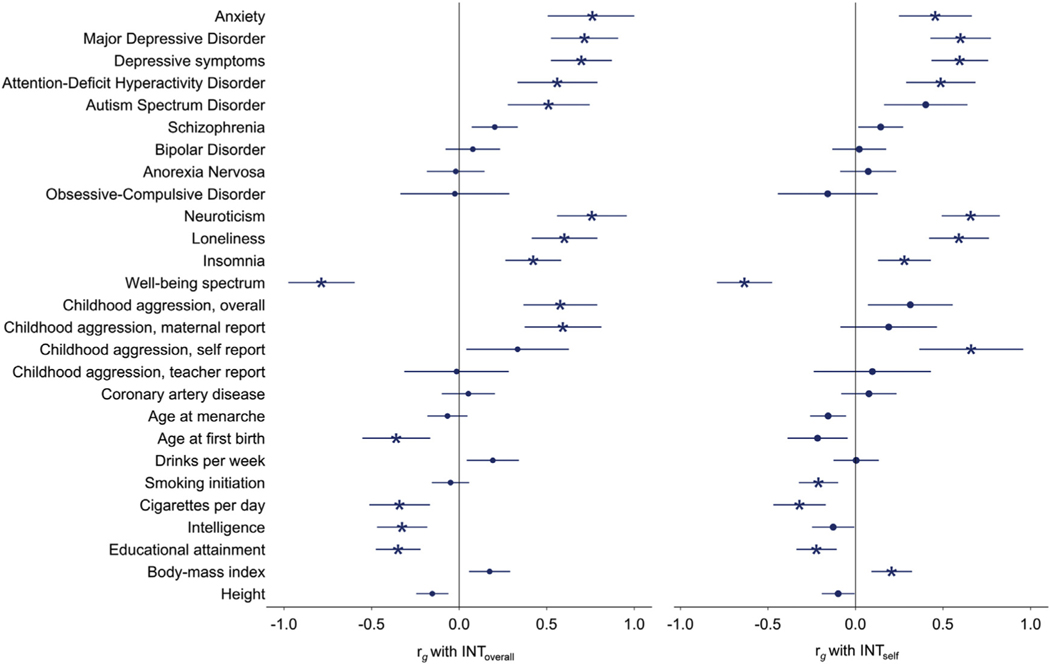
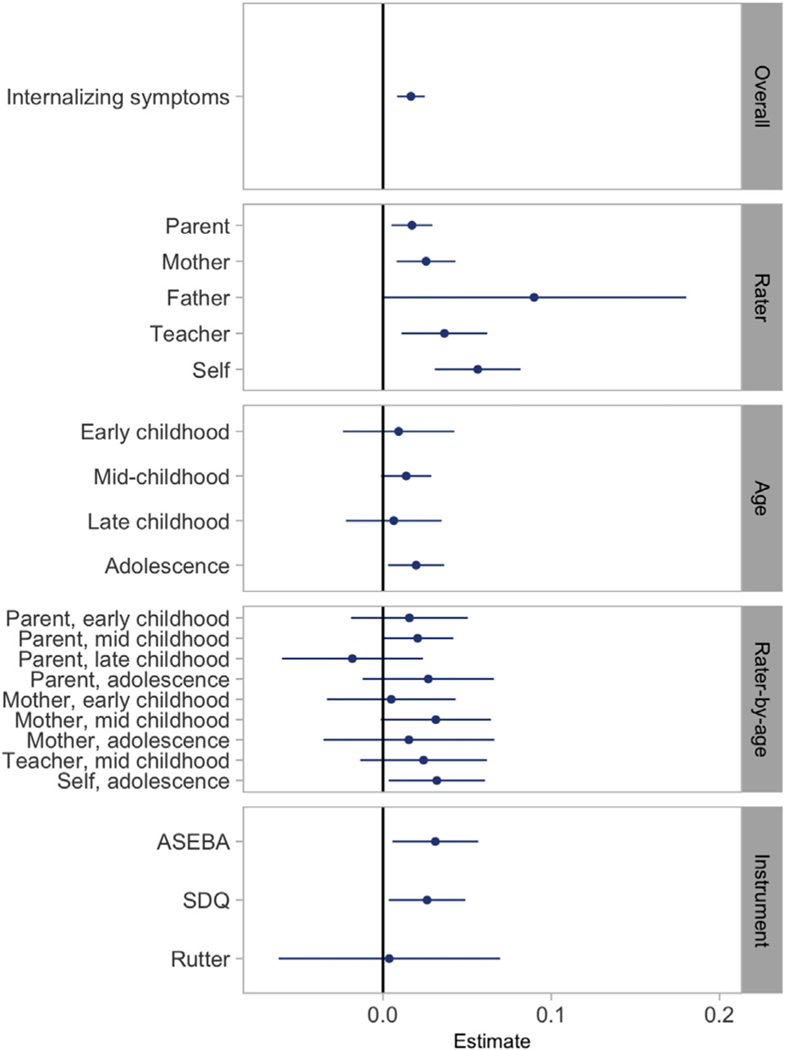
The meta-analysis of overall internalizing symptoms (INT) detected no genome-wide significant hits and showed low single nucleotide polymorphism (SNP) heritability (1.66%, 95% CI = 0.84-2.48%, n = 132,260). Stratified analyses indicated rater-based heterogeneity in genetic effects, with self-reported internalizing symptoms showing the highest heritability (5.63%, 95% CI = 3.08%-8.18%). The contribution of additive genetic effects on internalizing symptoms appeared to be stable over age, with overlapping estimates of SNP heritability from early childhood to adolescence. Genetic correlations were observed with adult anxiety, depression, and the well-being spectrum (|r| > 0.70), as well as with insomnia, loneliness, attention-deficit/hyperactivity disorder, autism, and childhood aggression (range |r| = 0.42-0.60), whereas there were no robust associations with schizophrenia, bipolar disorder, obsessive-compulsive disorder, or anorexia nervosa.
Genetic correlations indicate that childhood and adolescent internalizing symptoms share substantial genetic vulnerabilities with adult internalizing disorders and other childhood psychiatric traits, which could partially explain both the persistence of internalizing symptoms over time and the high comorbidity among childhood psychiatric traits. Reducing phenotypic heterogeneity in childhood samples will be key in paving the way to future GWAS success.
探究儿童和青少年内化症状的遗传结构。
在 22 个队列中,对 64561 名 3 至 18 岁的儿童和青少年进行了多次内化症状的单变量全基因组关联研究(GWAS),并进行了汇总分析。在使用所有可用数据进行的首次汇总分析中,以及在根据评估者、年龄和仪器分组的测量子集的后续汇总分析中,均考虑到了样本重叠。
整体内化症状(INT)的荟萃分析未检测到全基因组显著命中,且单核苷酸多态性(SNP)遗传力较低(1.66%,95%CI=0.84-2.48%,n=132260)。分层分析表明遗传效应存在评估者差异,自我报告的内化症状显示出最高的遗传力(5.63%,95%CI=3.08%-8.18%)。内化症状的加性遗传效应似乎在年龄上保持稳定,从幼儿期到青春期,SNP 遗传力的估计值重叠。遗传相关性与成人焦虑、抑郁和幸福感谱(|r|>0.70)、失眠、孤独、注意缺陷多动障碍、自闭症和儿童攻击行为(范围|r|=0.42-0.60)有关,而与精神分裂症、双相情感障碍、强迫症或神经性厌食症没有显著相关性。
遗传相关性表明,儿童和青少年的内化症状与成人内化障碍和其他儿童精神特质存在大量共同的遗传易感性,这可以部分解释内化症状随时间的持续存在以及儿童精神特质之间的高共病性。在儿童样本中减少表型异质性将是未来 GWAS 成功的关键。