Wang Jian, Hao Rui, Jiang Tianfang, Guo Xuanxuan, Zhou Fei, Cao Limei, Gao Fengjuan, Wang Guangming, Wang Juan, Ning Ke, Zhong Chunlong, Chen Xu, Huang Ying, Xu Jun, Gao Shane
Department of Neurosurgery, Shanghai East Hospital, Tongji University School of Medicine, Shanghai, 200120, China.
Center of Translational Medicine, Tongji Hospital, Tongji University School of Medicine, Shanghai, 200092, China.
Cell Biosci. 2022 Apr 4;12(1):40. doi: 10.1186/s13578-022-00774-x.
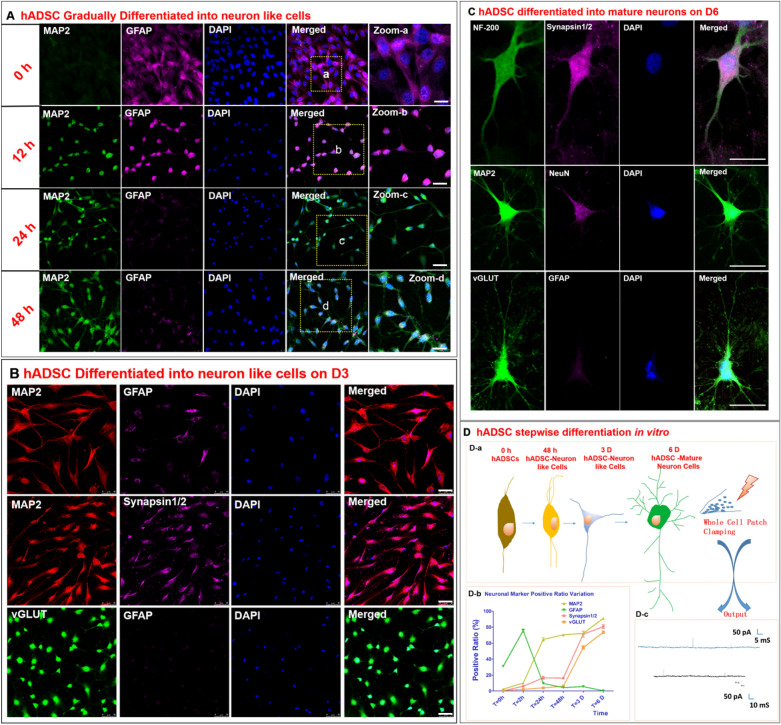
Human adipose-derived stem cells (hADSCs) have been demonstrated to be a promising autologous stem cell source for treating various neuronal diseases. Our study indicated that hADSCs could be induced into neuron-like cells in a stepwise manner that are characterized by the positive expression of MAP2, SYNAPSIN 1/2, NF-200, and vGLUT and electrophysiological activity. We first primed hADSCs into neuron-like cells (hADSC-NCs) and then intracerebrally transplanted them into MCAO reperfusion mice to further explore their in vivo survival, migration, integration, fate commitment and involvement in neural circuit rebuilding.
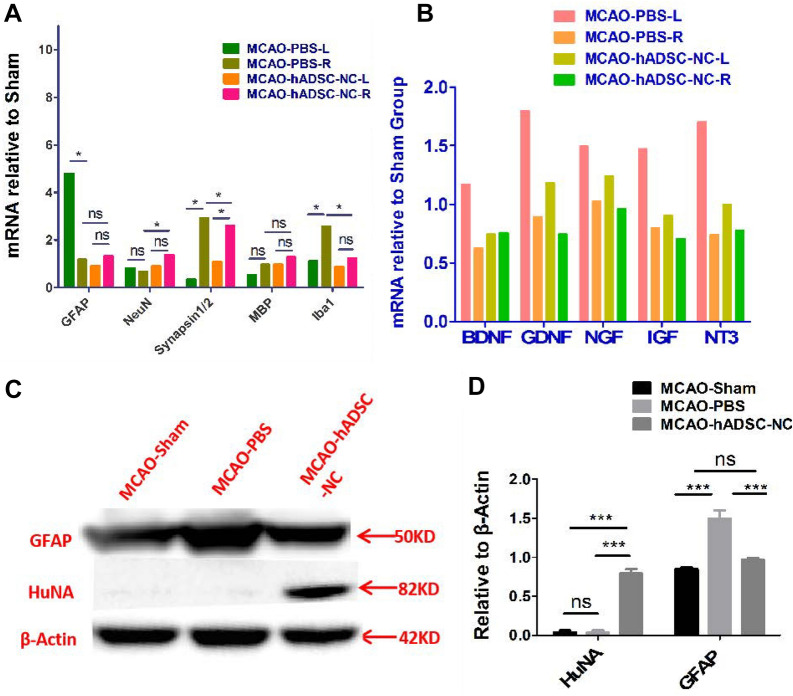
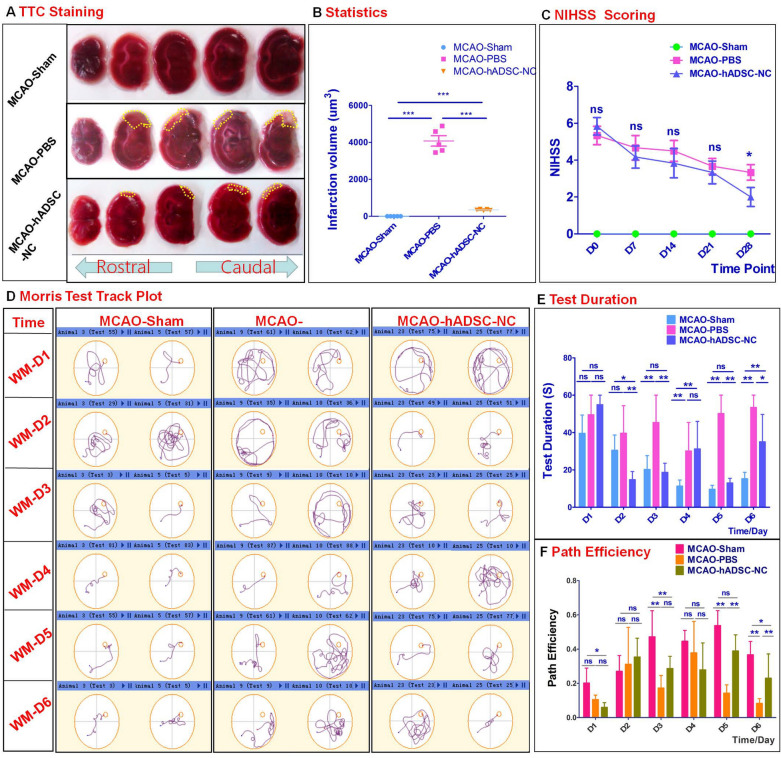
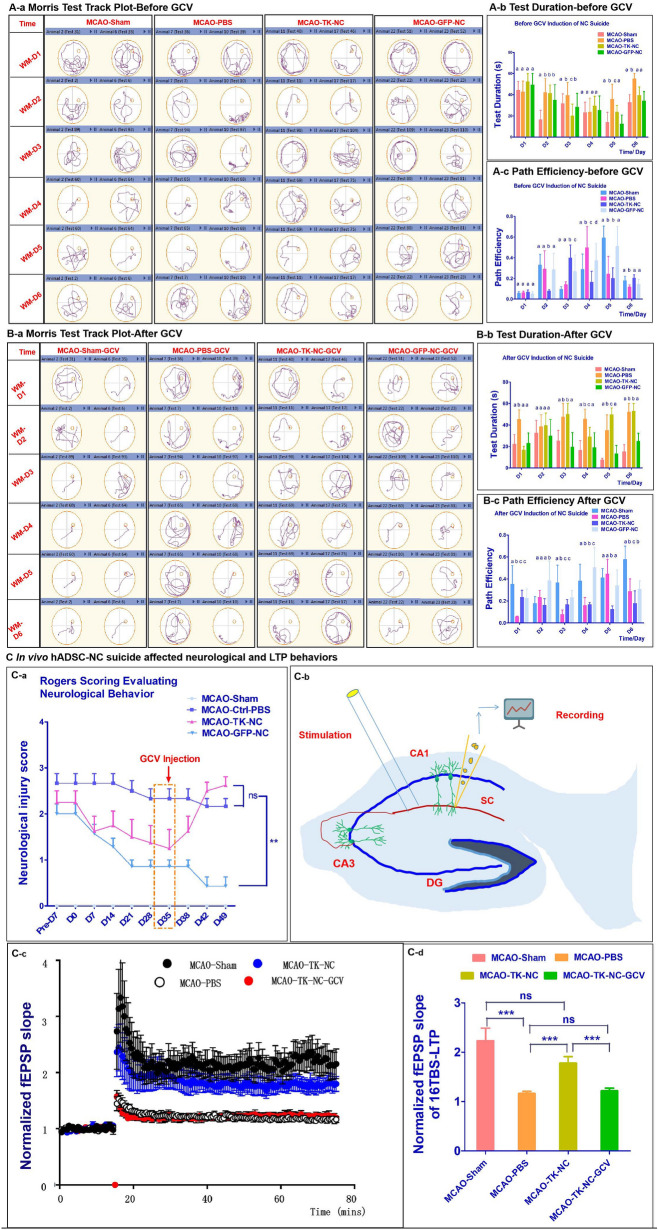
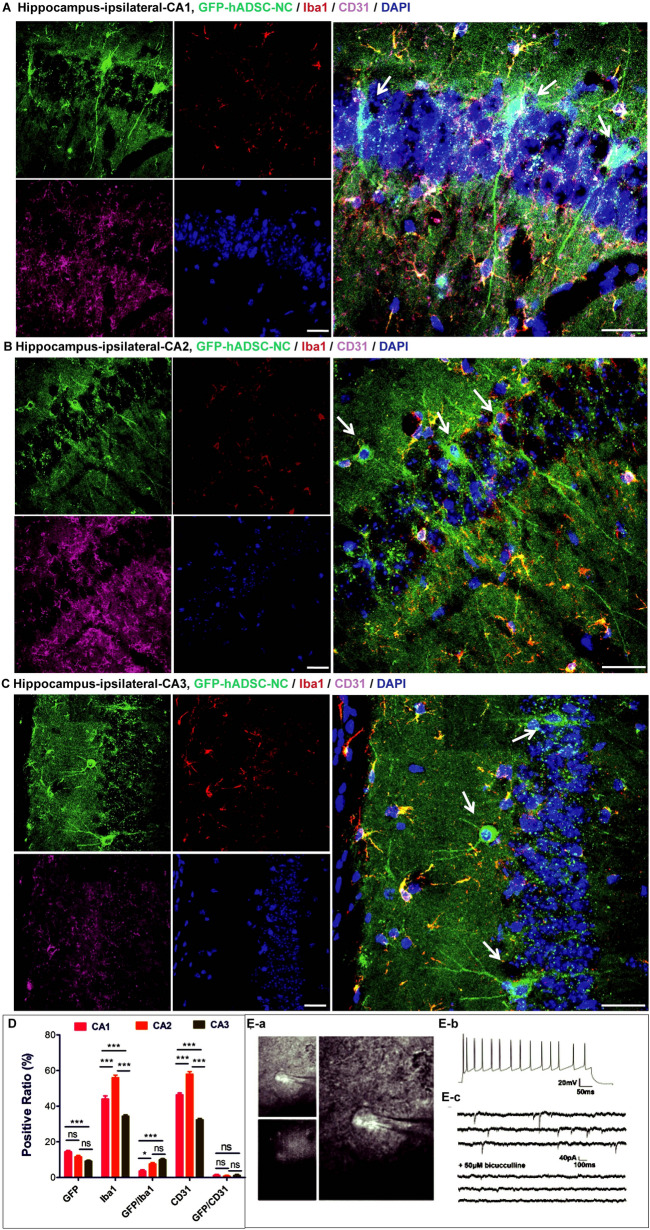
The hADSC-NCs survived well and transformed into MAP2-positive, Iba1- or GFAP-negative cells in vivo while maintaining some proliferative ability, indicated by positive Ki67 staining after 4 weeks. hADSC-NCs could migrate to multiple brain regions, including the cortex, hippocampus, striatum, and hypothalamus, and further differentiate into mature neurons, as confirmed by action potential elicitation and postsynaptic currents. With the aid of a cell suicide system, hADSC-NCs were proven to have functionally integrated into the hippocampal memory circuit, where they contributed to spatial learning and memory rescue, as indicated by LTP improvement and subsequent GCV-induced relapse. In addition to infarction size shrinkage and movement improvement, MCAO-reperfused mice showed bidirectional immune modulation, including inhibition of the local proinflammatory factors IL-1α, IL-1β, IL-2, MIP-1β and promotion proinflammatory IP-10, MCP-1, and enhancement of the anti-inflammatory factors IL-15.
Overall, hADSC-NCs used as an intermediate autologous cell source for treating stroke can rebuild hippocampus neuronal circuits through cell replacement.
人脂肪来源干细胞(hADSCs)已被证明是治疗各种神经疾病的一种有前景的自体干细胞来源。我们的研究表明,hADSCs可以逐步诱导分化为神经元样细胞,其特征为微管相关蛋白2(MAP2)、突触素1/2(SYNAPSIN 1/2)、神经丝蛋白200(NF - 200)和囊泡谷氨酸转运体(vGLUT)呈阳性表达以及具有电生理活性。我们首先将hADSCs诱导为神经元样细胞(hADSC - NCs),然后将其脑内移植到大脑中动脉闭塞再灌注小鼠体内,以进一步探究它们在体内的存活、迁移、整合、命运决定以及在神经回路重建中的作用。
hADSC - NCs在体内存活良好,并转变为MAP2阳性、离子钙结合衔接分子1(Iba1)或胶质纤维酸性蛋白(GFAP)阴性的细胞,同时保持一定的增殖能力,4周后Ki67染色呈阳性即表明了这一点。hADSC - NCs能够迁移至多个脑区,包括皮质、海马体、纹状体和下丘脑,并进一步分化为成熟神经元,动作电位激发和突触后电流证实了这一点。借助细胞自杀系统,hADSC - NCs被证明已在功能上整合到海马体记忆回路中,在那里它们有助于空间学习和记忆恢复,长时程增强效应(LTP)的改善以及随后丙戊酸(GCV)诱导的复发即表明了这一点。除了梗死面积缩小和运动能力改善外,大脑中动脉闭塞再灌注小鼠还表现出双向免疫调节,包括抑制局部促炎因子白细胞介素 - 1α(IL - 1α)、白细胞介素 - 1β(IL - 1β)、白细胞介素 - 2(IL - 2)、巨噬细胞炎性蛋白 - 1β(MIP - 1β)以及促进促炎因子干扰素诱导蛋白10(IP - 10)、单核细胞趋化蛋白 - 1(MCP - 1),并增强抗炎因子白细胞介素 - 15(IL - 15)。
总体而言,hADSC - NCs作为治疗中风的中间自体细胞来源,可以通过细胞替代重建海马体神经元回路。