School of Mathematical Sciences, Queensland University of Technology (QUT), Brisbane, Australia.
School of Mathematics and Statistics, University of Canterbury, Christchurch, New Zealand.
J R Soc Interface. 2022 Apr;19(189):20210903. doi: 10.1098/rsif.2021.0903. Epub 2022 Apr 6.
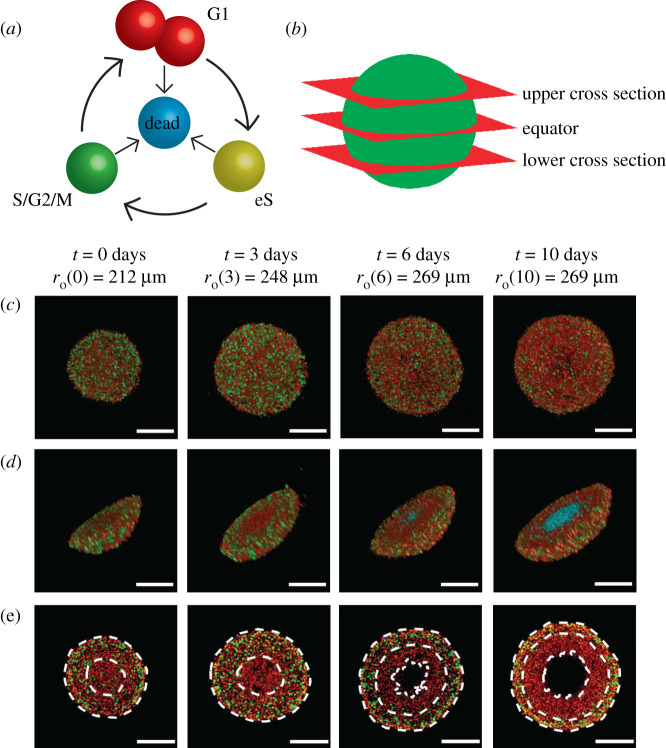
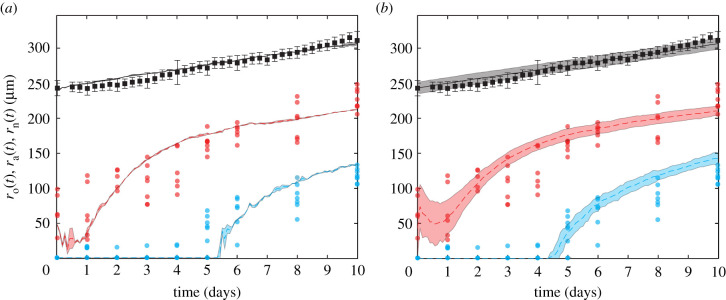
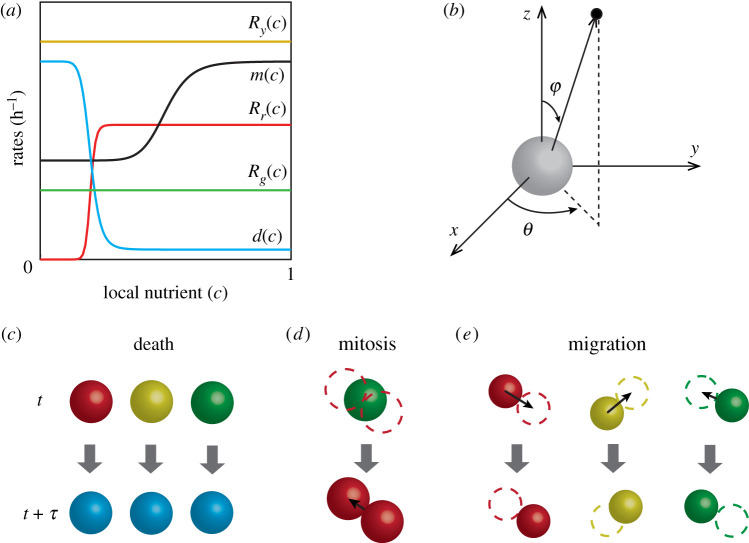
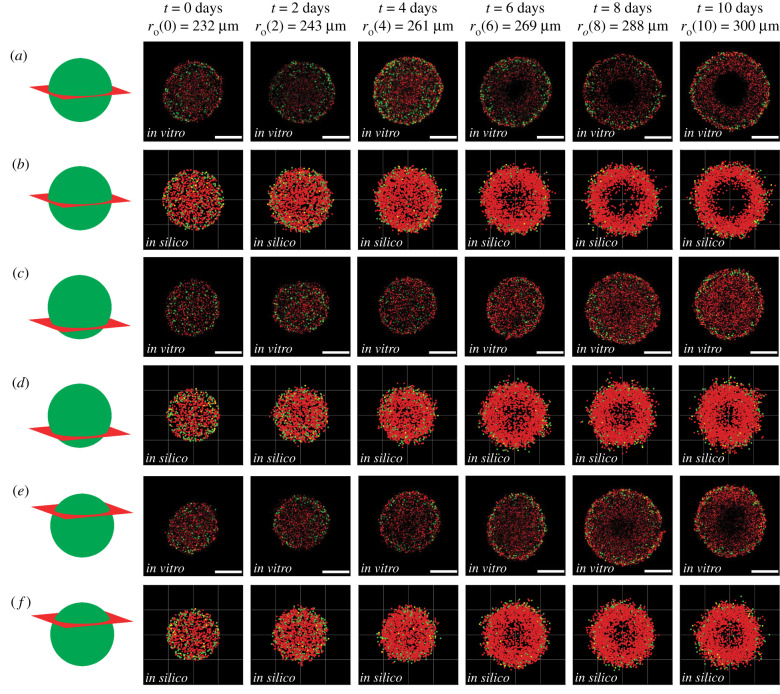
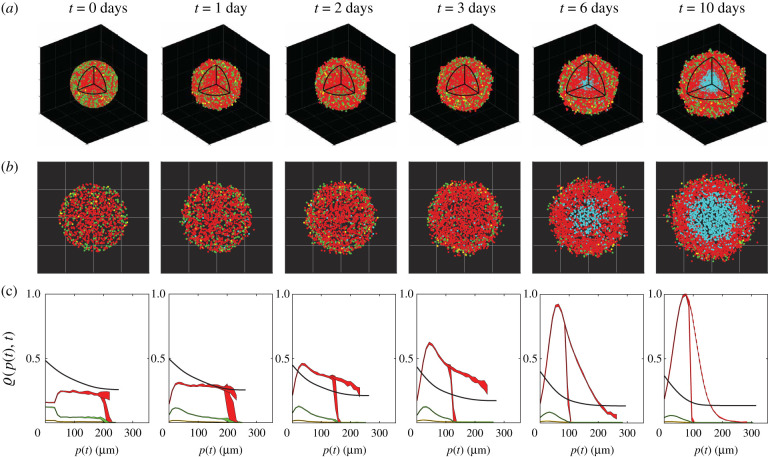
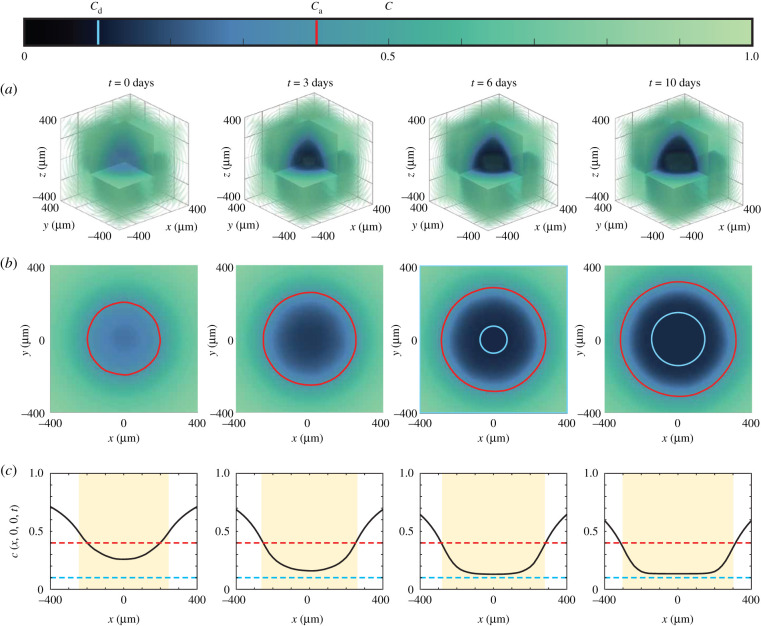
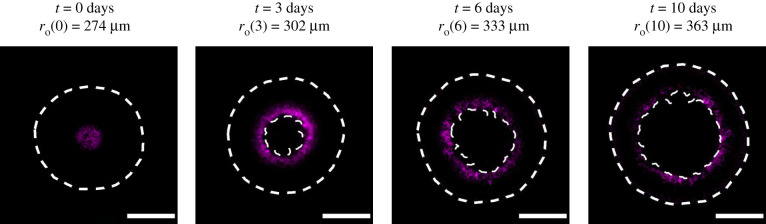
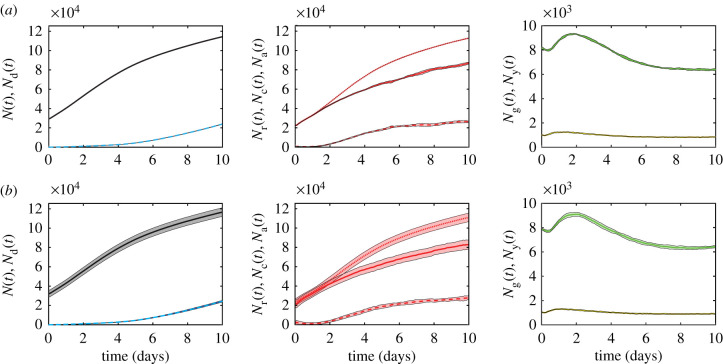
tumour spheroids have been used to study avascular tumour growth and drug design for over 50 years. Tumour spheroids exhibit heterogeneity within the growing population that is thought to be related to spatial and temporal differences in nutrient availability. The recent development of real-time fluorescent cell cycle imaging allows us to identify the position and cell cycle status of individual cells within the growing spheroid, giving rise to the notion of a four-dimensional (4D) tumour spheroid. We develop the first stochastic individual-based model (IBM) of a 4D tumour spheroid and show that IBM simulation data compares well with experimental data using a primary human melanoma cell line. The IBM provides quantitative information about nutrient availability within the spheroid, which is important because it is difficult to measure these data experimentally.
肿瘤球体已经被用于研究无血管肿瘤生长和药物设计超过 50 年。肿瘤球体在生长过程中表现出异质性,这被认为与营养物质可获得性的空间和时间差异有关。实时荧光细胞周期成像的最新发展使我们能够识别生长中的球体中单个细胞的位置和细胞周期状态,从而产生了四维(4D)肿瘤球体的概念。我们开发了第一个 4D 肿瘤球体的随机个体基础模型(IBM),并表明 IBM 模拟数据与使用原发性人类黑色素瘤细胞系的实验数据非常吻合。IBM 提供了关于球体内部营养物质可用性的定量信息,这很重要,因为这些数据很难通过实验进行测量。